Is It Okay to Leave a Dishwasher On When Away? A Practical Guide
Is it safe to leave a dishwasher on when you're not home? Explore risks, safety features, and practical steps to prevent leaks, floods, and electrical faults while you're away.


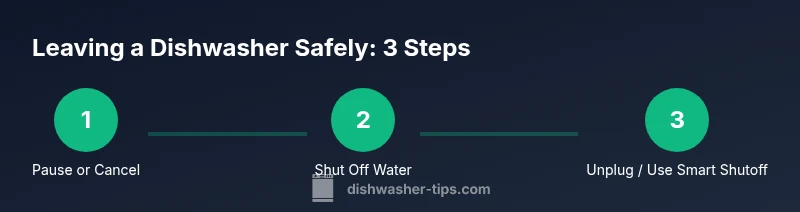
Leaving a dishwasher on when you’re not home is not recommended. If you must be away, avoid starting a cycle, pause or cancel any running load, shut off the water supply, and consider unplugging or using a smart shutoff. These precautions reduce risk and protect your home.
Why Leaving a Dishwasher On When You're Gone Is Risky
According to Dishwasher Tips, safety-first guidelines for homeowners emphasize never leaving a running dishwasher unattended. If you’re wondering is it ok to leave dishwasher on when not home, the answer is: it’s risky. Dishwashers rely on electrical components, heated water, and pressurized lines; even a small fault can escalate into a flood, a short circuit, or a fire risk. Leaks often start at hose connections or door seals and can go undetected until damage occurs. When you’re away, there’s no one to notice unusual noises, odors, or heat, which increases vulnerability to problems that would be quickly obvious if you were present. The Dishwasher Tips team has found that many incidents stem from leaving a cycle running while stepping out or from forgetting to shut off the water supply. Prolonged moisture can mold, corrode cabinets, and trigger safety switches that shut down the circuit—creating additional risk. Even energy usage matters: a running dishwasher consumes power and heats water that might otherwise be used elsewhere in the home. The safest practice is to avoid starting a cycle when you’re not going to supervise. If you must be away, use a delay-start only when you can monitor or rely on a smart shutoff that triggers if leaks appear. The overarching message from Dishwasher Tips is clear: plan ahead, verify valves, and prefer manual control when leaving your home.
Safer Alternatives When You Need to Be Away
If you need to be away, there are safer ways to manage dishwashing without leaving the appliance running. Consider using a delay-start cycle only when you’re present to monitor the process, or schedule cycles to start while you’re at home. Run full loads to maximize efficiency, and avoid mid-cycle starts that require immediate attention. Turn off the main water supply valve to the dishwasher when you know you’ll be out for an extended period. An unplugged unit eliminates standby power draw and reduces the risk of electrical faults. For tech-enabled homes, a smart shutoff or leak-detection sensor can provide alerts and automatic shutoff if a leak is detected. But even with these tools, supervision remains key; use them as safety nets rather than as a free pass to leave a running machine unattended. Finally, ensure your homeowner’s insurance and local regulations align with any safety devices you install so coverage remains intact in case of a claim.
How to Prepare Your Dishwasher to Sit Idle Safely
Preparing a dishwasher to sit idle safely involves a few deliberate steps you can take before you leave. Start by pausing or canceling any active cycle so there is no heat generation or water flow active while away. Next, locate and close the water shut-off valve dedicated to the dishwasher; a counterclockwise turn to the stop point is typically sufficient, but verify with the valve label or manual. If your model allows, unplug the unit or switch off the circuit at the breaker to remove all power from the appliance. Finally, holistically inspect hoses, seals, and the door latch for any signs of wear; addressing worn components now reduces the risk of leaks while you’re away. For some homes, installing a leak detector or smart shutoff provides an extra layer of protection when you cannot monitor in person.
Safety Features and Add-ons That Help
Modern dishwashers come with several safety features designed to reduce risk when you’re not home. Look for auto shutoff after a cycle completes, leak sensors that trigger alerts, and tub sensors that detect unusual heat or pressure. A compatible smart plug or built-in smart home integration can provide remote shutoff and status monitoring. When combined with a monitored water supply valve, these features significantly reduce flood risk and energy waste. Always verify compatibility with your specific model and read the manufacturer’s safety guidelines. Remember that no feature replaces responsible habits; treat these tools as safeguards to your routine, not excuses to neglect it.
Quick-Decision Checklist for Short Absences
Before you walk away, run through this quick checklist: 1) Is the cycle complete or paused? 2) Is the water valve fully off? 3) Is the dishwasher unplugged or protected by a safe outlet? 4) Is there a live leak detector or smart shutoff in place? 5) Are you able to monitor alerts via a smartphone app? If you answer yes to all, you’ve aligned with best practices for brief, supervised absences. If any item is uncertain, delay leaving until you can supervise or adjust your plan accordingly.
Real-World Scenarios and Practical Outcomes
In real homes, the key is to tailor your approach to the risk level and your daily routine. If you live in a high-humidity environment, even small leaks can cause significant damage quickly. In a busy household, you might rely on a smart shutoff for overnight trips or extended trips away from home. In all cases, you should be prepared to respond quickly if you receive an alert. Work with your appliance’s manual, your home’s plumbing layout, and your energy usage goals to decide when it’s safe to run a dishwasher in your absence. The ultimate goal is to minimize risk while maintaining convenience; safety should always take priority over rapid cleanup.
Common Myths Debunked
Myth 1: A dishwasher will shut itself off if something goes wrong. Reality: it may not detect every fault, and a failure can still escalate. Myth 2: Running at night is safe if you’re asleep nearby. Reality: you should not rely on sleep to monitor a running appliance. Myth 3: A powerful smart shutoff can replace supervision. Reality: these devices help, but they are not substitutes for awareness and preparation.
Tools & Materials
- Adjustable wrench(to shut off the supply valve if needed)
- Screwdriver (Phillips head)(for panel access if needed)
- Water supply shut-off valve(located under sink or near dishwasher)
- Owner’s manual(model-specific safety guidance)
- Smart shutoff device or smart plug(compatible with your dishwasher)
Steps
Estimated time: 15-30 minutes
- 1
Pause or Cancel the Current Cycle
Open the dishwasher interface and press Pause/Resume or Cancel. Confirm the door is closed and the drum is not rotating. This halts heat and water flow if you’re unsure about being away.
Tip: If you’re using a delay-start model, do not rely on it while you’re away. - 2
Shut Off the Water Supply
Locate the under-sink shut-off valve or the valve behind the dishwasher. Turn it clockwise until it stops to prevent any water flow while you’re away.
Tip: Know the valve location before you need it. - 3
Unplug or Switch Off Power
Unplug the dishwasher from the wall outlet or switch off the circuit at the breaker if dedicated to the appliance. This reduces the risk of electrical faults while idle.
Tip: If you use a smart outlet, ensure it’s configured for safe standby mode. - 4
Enable Controlled Start Upon Return
Only start a cycle after you’re back home or when you can supervise. Use delay-start features only when you’re present to monitor.
Tip: Check that dishes are loaded properly and water supply is ready before turning on. - 5
Consider a Safety Upgrade
Install a leak sensor or smart shutoff that will cut power or water if a leak is detected or if a flood risk arises.
Tip: Pair with a home security setup for integrated alerts. - 6
Run a Final Check Before Leaving
Double-check drain path for blockages and ensure door seal is intact. Confirm there are no visible leaks.
Tip: Keep a phone alert or smart home app ready for status.
People Also Ask
Is it dangerous to leave a dishwasher running when no one is home?
Yes. Running a dishwasher unattended can lead to floods, leaks, and electrical faults. Always avoid leaving it on if you’re not present.
Leaving a dishwasher running without supervision can cause floods or electrical issues; avoid it.
What should I do if I need to be away while a cycle is running?
Do not leave it on. Stop the cycle, shut off the water supply, and unplug or use a smart shutoff.
If you must be away, stop the cycle and shut off power and water.
Can I rely on delay-start to handle time away?
Delay-start is useful only if you’re supervising the process. Do not rely on it when you’re away from home.
Delay-start should be supervised; don’t leave it alone while you’re away.
Are there safety features that help when I’m away?
Modern dishwashers include leak sensors and auto shutoff; pairing with smart devices enhances protection.
Yes, leak sensors and auto shutoff help reduce risk when away.
Should I unplug the dishwasher after every cycle?
Unplugging eliminates standby power, but may require re-plugging; check your outlet or use a smart plug.
Unplugging is effective, but ensure you can re-connect safely when you return.
If I must leave it on, what precautions should I take?
Avoid leaving it on; if unavoidable, ensure water off, power protected, and monitoring via alerts.
Only leave it on with monitoring and protective devices in place.
Watch Video
What to Remember
- Never leave a running dishwasher unattended.
- Shut off water and unplug before leaving home.
- Use safety features with supervision, not alone.
- Consider smart shutoffs for automatic protection.