Liquid Soap in Dishwasher: Troubleshooting & Fixes
Learn why liquid soap in the dishwasher causes suds, how to diagnose the issue quickly, and step-by-step fixes to restore safe, clean operation. Practical tips from Dishwasher Tips.


Most likely, the issue is you used liquid soap in the dishwasher instead of detergent. The Dishwasher Tips team notes that liquid soap foams excessively, causing suds to overflow and residues on dishes. The quickest fix is to stop using liquid soap, switch to a recommended dishwasher detergent, and run an extra rinse to clear suds.
Understanding the risk of liquid soap in dishwasher
Liquid soap is designed for handwashing, not automatic dishwashers. When introduced into a closed wash chamber, its foaming agents can produce copious suds that spill over the door, clog filters, and reach the spray arms. This is especially true if you pour without measuring or use a soap designed for sinks rather than machines. Even a small amount can create a froth that disrupts the rinse cycle and leaves a film on glasses. The Dishwasher Tips team recommends treating this as a warning sign: stop and switch to the right detergent, then run a quick rinse to clear the foam. In this section, we explain why liquid soap in dishwasher behaves differently, how to recognize the signs, and how to prevent a repeat incident.
Symptoms you'll notice when detergent goes wrong
Common signs include visible suds in the tub after a cycle, a soapy film on glassware, and foam that escapes the door during wash. Some users report longer cycle times or the dishwasher performing multiple rinse cycles to try to clear residue. If you notice water pooling or suds around the gasket, this can indicate excessive foaming and improper drainage. These symptoms strongly point to using liquid soap instead of a proper dishwasher detergent. By recognizing the signs early, you can stop the cycle, remove excess foam, and switch to the correct product before running a test load. The goal is a clean, dry load and a foam-free tub.
Safety-first steps you must take immediately
First, unplug the machine and avoid opening the door during a sudsy cycle to prevent splashing. If foam is high, leave the door closed and wait a few minutes to reduce pressure before attempting safe access. Remove loose items from the vicinity to prevent slips, and wipe up any standing water around the base. Next, remove visible suds with an old towel and prepare to run a rinse cycle with the dishwasher empty. Do not start a new cycle with soap still present. If there is a leak, turn off the water supply and contact support if you suspect a seal or hose issue.
How to diagnose the detergent culprit
Check the detergent cup for residue or broken seals, and confirm you did not add hand soap or liquid dish soap intended for sinks. Read the label on the product you used—dishwasher detergents are designed to work with hot water and specific pH levels, while liquid soaps are not. Consider whether the load had too many suds-producing items (e.g., cups with leftover soap) or if you mixed products. Inspect the filters and spray arms for soap scum and rinse agent deposits, which can trap suds. A quick indicator is whether the machine rinses efficiently after removing visible foam; if not, the suds may be affecting the drainage system.
Step-by-step fixes for suds and residue
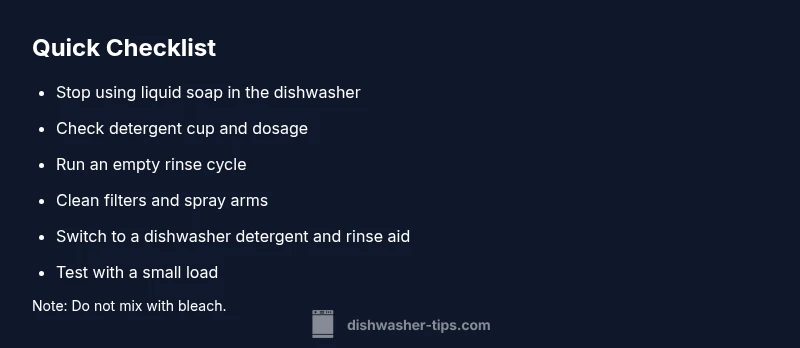
- Stop using liquid soap in the dishwasher and switch to a proper dishwasher detergent. 2) Run an empty rinse cycle to flush out residual foam. 3) Inspect and clean the filters, sump, and spray arms to remove any film. 4) Wipe the door gasket and seal area to remove remaining suds. 5) Refill with detergent and run a test load with a small amount of dishes. 6) If suds persist, run another rinse cycle and consider a dishwasher cleaner to remove built-up residue. These steps help restore cleaning performance without risking pump damage. 7) Check water hardness and advise on detergent type accordingly.
Cleaning and maintenance to prevent future suds
Preventing suds starts with using the correct product. Keep a dedicated container for dishwasher detergent and avoid any liquid soap labeled for sinks. Clean the filter and spray arms monthly or as recommended by the manufacturer. Use rinse aid as directed to improve drying and reduce film formation. If your water is very hard, consider a water softener or adjusting detergent type. Regular maintenance prevents foam buildup and extends the life of the pump and seals.
Detergent selection and usage best practices
Always follow the packaging instructions for dosage and compatibility. Liquid soaps meant for handwashing should never be used in dishwashers. Use the recommended dishwasher detergent and, when applicable, a separate rinse aid. Be mindful of water hardness and choose products designed for your machine’s cycle. Avoid mixing products or adding extra soap partway through a cycle. Adhering to these best practices reduces the risk of suds and improves overall cleaning performance.
When to call a pro
If suds persist after a thorough cleanup and a few extra rinse cycles, or if you notice leaks, unusual noises, or water backing up into the tub, it’s time to contact a professional. Faults in seals, hoses, or the pump may require specialized diagnosis and tools. A service visit can prevent further damage and ensure the dishwasher operates safely. In many cases, upfront diagnostics save money by preventing appliance replacement.
Debunking myths and sharing quick wins
Myth: Any soap can be used if you run more cycles. Reality: Only dishwasher detergents are designed for the machine’s heat and controls. Quick win: If suds appear, stop the cycle, switch detergents, and run an empty rinse. Myth: Vinegar or bleach can “fix” suds. Reality: These compounds can damage seals and harm the dishwasher. Stick to manufacturer-approved cleaning methods and products.
Final note and next steps
Once you’ve corrected the detergent choice, run a few test cycles with a small load to confirm the issue is resolved. If problems recur, document the symptoms and consult the brand’s troubleshooting resources or a qualified technician. Regular maintenance, correct detergent usage, and awareness of water hardness are the best defenses against suds and residue in the future.
Steps
Estimated time: 45-60 minutes
- 1
Stop using liquid soap
Cease all use of hand soaps or liquid soaps labeled for sinks. Replace with dishwasher detergent and follow the package instructions for dosage. This prevents further suds from forming in the next cycles.
Tip: Keep a dedicated label on your dishwasher detergent to avoid mixing products. - 2
Run an empty rinse cycle
Run a full wash cycle with no dishes to flush out soap residue. If your model has a rinse-only option, use that to avoid additional cleaning steps.
Tip: Wipe the door seal during this cycle to remove any lingering suds. - 3
Inspect and clean filters
Remove and rinse filters, the sump screen, and spray arms. Soap residue can clog pathways, reducing drainage and spreading suds.
Tip: Use a soft brush to remove stubborn buildup; avoid using metal tools that could scratch components. - 4
Wipe seals and interior
Carefully wipe the door gasket and interior walls where suds can cling. Residue on seals can hinder proper sealing and lead to leaks.
Tip: Dry the area with a towel after cleaning to prevent moisture buildup. - 5
Test with a small load
Load a few dishes and run a normal cycle using the correct detergent. Observe for suds; if none, proceed with a full cycle.
Tip: Use a minimal amount of detergent the first few cycles to gauge effectiveness. - 6
Assess the need for a professional
If suds persist after multiple correct cycles and screen cleaning, a professional should inspect seals, hoses, and the pump.
Tip: Document symptoms and timing to help the technician diagnose quickly.
Diagnosis: Excess suds or dishwasher not draining properly after a cycle
Possible Causes
- highUsing liquid soap in the dishwasher instead of detergent
- mediumOveruse of detergent or incorrect dosage
- lowClogged filters or spray arms
- lowWrong product in the detergent cup or seal failure
Fixes
- easyStop using liquid soap in the dishwasher and switch to a proper detergent
- easyRun an empty rinse cycle to flush residual suds
- mediumClean filters, sump, and spray arms to remove residue
- mediumCheck detergent cup seals and replace if damaged
People Also Ask
Why does liquid soap in a dishwasher create so many suds?
Liquid soap is designed for handwashing and contains high-foaming agents. When used in a dishwasher, these foaming agents create excessive suds that overwhelm the machine’s drainage and rinse cycles.
Liquid soap soap foams more than dishwasher detergents, which can overwhelm the machine and leave residue. Use dishwasher detergent instead.
Can I keep using liquid soap if I run extra cycles?
Extra cycles generally cannot fully remove the foam and residue caused by liquid soap. It's safer to switch to the correct detergent and flush suds with an empty rinse cycle.
Extra cycles aren’t a reliable fix; switch detergents and flush with an empty cycle.
What if my dishwasher leaks after suds?
A sudsy overflow can stress door gaskets and seals, leading to leaks. Check seals and ensure the door closes fully before running cycles.
Suds can damage seals; inspect the door gasket and reseal if needed.
Should I use vinegar or other cleaners to fix suds?
Avoid using vinegar or other cleaners inside the dishwasher as they can degrade seals and void warranties. Use manufacturer-approved cleaners and routines.
Do not use vinegar; stick to approved detergents and cleaners.
How do I prevent this from happening again?
Keep only dishwasher detergents in the dispenser, measure as directed, and regularly clean filters. If your water is hard, consider a softener and appropriate rinse aid.
Use the right detergent, measure correctly, and maintain filters to prevent suds.
When should I call a professional for suds issues?
If suds persist after following the troubleshooting steps and cleaning, or you notice leaks, a professional should diagnose seals, hoses, and the pump.
Call a technician if suds persist after cleaning and testing.
Watch Video
What to Remember
- Stop using liquid soap in the dishwasher immediately
- Switch to a dishwasher detergent and follow dosage guidance
- Run an empty rinse cycle to flush suds
- Clean filters and spray arms to restore drainage
- Call a pro if suds persist after cleaning and testing