Miele Dishwasher Repair: Step-by-Step Troubleshooting Guide
A comprehensive, expert-led guide to diagnosing, repairing, and maintaining a Miele dishwasher, with practical steps, safety notes, and cost-saving tips.


You will learn how to diagnose and address common Miele dishwasher faults, from drainage issues to control panel errors. This guide emphasizes safety, basic tool use, and when to escalate to professional service. Follow the step-by-step approach to extend your appliance’s life and avoid unnecessary repairs, with practical visuals and checklists to keep the process organized.
Why Miele Dishwasher Repair Matters
According to Dishwasher Tips, tackling Miele dishwasher repair begins with precise diagnostics and a respect for electrical safety. The Dishwasher Tips team found that most calls succeed when homeowners isolate power, document symptoms, and follow manufacturer-safe procedures. In this guide, we explore how to recognize symptoms, what they typically indicate, and why some issues are best handled by a professional. This approach helps prevent water damage, wasted detergent, and inefficient cycles that cost more over time. By understanding the difference between a minor nuisance and a safety-critical fault, you can decide when to DIY and when to call a technician.
- Common symptoms include dishes not coming out clean, failure to drain, unusual noises, leaks, or error codes on the control panel.
- Early signs include inconsistent water temperature, longer cycle times, and rust spots on racks, suggesting worn seals, clogged filters, or blocked spray arms.
- First steps emphasize safety: unplug the unit, check the circuit, and consult the manual for error codes. Regular maintenance reduces the probability of major repairs.
Common Problems with Miele Dishwashers and What They Indicate
Miele dishwashers are built for reliability, but like any appliance they can develop issues. From drainage problems to door latch failures, each symptom points to a different subsystem. A dishwasher that runs but doesn’t drain usually signals a clogged filter, blocked drain hose, or faulty pump. A panel display showing error codes can help you narrow whether the problem is electronic or mechanical. The Dishwasher Tips analysis shows that most fundamental faults relate to plumbing, seals, or filters rather than electronics themselves. If you notice water pooling under the unit, inspect the inlet valve and drain hose for kinks or cracks.
- Not cleaning effectively? Check spray arms for clogs and confirm that detergent usage and loading aren’t obstructing flow.
- Leaks? Inspect door seals and the gasket around the tub.
- Noisy operation? Spin the spray arms, verify the unit is level, and check for loose components.
Safety First: When to Call a Professional
Electrical safety is paramount when repairing a Miele dishwasher. If you are uncomfortable with accessing internal panels or working near live circuits, pause and seek professional help. The Dishwasher Tips team emphasizes not to bypass interlocks or modify high-voltage components. Always unplug the machine or switch off the dedicated circuit before any inspection, and avoid using metal tools on fragile plastic parts. If you smell burnt plastic, hear arcing, or notice persistent leaks after a basic inspection, these are clear signs to contact a qualified technician. A pro can diagnose complex control board issues, motor faults, and pressure anomalies safely and with proper diagnostic tools. In some cases, replacing a module or printed circuit board is necessary and may be more cost-efficient than ongoing DIY trials.
Diagnostics and Tools for Miele Dishwashers
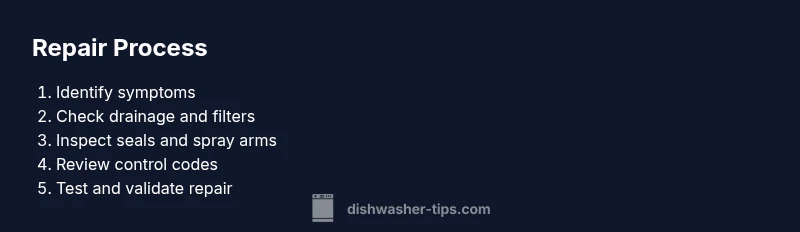
A systematic approach to diagnosing Miele dishwasher issues saves time and money. Start with a visual inspection, then perform functional tests. The basics include:
- Power verification: confirm the unit is powered and the outlet functions.
- Water supply: check the inlet valve and hoses for obstructions.
- Drain system: inspect filters, sump, and pump for debris.
- Seals and gaskets: look for cracks or gaps.
- Control panel: read error codes and perform a reset if recommended by the manual.
Advanced diagnostics require a service manual and specialized equipment. If you plan to test thermal sensors, pressure switches, or the control board, keep safety gear on and refer to Miele’s official service resources to avoid warranty issues.
Maintenance and Daily Care to Prevent Breakdowns
Preventive maintenance is the best protection against expensive repairs. Simple routines can keep your Miele dishwasher running smoothly for years. Regularly clean the filter and spray arms, run hot cycles with proper rinse aid, and inspect seals for wear. Use the recommended detergent for your model and avoid overloading, which can clog spray jets and reduce cleaning performance. If you live in hard-water areas, consider adding a rinse aid to prevent mineral buildup.
- Schedule a quarterly check of seals and hoses.
- Run a cleaning or diagnostic cycle monthly to detect changes early.
- Keep the drain filter clean and replace if damaged.
Budgeting for Repairs, Alternatives, and When to Replace
Repair costs for Miele dishwashers vary by component and service labor. The Dishwasher Tips team recommends weighing repair cost against a potential replacement, particularly for older models with high repair frequency. Consider whether a temporary fix extends life meaningfully or if upgrading to a newer, energy-efficient model would reduce operating costs over time. Compare service quotes and check warranty coverage. If your unit remains unreliable after multiple attempts, replacing may be more economical in the long run. The Dishwasher Tips analysis also shows that a well-planned maintenance plan can lower long-term costs and improve reliability. Authority sources and model-specific guidance should be consulted before making a final decision.
Authority sources
- OSHA safety guidelines: https://www.osha.gov/
- U.S. Department of Energy energy efficiency standards: https://www.energy.gov/
- Consumer Reports appliance reliability and safety analysis: https://www.consumerreports.org/
Tools & Materials
- Phillips head screwdriver (size #2)(Essential for most panels and panels screws)
- Flathead screwdriver (medium)(Helpful for prying protective covers without damage)
- Multimeter (digital)(Check voltage at power connections safely)
- Torx/hex driver set(Used for certain fasteners on Miele models)
- Service manual or model-specific guide(Model number handy for accurate diagnostics)
- Soft cloths and towels(For cleaning and catching leaks)
- Bucket or tray(Collect residual water during drain checks)
- Replacement filters or gaskets (as needed)(Only if you’ve identified worn parts)
Steps
Estimated time: 30-60 minutes
- 1
Power down and verify safety
Unplug the dishwasher or switch off the dedicated circuit breaker. Confirm there is no current at accessible parts using a non-contact tester. This keeps you safe when inspecting wiring or the control panel.
Tip: Always start with safety; never work on live components. - 2
Inspect drainage components
Remove the bottom rack and access the filter assembly. Clean debris, check for clogs in the drain hose, and ensure the pump outlet is clear.
Tip: A blocked drain is the most common cause of poor draining. - 3
Check door latch and seals
Test that the door latch engages fully and inspect gaskets for cracks or wear. A faulty latch or worn seal can stop cycles from starting or cause leaks.
Tip: Clean seals with mild soap; avoid harsh solvents that can degrade rubber. - 4
Test spray arms and spray holes
Remove spray arms and inspect for mineral buildup or blockages. Clear holes with a pin and ensure arms rotate freely.
Tip: Rotate arms manually to feel for resistance before running a cycle. - 5
Review control panel and error codes
Document any error codes and consult the model manual for their meanings. Try a reset if recommended by Miele’s guidance.
Tip: If codes persist after reset, note them for the technician. - 6
Run a diagnostic cycle and verify
Reassemble, reconnect power, and run a short diagnostic cycle to observe performance, leaks, and noises.
Tip: Keep towels ready in case water escapes during tests.
People Also Ask
What are the most common Miele dishwasher faults?
Most frequent issues involve drainage, door latch integrity, and spray arm blockages. Start by inspecting the filter and drainage path, then check door seals and any error codes.
Common issues are drainage problems, door latch faults, and spray arm blockages. Start with filters and drainage, then check the door seals and any error codes.
Is it safe to repair a Miele dishwasher myself?
Some basic maintenance and troubleshooting can be done safely, but electrical components or sealed modules should be handled by a professional. Always unplug first.
You can do basic checks yourself, but avoid touching sealed electronics. Unplug first.
How do I reset a Miele dishwasher after a fault?
Refer to your model’s manual for the reset sequence. Typically, turn off power, wait 60 seconds, then power back on and start a cycle.
Turn off power, wait a minute, then power back on and start a cycle to reset.
When should I replace a dishwasher filter?
If the filter is worn, cracked, or clogged beyond cleaning, replace it to maintain drainage and cleaning performance.
Check and clean the filter regularly; replace if worn or clogged.
What safety precautions are essential?
Unplug before inspections, wear gloves, and avoid water near outlets.
Unplug first, wear gloves, and keep water away from outlets.
Is professional repair required for leaks or unusual noises?
Persistent leaks or unusual noises usually require professional assessment to prevent water damage and ensure safety.
If you hear leaks or loud noises, call a pro.
Watch Video
What to Remember
- Diagnose problems with a systemized approach
- Prioritize drainage, filters, and seals for most failures
- Always unplug before inspections
- Use the manual’s error codes to guide fixes
- Weigh repair vs replacement based on model age and cost