No Water Going Through Dishwasher: Quick Troubleshooting Guide
Urgent, practical troubleshooting guide to diagnose and fix no water going through dishwasher. Learn safe steps, diagnostic flow, step-by-step fixes, and prevention tips from the Dishwasher Tips team.


Water not entering the dishwasher is typically caused by a blocked inlet screen, a kinked supply hose, or a faulty inlet valve. Start by turning off power and water at the shutoff, inspect the supply line and filter screen for debris, and reseat the hose. If water still won't flow, proceed with the diagnostic flow.
No Water Going Through Dishwasher: What It Means
When you notice no water going through dishwasher during the fill, it disrupts the entire wash cycle and can lead to debris buildup, odors, and poor cleaning results. This symptom is a signal from the appliance that water is either not reaching the tub or not being detected by the fill sensors. According to Dishwasher Tips, most cases stem from a blocked inlet screen, a kinked supply hose, or a faulty inlet valve. Recognizing these patterns early helps homeowners act quickly and safely, often avoiding costly service calls. By systematically checking water supply, hoses, filters, and valves, you can restore normal operation in many situations and minimize downtime. Always approach this problem with clear safety steps and a plan, especially if you share a water line with other appliances.
Quick Checks You Can Do Before Disassembly
- Verify the power is on and the dishwasher is properly plugged in, and ensure the circuit breaker for the kitchen outlet is in the ON position.
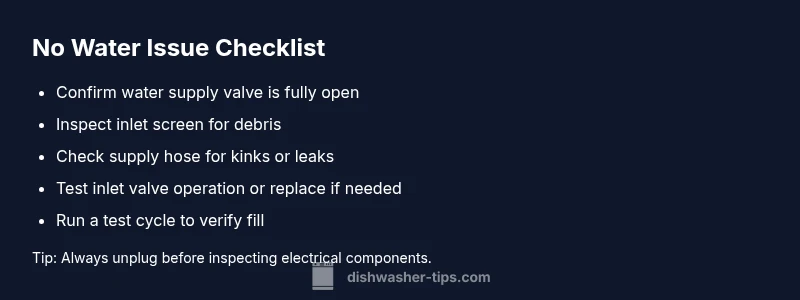
- Confirm the water shutoff valve behind or under the sink is fully open.
- Inspect the water supply hose for kinks, bulges, or leaks; if necessary, gently straighten the hose.
- Check the inlet screen on the valve for debris and clean it carefully with a soft brush or running water.
- Make sure the door latch is engaging fully; a faulty latch can prevent the fill sensor from triggering a cycle.
These quick checks address the vast majority of no-water scenarios and are safe for most DIYers. If any step requires tools you do not have or you see damaged hoses, stop and seek professional help.
How the Water Inlet System Works
The dishwasher fills when the control board opens the water inlet valve, allowing water from your home's supply line to enter the tub. The inlet screen filters out debris, while the hose carries water to the tub. If any component in this chain fails — a closed valve, a clogged screen, or a kinked hose — the tub remains empty, and the wash won’t start properly. Understanding this flow helps you diagnose the issue more efficiently and avoid unnecessary part replacements. The Dishwasher Tips team emphasizes safety: disconnect power before inspecting any electrical components and avoid overtightening hose connections.
Common Culprits and How to Verify Them
- Closed or partially closed water valve: Open fully and retest. A valve that won’t stay open or is stiff may indicate wear.
- Debris in inlet screen: Remove the screen and rinse; use a soft brush to remove mineral deposits.
- Kinked or damaged supply hose: Replace if pinched or worn; ensure it’s routed without sharp bends.
- Faulty inlet valve or wiring: Listen for a humming sound when the valve should be open; if none, testing with a multimeter or professional testing is needed.
By focusing on these areas first, you can often pinpoint the issue without disassembly or temporary parts replacements. If you cannot safely access the valve or you observe corrosion, consult a technician.
Cleaning and Replacing Parts: Inlet Screen, Hose, and Valve
If debris blocks the inlet, clean or replace the screen and reassemble. For a kinked hose, install a new one of the same diameter and ensure it’s routed to prevent pinching. Inlet valves can fail due to wear or electrical faults; if you observe constant buzzing, overheating, or no response when the cycle calls for fill, replacement is often the safest option. When replacing a valve, ensure you match the model family and use compatible fittings to prevent leaks. Always wipe up spilled water to prevent slip hazards and water damage.
Testing Water Flow After Repairs
After any repair, reconnect power and water, run a short wash cycle with no dishes to observe whether the tub fills correctly. Check for leaks around fittings and verify that the fill stops when the tub is full. If the tub fills normally but the spray arms do not rotate properly, recheck door latch alignment and sensor logic. Document any unusual sounds or error codes and refer to the user manual for calibration steps. A successful test confirms you’ve restored flow and can proceed with a full load.
Safety, Common Mistakes, and When to Call a Pro
- Always unplug the unit or switch off the circuit breaker before inspecting electrical components; never work on live wiring. Keep water and electricity separate with dry hands and dry surroundings.
- Do not force hoses through cramped gaps; damaged hoses can cause leaks.
- Avoid running the dishwasher if you notice continuous leaks, burning smells, or scorched-looking wiring.
- If you cannot locate the root cause after the basic checks, or if you encounter a faulty water inlet valve, contact a licensed appliance technician.
Prevention: Keeping Water Flowing Smoothly
- Schedule a monthly quick check of the inlet screen and hoses to catch debris and kinks early.
- Use a high-quality water conditioner or rinse aid to reduce mineral buildup on valves and screens.
- Consider annual valve inspection and hose replacement based on usage and water quality in your area.
- Keep the dishwasher’s surroundings clean and dry to prevent corrosion around electrical components.
- If you have hard water, use a compatible descaler or water-softening system to extend the life of internal fittings.
Steps
Estimated time: 1 hour
- 1
Power down and shut off water
Unplug the dishwasher or switch off the circuit, then shut off the home water supply to prevent leaks. This keeps you safe while inspecting valves and hoses.
Tip: Always confirm power is off with a voltage tester if you have one. - 2
Check the main water valve
Locate the valve under the sink or behind the dishwasher and ensure it is fully open. A valve that is only halfway open can prevent proper filling.
Tip: If the valve feels stiff, do not force it; consider replacing it or calling a pro. - 3
Inspect the inlet screen
Remove the inlet screen from the valve and rinse it under running water. Use a soft brush to remove mineral deposits; reinstall carefully.
Tip: Keep the screen clean; a dirty screen is a common cause of fill failure. - 4
Check the supply hose for damage
Inspect the hose for kinks, bulges, or leaks. If damaged, replace with a matching hose and reattach firmly.
Tip: Avoid routing the hose across sharp corners or hot surfaces. - 5
Test the valve operation
With power off, gently apply power to observe valve behavior or use a multimeter to check continuity if you are comfortable.
Tip: If the valve hums but does not open, it likely needs replacement. - 6
Run a test cycle
Reconnect utilities and run an empty cycle to observe whether the tub fills correctly and the spray system operates.
Tip: Watch for leaks at every connection during the test. - 7
Evaluate results and decide
If the tub fills as expected, you’re done. If not, escalate to professional support for valve or wiring issues.
Tip: Document any error codes or abnormal sounds for the technician.
Diagnosis: No water entering the dishwasher during the fill cycle
Possible Causes
- highWater supply valve is closed or not fully open
- mediumBlocked or dirty inlet screen
- mediumKinked, pinched, or leaking supply hose
- lowFaulty inlet valve or wiring
Fixes
- easyOpen the water valve fully and inspect for leaks
- easyRemove and clean the inlet screen; replace if damaged
- hardReplace the inlet valve or repair valve wiring if faulty
- easyCheck the supply hose for kinks or damage and replace if needed
People Also Ask
What is the first thing I should check if water won't enter the dishwasher?
Start with the water supply valve, power, and the inlet screen. A blocked screen or a closed valve is the most common cause and quick to fix.
Check the water valve, power, and inlet screen first; these are the most common causes and the easiest fixes.
Can a clogged filter keep water from entering the dishwasher?
Yes. A clogged inlet screen or filter can prevent water from entering the tub, especially if debris has built up over time.
A clogged filter can stop water from entering the tub, so cleaning it is often the first step.
Is it safe to run the dishwasher without water to test it?
No. Running with no water can damage the pump and other components. Always ensure water supply and fills are normal before testing.
No, never run it without water; it can damage the pump. Ensure water is flowing before testing.
When should I replace the inlet valve?
If tests show the valve doesn’t open or if continuity checks fail, replacement is usually necessary rather than repair.
If the valve won’t open or tests fail, replacement is usually needed.
What maintenance prevents this issue?
Regularly clean the inlet screen, inspect hoses for wear, and consider a valve check as part of annual maintenance, especially in hard water areas.
Clean the inlet screen and inspect hoses regularly as part of yearly maintenance.
Watch Video
What to Remember
- Identify the root cause before replacing parts
- Start with simple checks: valve, screen, hose
- Test cycles to verify water flow after repair
- Safety first: disconnect power and water before work
- Call a pro if you are unsure or encounter electrical issues