What If Your Dishwasher Isn't Level? A Practical Troubleshooting Guide
Diagnose and fix a dishwasher that's not level with a step-by-step guide, common causes, safety tips, and prevention strategies from Dishwasher Tips.


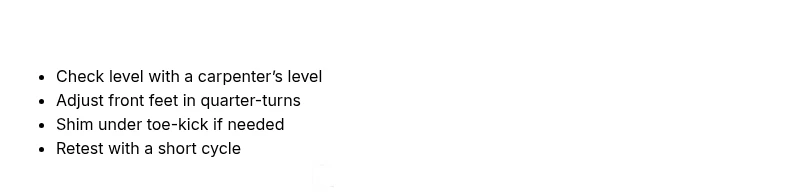
The most common cause is an uneven floor or cabinet, or an unbalanced load that tilts the tub. Start by verifying level with a carpenter’s level, adjust the front feet, and retest. If it still tilts, inspect the leveling legs, toe-kick shims, and cabinet supports for proper alignment.
Why Level Matters
A dishwasher that isn’t level can leak around the door seal, cause uneven spray patterns, and drain improperly. A tilted tub can also make dishes wobble, extend cycle times, and increase vibration noise. For homeowners, ensuring a true level surface protects your floor, prevents water damage, and helps the appliance perform as designed. According to Dishwasher Tips, maintaining a level installation is a simple, high-impact step you can take in minutes with basic tools. In 2026, many leveling problems come from uneven floors or cabinet frames, not faulty components.
Quick Checks You Can Do Before Tools
- Close the door and place a carpenter’s level on the door or interior tub wall. Read both ends for a tilt.
- Check the front feet: are they raised or sunken? Do a quick spin to feel resistance.
- Inspect the floor around the dishwasher for a slant or soft spots that could tilt the unit over time.
- Confirm the unit sits flush against surrounding cabinetry; gaps at the toe-kick can indicate misalignment. If any of these checks show a tilt, it’s time to adjust feet or add shims.
Common Causes of an Unlevel Dishwasher
- Uneven floor surface or warped cabinet base leading to a constant tilt. Likelihood: high.
- Improperly adjusted leveling feet or damaged feet that don’t grip evenly. Likelihood: high.
- Skewed toe-kick or cabinet plinth creating an uneven base. Likelihood: medium.
- Heavy or uneven dish loads that momentarily tilt the tub during cycles. Likelihood: low.
- Loose mounting brackets or a misaligned anti-tip device. Likelihood: medium.
Step-by-Step Fixes for Front-Feet and Rear Feet
- Unplug the dishwasher and turn off water supply to ensure safety. 2) Move the unit slightly to access the front leveling feet. 3) Place a level on the door and note the tilt direction. 4) Use a wrench or pliers to raise or lower the front feet in quarter-turn increments until the bubble centers. 5) If the floor is sloped, add shims under the toe-kick at the front corners or level the rear feet to compensate. 6) Push the unit back into place and test again with the level, running a short cycle to confirm stability. Tip: avoid over-tightening feet; you can strip threads.
Checking the Cabinet and Plinth for Stability
Even with the feet set, a loose cabinet can distort level alignment. Check that the dishwasher isn’t wobbling due to a loose toe-kick, mounting screws, or a sagging plinth. Tighten any screws that secure the unit to adjacent cabinets, and ensure the plinth is properly seated. If you notice a warped cabinet base, you may need to adjust shims or consult a carpenter to restore a flat seating surface. A stable mounting ensures long-term level performance.
Preventive Tips to Keep It Level
- Place the dishwasher on a firm, flat surface and verify the floor beneath it is level.
- Use a quality spirit level during installation and recheck after heavy loads or renovations.
- Install a shim kit or anti-tip bracket if the cabinet edges show gaps or movement.
- Schedule an annual check as part of your maintenance routine to catch sagging or loose components early.
When to Call a Pro and What to Expect
If you’ve tried leveling feet, shimming, and cabinet tightening without success, professional help is advised. A technician can assess the cabinet structure, verify plumbing clearance, and check for hidden damage to the tub or mounting system. Expect a diagnostic visit, potential replacement feet or base components, and a quick re-test to confirm a true level installation.
Steps
Estimated time: 30-45 minutes
- 1
Power Down and Access Feet
Unplug the unit and shut off water. Move the dishwasher enough to reach the front feet. This keeps you safe while testing balance.
Tip: Keep the power cord tucked away and dry hands when handling the feet. - 2
Measure and Mark Level
Place a level on the door or tub wall. Mark which foot is high or low and plan which feet to adjust first.
Tip: Note tilt direction to guide which feet to raise. - 3
Raise Front Feet by Quarter-Turns
Using the appropriate tool, rotate the front feet to raise the lower side until the bubble centers. Check level again after each quarter turn.
Tip: Avoid over-tightening; small adjustments are enough. - 4
Check Rear Feet and Stabilize
If the back tilts, adjust rear feet or add shims under the toe-kick. Re-check level with the front and back together.
Tip: Shims should be thin and snug, not loose. - 5
Reposition and Test Run
Slide the appliance back, re-test with the level across multiple points, and run a short cycle to observe leaks or movement.
Tip: Watch for door alignment and seal contact during cycle. - 6
Secure and Finalize
Tighten any mounting screws, reseat the toe-kick, and confirm no movement. Keep a maintenance log for future checks.
Tip: Note the date and any adjustments for future reference.
Diagnosis: Dishwasher sits unlevel or tilts when installed, causing leaks or poor door seal.
Possible Causes
- highUneven floor surface or warped cabinet base
- highImproperly adjusted leveling feet or damaged feet
- mediumLoose mounting brackets or toe-kick misalignment
- lowTemporary tilt from unbalanced load
Fixes
- easyCheck and adjust front leveling feet using a level
- easyShim under toe-kick or cabinet corners as needed
- mediumRealign or replace warped cabinet or support frame
- hardConsult a professional for persistent or structural issues
People Also Ask
Why would a newly installed dishwasher be off-level even on a flat floor?
Even on a flat floor, cabinet tolerances, toe-kick fit, or uneven shims can create tilt. Check cabinet frame alignment first, then adjust feet for true level.
Even on flat floors, cabinet tolerances or toe-kick fit can tilt a new dishwasher; start with cabinet alignment, then feet.
Can an unlevel dishwasher cause leaks even if the door seal looks fine?
Yes. An unlevel tub can push water toward the door seal, causing slow leaks or mis-seal contact. Leveling the unit is essential before replacing seals.
Yes, a tilt can push water toward the door and cause leaks; level it first.
What tools do I need to level a dishwasher?
You’ll typically need a carpenter’s level, an adjustable wrench or pliers, possibly shims, and a flat-head screwdriver depending on your model.
A level, a wrench or pliers, and some shims are usually enough.
Is it safe to adjust the feet while the dishwasher is loaded with dishes?
It’s best to empty the dishwasher and adjust with the doors open. This avoids shifting loads during leveling.
Try to level with the dishwasher empty to avoid movement.
When should I replace the leveling feet?
If feet are cracked, deformed, or won’t hold position, replacement is recommended to restore level stability.
Replace damaged feet to restore proper leveling.
Watch Video
What to Remember
- Leveling prevents leaks and improves performance
- Check feet, shims, and cabinet stability first
- Test with a short cycle after every fix
- Call a pro if structural issues exist