What to Do If Your Dishwasher Has Standing Water
Urgent troubleshooting guide to diagnose and fix standing water in your dishwasher. Learn step-by-step checks, common causes, and when to call a pro.


Direct fix: start by draining the water, remove and clean the filter, and check the drain hose for kinks or clogs. According to Dishwasher Tips, the most common cause is a blocked filter or hose, which you can clear with a brush and a rinse. If water remains after these steps, continue with the diagnostic flow below.
What standing water in a dishwasher indicates
When you open the dishwasher after a cycle and see standing water, it usually means the unit isn't draining properly. This is a common problem that homeowners can often fix themselves with careful checks. In many cases, simple clogs in the filter, sump, or drain hose are to blame. The Dishwasher Tips team notes that addressing these issues early reduces odor, bacteria growth, and the risk of overflowing. If you find water remains after cleaning the accessible parts, it’s a sign you should move to more thorough diagnostics to protect your floor and cabinets. Understanding what standing water means helps you prioritize steps: start with the easiest parts and proceed to test the pump. Also, be mindful that some dishwashers have built-in sensors that can indicate a fault rather than a physical blockage. In this guide, we’ll walk through a safe, methodical approach to pinpoint the cause and restore normal drainage.
Quick checks you can do right now
Safety first: unplug the dishwasher and shut off the water supply. Remove the bottom rack to access the filter area and pull out the filter assembly. Use a towel to soak up the standing water so you can clearly inspect the drain region. Rinse the filter under warm water and brush away stubborn debris. Look behind the unit for a kinked or blocked drain hose, and check the area around the disposal connection if applicable. If your model has an air gap, inspect it for clogs. After these quick checks, run a short empty cycle to see if the tub drains. If water remains, proceed with deeper inspections outlined in the diagnostic flow below.
Common causes of standing water
Most standing water in dishwashers results from drainage obstructions or filtering issues. A clogged filter or debris in the sump is a frequent culprit, especially in units used heavily with sticky or starchy foods. A kinked or blocked drain hose can prevent water from escaping, and a failing drain pump or impeller may fail to move water out of the tub. A faulty float switch can fail to trigger the pump, leaving water behind. Dishwashers with hard water can accumulate mineral deposits that contribute to clogs in hoses, valves, or spray arms. Dishwashers tips analysis shows that filter and drainage problems account for the majority of standing-water complaints. Identifying the right cause is essential to choose the correct fix and avoid unnecessary replacements. Future prevention through regular cleaning reduces recurrence.
How to inspect the drain hose and filter thoroughly
Begin by removing the filter and inspecting the sump for any remaining debris. Use a flashlight to look into the sump and remove any food particles that may be lodged in corners or screens. Detach the drain hose from the sink or disposal area (only if your model allows) and flush it with warm water to check for internal obstructions. Reconnect the hose and confirm it is routed properly with no sharp bends. If you notice any cracks or bulges, the hose may need replacement. After cleaning, reinstall the filter and run a test cycle with an empty load to verify drainage. If water still accumulates, the issue may lie with the pump or float switch.
The role of the pump, impeller, and float switch
The drain pump and its impeller physically push water out of the tub. If the impeller blades are worn or jammed, water won’t move, leaving standing water behind. The float switch acts as a sensor to signal when the tub has drained; a stuck or faulty float can prevent the pump from engaging. Inspect these components only after verifying the basics: filter cleanliness and hose integrity. If you find signs of wear, burning smells, or testing shows no electrical continuity, replacement might be necessary. In most homes, a faulty pump or float is a repair that benefits from professional service if you don’t have the right tools.
Diagnostic flow: symptom → diagnosis → solution
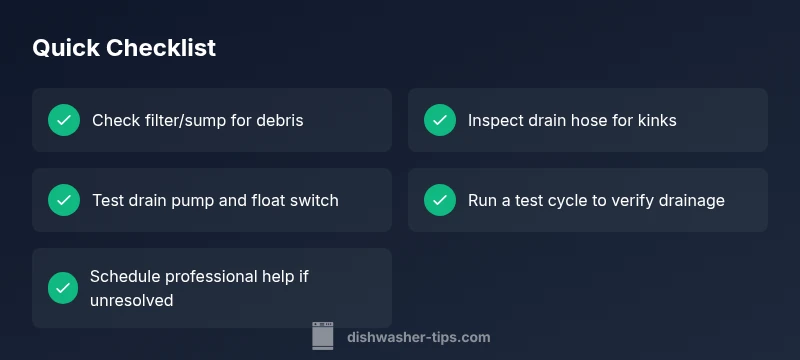
Starting with the symptom—standing water after a cycle—helps guide the diagnosis. If the drain hose is clear and the filter is clean but water remains, the drain pump or float switch is likely at fault. If the hose is kinked, straighten it; if the filter is dirty, clean or replace it. When diagnosing, prioritize simpler fixes before testing electrical components. The flow is: check filter → inspect hose → test drain pump → verify float switch → run test cycle. If you identify a faulty pump or sensor, replacement or professional service is recommended. Always unplug the unit before any disassembly and consult the user manual for model-specific instructions.
Step-by-step repair: most common fix (blocked filter or clogged sump)
- Power off the unit and unplug it. 2) Remove the bottom rack and take out the filter assembly. 3) Rinse the filter under warm water and use a soft brush to remove debris from the sump. 4) Reassemble and run a short empty cycle to test drainage. 5) If drainage remains poor, inspect the drain hose for kinks or blockages and clear as needed. 6) Re-test with a full load after cleaning to confirm normal drainage.
Safety tips, warnings, and when to call a professional
Always unplug the dishwasher and shut off water supply before starting any disassembly. Wear protective gloves to avoid sharp edges or contaminated water. Do not use metal tools to scrape the interior or gasket surfaces; you can damage parts. If you’re uncomfortable testing the drain pump or float switch, or if water leaks persist after basic fixes, contact a licensed technician. Regular maintenance, like periodic filter cleaning and hose inspections, helps prevent standing water.
Prevention and maintenance to avoid standing water
Create a simple cleaning routine: after every few cycles, remove and rinse the filter, wipe the sump area, and check hoses for kinks. Use the correct detergent and avoid overloading the dishwasher, which can push debris into the filter. Consider a yearly inspection of hoses, clamps, and the spray arms. If your home uses hard water, a routine mineral buildup flush (as recommended by your appliance manufacturer) can reduce clogs and improve drainage. By coupling good habits with prompt troubleshooting, you can minimize standing water issues and extend the life of your dishwasher.
Steps
Estimated time: 30-60 minutes
- 1
Power off and access the filter
Unplug the dishwasher and pull the bottom rack to access the filter area. Remove the filter housing and inspect for obvious debris. Wipe the area clean before proceeding.
Tip: Take a photo of hose connections before disconnecting to ensure proper reassembly. - 2
Remove and clean the filter
Gently lift out the filter screen and rinse under warm water. Use a soft brush to remove dried food particles from the mesh and surrounding sump area. Reinstall once clean.
Tip: Avoid using metal tools that could tear the mesh. - 3
Inspect the drain hose
Trace the hose from the dishwasher to the disposal or sink. Check for kinks, crush points, or buildup. If accessible, detach and flush with warm water.
Tip: Do not force the hose; bend gradually to avoid cracks. - 4
Test the drain pump and float switch
With the unit still unplugged, locate the drain pump and inspect for visible damage. If you have a multimeter and know how to test, verify continuity of the pump coil. Check the float mechanism for free movement.
Tip: If you hear unusual noises, the pump may be failing. - 5
Run a test cycle
Reconnect power, run an empty cycle, and observe the drainage. If water still remains, you may need a replacement part or professional service.
Tip: Keep towels handy for any residual leakage.
Diagnosis: Dishwasher won't drain; standing water remains in tub after cycle
Possible Causes
- highClogged or dirty filter/sump
- mediumKinked, blocked, or misrouted drain hose
- lowFaulty drain pump or impeller
- lowFaulty float switch
Fixes
- easyClean the filter and sump debris; reassemble
- easyInspect and straighten/clear drain hose; test flow
- hardTest and, if necessary, replace the drain pump
- mediumTest and replace the float switch if faulty
People Also Ask
Why is there standing water at the bottom after a cycle?
Standing water typically means a drainage issue, often a clogged filter or blocked drain hose. Check these parts first, then inspect the pump and float switch if needed.
Most standing water after a cycle comes from clogs in the filter or drain hose. Start with those parts and test the pump if needed.
Can a clogged filter cause the dishwasher to not drain properly?
Yes. A clogged filter is one of the most common causes of poor drainage. Cleaning or replacing the filter often resolves the issue.
Yes. A clogged filter is a leading cause—clean it and retry the cycle.
Is it safe to run the dishwasher with standing water?
No. Running with standing water can cause overflow and electrical hazards. Stop and troubleshoot before attempting another cycle.
No. It can overflow or leak, so unplug and check first.
What should I check first if there is standing water?
Start with the filter and drain hose. If those are clear, test the drain pump and float switch for proper operation.
First, check the filter and hose, then test the pump and float.
When should I call a professional?
If you hear grinding or burning noises, observe persistent leaks, or cannot locate the blockage after basic checks, contact a licensed technician.
If you still have drainage issues after the basics, it’s time to call a pro.
Will replacing the pump fix standing water?
Replacing a faulty pump often resolves drainage problems. Confirm pump operation before replacing, as some issues are sensor-related.
Replacing a bad pump can fix it, but make sure the pump is indeed the problem.
Watch Video
What to Remember
- Identify the drain path first: filter, hose, then pump.
- Clean and reseat components before replacements.
- Run short tests after each fix to confirm drainage.
- The Dishwasher Tips team recommends proactive maintenance to prevent standing water.