What Causes a Dishwasher Flood: Urgent Troubleshooting Guide
Urgent, practical steps to diagnose and fix a flooded dishwasher. Learn common causes, safety checks, and a clear step-by-step plan to prevent water damage at home.


The most common cause of a dishwasher flood is a blocked or faulty drain path (drain hose, air gap, or pump). Quick fixes: unplug, inspect the drain hose for kinks or clogs, check the air gap, and test the drain pump. If the water keeps returning, shut off power and water, then call a professional.
What causes dishwasher floods and why it happens
When a dishwasher floods, the root causes usually revolve around drainage or water level controls. A blocked drain hose, a stuck air gap, or a failing drain pump can allow wastewater to flow back into the tub and spill onto the floor. New installers sometimes misposition hoses, creating backflow, while aging gaskets and seals can leak water into the base. According to Dishwasher Tips, many floods originate from simple, user-serviceable issues such as a kinked hose or a clogged filter. Understanding these mechanisms helps homeowners act quickly and safely, reducing water damage and costly repairs.
Safety priorities before you touch anything
Water and electricity are a dangerous mix. Before inspecting any components, unplug the dishwasher or switch off the circuit at the breaker. If water has pooled near outlets or you see exposed wiring, do not proceed—evacuate the area and contact a licensed technician. Keep children and pets away, remove any items from the floor, and dry the surrounding surfaces as soon as possible to prevent slip hazards. If you must reach underneath the appliance, use dry towels and wear non-slip shoes. The goal is to minimize risk while you diagnose the issue.
Quick checks you can perform safely (no tools needed)
Start with the simplest checks: confirm the door is fully closed and latched, inspect the exterior and tub for obvious cracks or leaks, and look at the drain hose for kinks or obvious clogs. If you have an air gap on the sink drain, remove any debris that could block it. Remove standing water using towels or a sponge, then observe whether water reappears after a brief test cycle. These basic checks often resolve minor floods without tools or disassembly.
How the float switch and water inlet valve influence flooding
The float switch tells the dishwasher when to stop filling. If the float sticks, the unit may overfill, causing water to poke through seals and leak onto the floor. Similarly, a faulty water inlet valve can admit too much water or fail to shut off properly, resulting in a flood. Signs include continuous filling, water spraying from seals, or water pooling after cycles. Replacing a faulty valve or cleaning the float assembly is a common, user-serviceable fix when done carefully.
Common culprits: drain hose, seals, and pump access
Drain hose problems are among the top flood culprits: kinks, clogs, or improper routing can force wastewater back into the tub. Worn door seals or tub gaskets allow water to seep from the door area during cycles, especially when misaligned. A clogged sump screen or a failing drain pump can stall drainage and cause water to back up. Inspecting these components often reveals the exact leak source, guiding targeted repairs rather than full unit replacement.
Preventing future floods: maintenance habits that save money
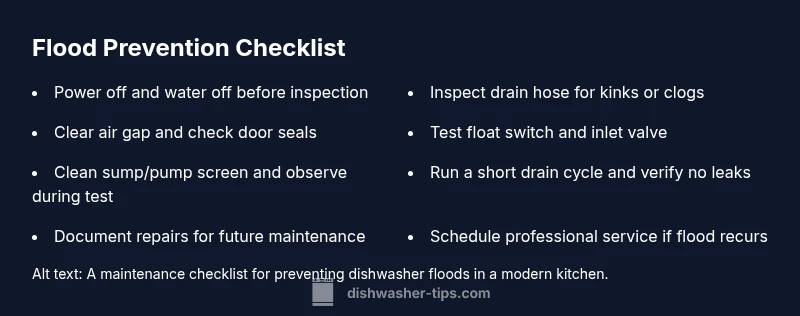
Regular maintenance minimizes flood risk. Clean the filter and sump screen monthly, check hoses for wear, and ensure the drain hose connections are snug and unobstructed. Run a diagnostic test cycle to verify proper drainage after repairs. Use the correct detergent and avoid overloading the tub, which can increase stress on seals. Keeping a maintenance routine reduces the chances of water damage and extends the machine’s life.
Diagnosing a flood: a high-level workflow you can follow
Begin with symptoms (water on the floor during or after a cycle), then move to quick checks (drain hose, air gap, and door seal). If those checks pass, inspect the float switch and inlet valve, followed by pump and sump components. Finally, confirm that hoses are routed correctly and the base is dry to prevent mold growth. If you cannot isolate the problem after these steps, it’s time to call a professional for a safe, final resolution.
What to do after a flood: cleanup and restoration
Start by turning off power at the breaker and water supply, then remove standing water with towels and a mop. Dry the area thoroughly to prevent mold. Inspect for damage to cabinetry or flooring and document it for insurance if needed. Ensure the dishwasher is fully dry before testing; if you notice persistent dampness, contact a service technician for a full assessment and leak repair.
Steps
Estimated time: 45-60 minutes
- 1
Power off and shut off water supply
Unplug the dishwasher from its outlet or switch off the circuit breaker. If possible, shut off the water valve feeding the unit to stop new water flow. This first step prevents further spillage while you inspect the machine.
Tip: If you sense an electrical shock or cannot reach the outlet safely, stop and call a professional. - 2
Check drain hose and air gap for blockages
Disconnect the drain hose from the sink or disposal. Inspect for kinks, clogs, or cracks. Remove any debris from the hose and clean the air gap if present. Reconnect firmly and test drainage with a short cycle.
Tip: Use a flashlight to inspect hoses; a hidden kink can be easy to miss. - 3
Inspect the float switch and inlet valve
Access the lower front panel or service panel per the manual. Look for a clogged or stuck float, and verify the float moves freely. If the float is fine, inspect the inlet valve for signs of wear or leakage; replace if needed.
Tip: Take photos of connections before removing any wiring or hoses. - 4
Check door seals and tub condition
Examine the door gasket for cracking or deformation. Check tub seals around joints for wear. Replace any damaged seals to restore a watertight enclosure.
Tip: A good seal prevents floods during any cycle, even with minor hose issues. - 5
Test run and monitor for leaks
Plug back in and run a short drain/empty cycle with a minimal amount of water. Watch for leaks and confirm that the tub stops filling when expected. If water appears again, stop the cycle and call a professional.
Tip: Keep towels handy to manage residual water during testing.
Diagnosis: Dishwasher floods or leaks water onto the floor during or after a cycle
Possible Causes
- highBlocked or kinked drain hose, or clogged air gap
- mediumFaulty or stuck float switch
- mediumOverfilled tub due to inlet valve fault
- lowWorn door seal or tub gasket
- lowClogged sump or faulty drain pump
Fixes
- easyUnclog/straighten drain hose and clear air gap; reseat hoses securely
- mediumInspect/replace float switch if stuck or slow to rise
- mediumTest and replace inlet valve if overfilling occurs
- mediumReplace worn door seal or tub gasket to prevent leaks
- hardClean sump, test drain pump operation, and replace if faulty
People Also Ask
What causes a dishwasher to flood?
Floods are usually caused by drainage problems (blocked hose or air gap), a faulty float switch, or a failing inlet valve. Leaky door seals and damaged tub components can also contribute. A systematic check helps identify the exact culprit.
Most floods come from drain issues, a bad float, or a faulty inlet valve. Check those first.
Is a dishwasher flood dangerous?
Yes. Standing water near electrical components poses shock risk. Shut off power at the breaker and avoid touching water; if water is near outlets, evacuate and call a professional.
Yes—it's dangerous. Cut power and avoid wet areas until inspected.
How do I fix a clogged drain hose?
Detach the hose and sink connection, remove kinks, and clear clogs with a long flexible brush or plumber's snake. Reconnect securely and run a test cycle.
Unclip, clean, and reattach the drain hose; test for leaks.
When should I call a professional for a flood?
If the flood recurs after basic checks, or if you notice damaged hoses, seals, or the inlet valve, contact a licensed appliance technician for a safe repair.
If it keeps flooding after checks, call a pro.
Can overfilling cause flooding?
Yes. A stuck float or faulty water inlet valve can cause overfilling, leading to floods. Fix the float or replace the valve as recommended by the manufacturer.
A stuck float can cause overfilling; fix or replace it.
Will my warranty cover flood repairs?
Warranty terms vary by model and purchase date. Check the manual and service terms; some flood-related exclusions may apply.
Warranty depends on terms; check your policy.
Watch Video
What to Remember
- Identify the flood source early (drain path vs. seals).
- Start with safe, simple checks before disassembly.
- Replace or repair worn components to prevent recurrence.
- Document repairs and test thoroughly after each fix.