Where Dishwasher Plug Is Located: A Practical Troubleshooting Guide
Discover where to find the dishwasher plug, how to safely test power, reset circuits, and diagnose common electrical issues with your dishwasher. This step-by-step guide from Dishwasher Tips helps homeowners troubleshoot power problems confidently.


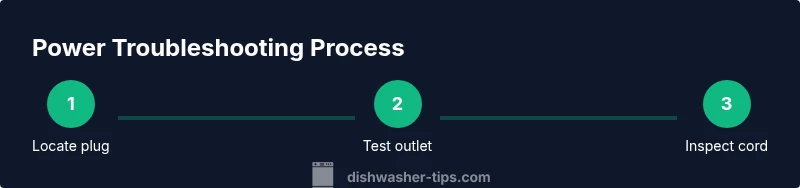
Locate the dishwasher plug by tracing the power cord to the outlet behind or beneath the unit. Check that the outlet is powered, the circuit breaker is on, and there’s no visible cord damage. This guide shows you safe testing, GFCI checks, and when to call a professional.
Why locating the dishwasher plug matters
Finding the exact location of the dishwasher plug matters because most power problems start at the outlet, the circuit, or the cord, not inside the machine. If you can identify where the plug is and how it connects to the wall, you can quickly test for power, determine if the outlet is live, and rule out obvious safety hazards. The Dishwasher Tips team emphasizes that a systematic check—from the wall outlet to the dishwasher cord—saves time and reduces unnecessary disassembly. When you know where the plug sits (whether behind the machine, under the sink, or in a nearby gang box), you can safely switch off power, inspect the cord for wear, and decide whether a simple reset or a professional service is needed. In busy homes, this approach helps both homeowners and renters stay on schedule, avoid electrical shocks, and prevent further damage to the appliance. In short, start with the plug to set a clear diagnostic path.
Safety first: power, water, and tools
Before touching any electrical components, make safety your primary concern. Always unplug the dishwasher at the wall outlet if accessible, or switch off the corresponding circuit breaker in your service panel. Wear non-conductive gloves and keep the area dry; never handle electrical parts with wet hands. Use a non-contact voltage tester to verify that the outlet is truly dead before you proceed. Keep a flashlight handy to inspect cords, strain reliefs, and plug prongs for signs of wear or scorching. This stage protects you from shocks and helps you detect obvious hazards that would require a licensed electrician.
How to physically locate the plug and outlet
Dishwashers can be plugged in from different orientations depending on the kitchen layout. In many homes, the plug is tucked behind the discharge hose or under the sink area where the cord exits the back of the appliance. Some models are hard-wired and have a junction box instead of a removable plug. Start by pulling the dishwasher away from the wall just enough to access the rear panel. Look for the two-prong or three-prong plug, the strain relief boot around the cord, and any signs of moisture. If you see water pooling near the outlet, stop and dry the area completely before continuing. If you cannot access the plug safely, do not force the cord; call a professional.
Common outlet problems and how to test them
Outlets fail for several reasons: a tripped breaker, a blown fuse, a loose connection, or a GFCI that has tripped. Use a plug-in outlet tester to quickly check for proper wiring and grounding. If the tester indicates an open ground, reverse polarity, or a short, do not use the outlet. Check the circuit breaker panel for a tripped switch and reset it if safe to do so. If a GFCI outlet is installed nearby (in a kitchen, laundry room, or bathroom), press the reset button. If the GFCI keeps tripping, the fault may be downstream or in the dishwasher cord, and a qualified electrician should inspect the circuit to avoid fire risk.
Diagnosing why the dishwasher won't start
If power is reaching the unit, the problem could be the door latch switch, thermal fuse, timer, or electronic control board, not just the plug. Start by verifying that the door latch engages fully; a loose latch can prevent a start command from reaching the control board. Next, inspect the power cord and the plug for physical damage or melted insulation. A damaged cord will need to be replaced. If the dishwasher still won’t start after confirming power, test the outlet again with a known-good device to ensure the outlet isn’t the culprit. For many users, the issue lies in a tripped GFCI, a faulty cord, or moisture around the junction box.
When to call a professional
If you observe burnt or melted insulation, scorch marks, a burning smell, or consistent outlet trips, stop using the appliance immediately and consult a licensed electrician. Also contact a technician if you cannot safely access the plug due to tight cabinet space or if the dishwasher is hard-wired into a junction box. DIY fixes have limits and can void warranties or create safety hazards. A professional can test for hidden faults, replace damaged cords or outlets, and verify that grounding and circuit protection are functioning correctly.
Preventive steps and next best practices
After you resolve a power issue, implement preventive steps to reduce recurrence. Keep the area around the outlet dry and clean, ensure the cord is properly seated and not pinched, and avoid routing the cord where it could be stepped on or snagged by furniture. Regularly inspect cords and plugs for wear, and replace any damaged parts promptly. Consider labeling the circuit so you know which breaker controls the dishwasher, and use a dedicated circuit if possible to avoid nuisance trips from other appliances. Routine checks can dramatically reduce future downtime.
Quick troubleshooting recap and practical tips
To summarize, start with the plug, verify power, test the outlet, and inspect the cord for damage. If you notice any burning smell, smoke, or melted insulation, stop immediately and seek professional help. Keeping spare parts like a plug, strain relief, and a basic outlet tester on hand can speed up future diagnostics. By following a systematic approach, you’ll minimize risk and maximize recovery time when problems arise.
Tools & Materials
- Non-contact voltage tester(Safety first: verify power is off without touching conductors)
- Plug-in outlet tester(Checks wiring and grounding quickly)
- Multimeter(For more detailed voltage checks if available)
- Flashlight(Illuminates hard-to-see rear panels and junctions)
- Screwdriver set (Phillips and flat-head)(Accessing back panels and strain-relief clamps)
- Gloves (non-conductive)(Protect hands when handling cords)
- Electrical tape(Temporary insulation for minor repairs)
- GFCI tester(Useful for kitchen outlets and testers)
Steps
Estimated time: 30-60 minutes
- 1
Power down and verify
Unplug the dishwasher if the plug is accessible, or switch off the corresponding circuit breaker. Use the non-contact voltage tester to confirm there is no live voltage at the outlet or junction box before touching wires. This step prevents shocks and sets the safety baseline.
Tip: Always assume wiring is live until proven otherwise; confirm with two methods if you’re unsure. - 2
Locate the plug and access safely
Carefully pull the dishwasher away from the wall just enough to access the plug and back panel. If the unit is hard-wired, identify the junction box. Do not force panels apart; use proper tools and avoid touching internal components.
Tip: Keep a clear space behind the unit to avoid pinching the cord during testing. - 3
Test the outlet for power
With power switched off, reconnect briefly to test power flow using the outlet tester when appropriate. If you’re unsure about the tester readings, use a known-good device to confirm the outlet’s status. Document any abnormal readings.
Tip: If the tester shows an open ground or miswiring, do not proceed; consult an electrician. - 4
Check for GFCI trips
In kitchens, many outlets are on GFCI circuits. Reset any GFCI outlet you find by pressing the reset button, then re-test the dishwasher. If the GFCI trips again, the fault is likely downstream or in the dishwasher cord itself.
Tip: Do not bypass a GFCI; it’s a critical safety device. - 5
Inspect the cord and plug for damage
Look for cracks, burns, melted insulation, or loose prongs. If you see any damage, replace the cord or plug rather than attempting a temporary repair. Damaged wiring increases fire risk.
Tip: Use a replacement cord that matches the model’s specifications. - 6
Check grounding and strain relief
Verify the cord’s strain relief is intact and properly clamped. Ensure the grounding path is present and secure. A loose strain relief can cause intermittent power loss or exposure of live conductors.
Tip: If you’re unsure how to verify grounding, stop and call a pro. - 7
Power up and run a test cycle
Reconnect power safely and run a short, basic wash cycle to confirm the appliance responds. Listen for normal operation and watch for error codes or unusual noises. If it starts but shuts down unexpectedly, note the pattern for a technician.
Tip: Capture any error codes in a notebook to speed up service calls. - 8
Record findings and plan next steps
Document what you tested, readings observed, and whether the issue persisted after testing. Decide whether you can continue troubleshooting, need a replacement part, or should schedule professional service. Keep receipts and warranties handy.
Tip: A quick photo log helps technicians replicate the problem accurately.
People Also Ask
Where is the dishwasher plug typically located?
Most dishwashers plug into an outlet behind the unit or under the sink area. Some models are hard-wired into a junction box. If you can't access the plug safely, avoid forcing the panel and contact a professional.
Most dishwashers plug into an outlet behind the unit or under the sink. Some are hard-wired into a junction box. If safe access isn’t possible, contact a professional.
What should I do if the outlet trips the GFCI repeatedly?
A repeated GFCI trip usually indicates a fault either in the dishwasher cord or in the outlet circuit. Do not bypass the GFCI; reset and test downstream devices. If the problem persists, call a licensed electrician.
If the GFCI keeps tripping, reset and test downstream devices. If it continues, call a licensed electrician.
Is it safe to DIY electrical issues with a dishwasher?
Basic visual checks and power testing are okay, but any signs of damage, burns, or moisture require professional service. Working on live circuits without proper training can be dangerous.
Basic checks are fine, but if you see damage or moisture, call a professional.
What if the plug or cord looks damaged?
Damaged cords or plugs should be replaced with the correct part for your model. Do not splice or tape insulation to restore service. This reduces shock and fire risks.
If the cord is damaged, replace it with the correct part and do not tape it up.
How can I tell if the dishwasher outlet is the problem and not the appliance?
Swap in a known-good device or tester to confirm outlet power. If another device works on the same outlet but the dishwasher doesn't respond, the issue is likely inside the dishwasher or its cord.
If another device works on the outlet but the dishwasher doesn't, the issue is likely inside the dishwasher or its cord.
Should I replace the dishwasher cord myself?
Cord replacement is feasible if you have electrical knowledge and the correct replacement part. If not, hire a licensed electrician to ensure proper grounding and compliance with safety codes.
Cord replacement can be done if you have the right parts and skills; otherwise, hire a licensed electrician.
Watch Video
What to Remember
- Identify the plug location before touching any wiring.
- Test power safely and inspect for visible damage.
- Reset GFCI outlets and replace damaged cords or plugs.
- Proceed with caution and call a professional if uncertain.
- Document tests and outcomes for accurate follow-up.