Why Your Dishwasher Has Standing Water: A Troubleshooting Guide
Diagnose and fix standing water in your dishwasher quickly with expert, AI-informed tips from Dishwasher Tips. Learn common causes, step-by-step fixes, safety tips, and prevention strategies for homeowners and renters.


Standing water in a dishwasher is usually caused by a clogged drain, blocked filter, or a faulty drain pump. Start by removing the bottom rack, clean the filter and sump screen, and run a quick drain test. If water remains, inspect the check valve and hose for obstructions. Remove any disposer knockout plug if applicable.
Why standing water in your dishwasher happens
If you're wondering why dishwasher has standing water, you're not alone. Standing water after a cycle is typically a drainage symptom, not a sign of overloaded dishes. According to Dishwasher Tips, most cases originate from clogs or worn parts in the bottom of the tub. Before you panic, take a methodical approach: clear visible debris, inspect filters, and run a quick drain check. This guide explains the common pathways that trap water in the sump and how to address them without specialized tools. A failed drain pump or a kinked hose can create a backflow condition that leaves water in the basin even after the spray arms finish their wash. Clear visuals, not guesswork, will help you identify the culprit quickly. The goal is to restore normal drainage so your dishes come out dry and clean, not sitting in murky water.
When you start troubleshooting, note any unusual noises, slow draining, or unusual odors. These cues narrow down whether the issue is mechanical or due to a debris blockage. The Dishwasher Tips team found that persistent standing water almost always points to a drainage issue rather than a misloaded rack. Keep your safety first: unplug the unit before handling internal parts and avoid leaning into the tub where sharp edges may be present.
Quick checks you can do before calling a technician
First, unplug the dishwasher or switch off the circuit to ensure safety. Then remove the bottom rack to access the filter and sump area. Remove and rinse the filter screen, clean the sump screen, and wipe away any debris embedded in the tub. Reassemble loosely and run a short empty cycle to observe drainage. If water still remains, inspect the drain hose for kinks or clogs and ensure the hose is not pinched by the cabinet. Check the air gap (if equipped) for blockages and remove any buildup. If you have a garbage disposal, verify that the knockout plug was removed when the dishwasher was installed. These quick checks catch the most common culprits and can often restore drainage without tools. Dishwasher Tips analysis shows that in many cases, the simplest fixes are the most effective, and cleaning the filter alone can resolve the issue.
Common causes: clogged filter and drain pathway
The most frequent causes of standing water are a clogged filter, a blocked sump screen, or a restricted drain pathway. Food particles, hard water minerals, and soap scum accumulate over time, hindering water flow. A clogged filter also reduces spray effectiveness, which can leave water standing. A damaged or misaligned float switch can falsely tell the dishwasher that the tub is full, preventing drainage. Check for cracks or misalignment, and replace if needed. Additionally, a faulty drain pump or impeller may fail to push water out, resulting in pooling at the bottom. Knowing these scenarios helps you decide whether a nozzle or pipe needs cleaning versus a pump replacement.
Inspect the drain pump and impeller
Accessing the drain pump usually requires removing the lower kick panel or the pump cover. Look for signs of wear, cracks, or a loose impeller blade. Test the pump with a multimeter to confirm continuity if you have one, or perform a manual spin to feel for resistance. If the impeller is damaged or the pump hums but does not move water, replacement is likely necessary. When testing, run a drain cycle and listen for a loud grinding noise that signals a failing pump. Replacing the pump is a job that may require professional service, but a simple loose connection or dirty impeller can often be corrected with cleaning and reseating.
Drain hose, air gap, and connections to check
A kinked or clogged drain hose can stop water from escaping the tub. Detach the hose from the sink or disposal and inspect for bends or blockages. If your setup uses an air gap, remove the cap and clean out mineral buildup. Loose hose clamps can also cause leaks and backflow; tighten them if needed. Ensure the hose is properly sloped downward toward the drain to promote gravity-assisted flow. Debris inside the hose can restrict flow, so consider flushing the hose with warm water or replacing it if obstruction persists.
Running a diagnostic test and interpreting results
After addressing filters and hoses, run an empty cycle with a drain test option if your model supports it. Listen for the sound of the drain pump and observe whether the water drains within a few minutes. If water still remains after the cycle, the fault is more likely with the pump or the control board rather than the filter. If your dishwasher includes error codes, consult the user manual for codes such as “Drain,” “Pump,” or “Flow Sensor” to pinpoint the fault. Tracking patterns (like recurring slow draining) helps you decide whether to attempt a part replacement or call a technician. Remember that safety comes first: if you smell burning insulation or hear arcing, stop immediately and seek professional help.
Maintenance tips to prevent standing water in the future
Perform monthly filter cleaning and sump checks to minimize debris buildup. Use a high-quality dishwasher cleaner a few times per year to reduce mineral buildup and soap scum. Run hot water through your household water heater before starting a cycle to improve drainage, especially if you notice mineral buildup. Use the correct rinse aid and recommended detergent to avoid excessive suds, which can trap water. Inspect hoses for wear at least once a year and replace aging components. Finally, check the disposal-side knockout plug whenever you use a garbage disposal and dishwasher together to prevent backflow.
When to call a pro and safety reminders
If you cannot locate the blockage, or if the pump, control board, or wiring appears damaged, it’s time to call a licensed technician. Attempting electrical work on a dishwasher can be dangerous, so avoid DIY fixes beyond basic cleaning. For complex repairs, rely on a trained professional who can diagnose the exact fault with specialized tools. To minimize risk, always unplug the unit before inspecting and never spray water directly onto electrical components. Regular maintenance and timely repairs extend dishwasher life and prevent expensive emergencies.
Quick-reference troubleshooting checklist
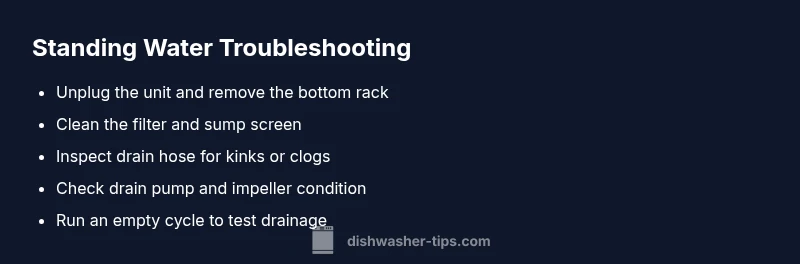
- Unplug the unit and remove the bottom rack
- Clean the filter and sump screen
- Run an empty cycle to observe drainage
- Inspect and, if needed, replace the drain hose and clamps
- Check the air gap for blockages
- Look for a faulty drain pump or impeller and test continuity
- Reconnect and test; monitor for successful drainage
Steps
Estimated time: 45-60 minutes
- 1
Power down and safety prep
Unplug the dishwasher or switch off the circuit breaker. Remove the bottom rack to access the filter area and avoid contact with moving parts. This first step ensures you won’t be shocked or injured while inspecting components.
Tip: If you smell burning plastic or hear buzzing, stop and call a pro immediately. - 2
Access and clean the filter
Remove the filter screen and rinse under warm water. Scrub away baked-on residue with a soft brush and reseat the filter securely. A clean filter often resolves most standing water issues.
Tip: Use a flashlight to spot hidden debris in the sump. - 3
Check the sump and drain path
Inspect the sump area for hair, scraps, or hard-water buildup. Remove debris with a plastic tool and flush the drain hose with warm water to verify flow remains unobstructed.
Tip: Do not use metal tools that could scratch the tub. - 4
Inspect the drain hose and clamps
Trace the drain hose from the tub to the disposal or drain. Look for kinks, crushing, or disconnections. Tighten clamps and replace any damaged sections.
Tip: Ensure the hose has a downward slope to promote drainage. - 5
Test the drain pump and impeller
Access the pump housing and check for a loose impeller or motor humming with no water movement. If accessible, test continuity with a multimeter or replace the pump if faulty.
Tip: Only test electrical components if you have proper training. - 6
Run a test cycle
With everything reassembled, run a short empty cycle to confirm drainage, watching for water release and listening for the pump’s sound.
Tip: If water remains, skip to professional service. - 7
Check for error codes
Consult the user manual for error codes related to Drain, Pump, or Flow Sensor. Code-specific steps can direct you toward the right repair.
Tip: Note codes for future reference. - 8
Prevent future standing water
Create a maintenance routine: monthly filter clean, periodic hose checks, and use of recommended detergents and rinse aids. Regular checks reduce the chance of recurring clogs.
Tip: Keep a small brush on hand for quick cleanups.
Diagnosis: Dishwasher leaves standing water after cycle
Possible Causes
- highDrain blockage or filter clog
- mediumFaulty drain pump or impeller
- lowKinked or blocked drain hose/air gap
Fixes
- easyClear the filter and sump of debris; run a drain test
- mediumInspect/replace the drain pump or impeller if needed
- easyUnblock or replace the drain hose, secure clamps, and clean air gap
People Also Ask
Why is my dishwasher still full of water after a cycle?
Commonly this indicates a drainage issue, such as a clogged filter, blocked drain hose, or a faulty drain pump. Start with the filter cleanup and hose inspection, then test the drain cycle.
Most often the water remains due to drainage problems—clean the filter, check the hose, and test the drain pump.
Can a damaged pump cause standing water even if the filter is clean?
Yes. If the pump or impeller is worn or blocked, water cannot be expelled during the drain phase, leaving standing water behind.
A bad pump or impeller can keep standing water from draining.
Is it safe to DIY fix standing water in a dishwasher?
Basic maintenance such as cleaning filters and hoses is generally safe if you unplug the unit. More complex parts, like the drain pump or control board, should be handled by a professional.
Basic cleaning is fine if the unit is unplugged; for major parts, call a pro.
Should I use chemical drain openers for a dishwasher?
Avoid chemical drain openers in dishwashers as they can damage components. Use mechanical cleaning and manufacturer-approved cleaners instead.
Avoid chemical openers; stick to manual cleaning and manufacturer-approved cleaners.
How often should I clean the dishwasher filter?
Clean the filter at least once a month or whenever you notice reduced drainage or visible debris.
Clean the filter monthly to prevent clogs.
What maintenance reduces standing water long-term?
Regular filter and hose checks, proper detergent use, and annual inspections of hoses and clamps reduce standing-water risk.
Keep up with routine maintenance to prevent future drainage problems.
Watch Video
What to Remember
- Start with simple checks: clean the filter, inspect the drain hose.
- Diagnose drain-related causes before replacing parts.
- Unplug before any inspection to stay safe.
- Test cycles help confirm drainage and avoid unnecessary repairs.
- Regular maintenance prevents standing water from returning