Why Is the Dishwasher Not Draining Completely? A Practical Troubleshooting Guide
Urgent, practical steps to diagnose and fix drainage issues in dishwashers. Learn common causes, quick checks, and a step-by-step fix plan to restore proper draining.


Most commonly, incomplete draining is caused by a clogged filter or debris buildup that blocks the pump. Start with a quick test: remove the lower rack, pull out the filter assembly, and rinse it under warm water to remove grime. Then inspect the drain hose for kinks or obstructions; straighten any bends and, if possible, detach and flush the hose. Run a short empty cycle to confirm drainage before calling for service.
Why the Drain Not Draining Completely? Understanding the Core Issue
If you’re wondering why is dishwasher not draining completely, the most common culprits are blockages in the filtration path or debris in the pump housing. Dishwasher drainage relies on a clean filter, a free-flowing drain hose, and a healthy pump impeller. When any one of these links is hindered, water backs up and you’ll see standing water at the end of a cycle. According to Dishwasher Tips, most drainage woes originate from particulate buildup in the filter or hose, especially in older models or households with hard water. Regular maintenance reduces these risk factors and keeps the system running smoothly.
The drainage pathway starts with the filter basket and screen, moves to the pump, and exits via the drain hose. If food particles bypass the filter or accumulate near the pump inlet, the flow rate drops. In some setups, the drain hose could be re-angled or crimped by cabinet contents, which also restricts flow. Finally, a faulty pump or a blocked air gap can prevent complete drainage. Understanding these elements helps you systematically identify where the blockage lies and take quick action.
Common Causes of Incomplete Drainage
There are several frequent factors for water not exiting the tub fully. The most common are a clogged filter or pump suction, a kinked or clogged drain hose, and an obstructed air gap (if your dishwasher uses one). Less common but still possible are a failing drain pump, a hard-water buildup on impellers, or a clogged garbage disposal connection. The exact symptom you observe—water left in the bottom, slow draining, or gurgling sounds—helps pinpoint which component is at fault. Dishwasher Tips emphasizes inspecting the filter first, since this is the simplest fix with the biggest payoff. Also, ensure the unit drains into a clear path; any obstruction upstream will mimic other issues and waste time.
- Clogged filter or basket
- Blocked drain hose or kinked line
- Obstructed air gap (if installed)
- Faulty drain pump or impeller
- Connection to disposer is blocked or clogged
- Hard-water scale buildup around the pump inlet
Quick Checks You Can Perform Before Calling a Pro
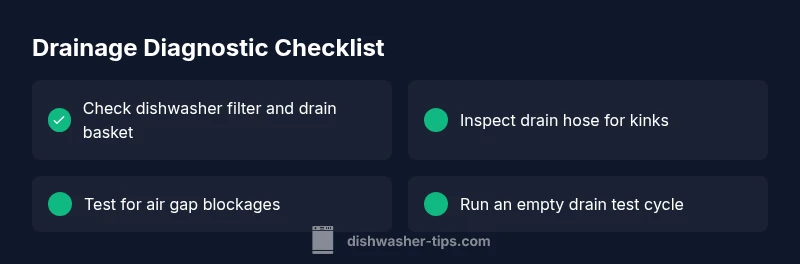
Begin with the simplest checks to save time and avoid unnecessary service calls. Remove the lower rack and pull out the filter basket; rinse it under warm water to clear trapped debris. Inspect the drain hose behind the kick plate for kinks, twists, or a full clog; detach and flush if needed. If the unit drains into a garbage disposal, run the disposal to clear any buildup. Check the air gap (if present) for blockages by removing the cap and flushing it with water. Finally, run an empty cycle with a small amount of white vinegar or a dishwasher-safe cleaner to dislodge minor residues.
If you cannot access the hose easily or see a broken component, do not force-dismantle parts; refer to the user manual or contact a professional. The brand recommendations from Dishwasher Tips highlight safety first: disconnect power before any manual inspection and avoid contact with hot water or electrical components.
Diagnostic Flow: Symptom to Diagnosis to Solution
When you observe standing water at the end of a cycle, start with the easiest deductions. First, verify the filter and pump assembly are clear. If water remains, check the drain hose for kinks and ensure it’s not clogged. If the hose and filter are clean, inspect the drain pump for unusual sounds or failure to activate. If you notice a humming noise or no noise at all during the drain phase, the pump may be defective. Finally, consider external factors such as a clogged sink drain or disposer that backfeeds into the dishwasher.
Step-by-Step Fixes for the Most Common Cause (Blocked Filter or Pump Area)
- Power down the unit and unplug or switch off the breaker to ensure safety. Remove the lower rack and take out the filter basket. Rinse the filter under warm water and scrub away any stubborn residues with a soft brush. 2) Reinsert the filter and ensure it sits securely. Remove the lower spray arm if accessible and check for obstructions around the pump inlet. 3) Locate and inspect the pump housing for visible debris; use a flashlight to look into the sump and gently remove any buildup with a wooden skewer or plastics-safe tool. 4) Reassemble the components, reattach the drain hose, and check for leaks. 5) Run an empty cycle to confirm the tub drains completely, then reload dishes and run a short cycle to verify continued performance. 6) If drainage is still inadequate, proceed to the next potential cause (hose or pump failure) or contact a professional.
Pro tip: Keep a small brush and a microfiber cloth handy to wipe away grime from filters and seals after each load to prevent recurrent clogs.
When to Call a Professional and What to Expect
If you’ve performed the quick checks and the dishwasher still leaves water behind, it’s time to involve a professional. Signs you need help include unusual noises during draining, a dead pump, persistent leaks, or electrical odors. A technician will typically test the drain pump resistance, inspect the wiring harness, and verify voltage at the motor. They may also check for blockages in hard-to-reach areas and assess potential disposal connection issues. For safety, never attempt to bypass safety interlocks or repair electrical components yourself.
Preventive Tips to Avoid Future Drainage Problems
Regular maintenance is your best defense. Clean the filter and sump every 1–2 weeks if you use the dishwasher frequently. Run hot water through the drain hose before starting a cycle if your water is very hard, and consider using a water-softening additive if recommended for your model. Periodically inspect the pump housing for debris and replace worn inlet hoses before they fail. If your home has older plumbing or a history of clogs, schedule routine checks and keep an eye on sink drains as a complementary safeguard. By following these habits, you’ll reduce the chances of sudden drainage issues and extend the life of your dishwasher.
Steps
Estimated time: 45-60 minutes
- 1
Power down and access the drain area
Unplug the unit or switch off the circuit at the breaker. Remove the lower rack to access the filtration area and drain hose. This initial safety step prevents any accidental electrical shock while inspecting components.
Tip: Use a headlamp to clearly view the sump and hose connections. - 2
Remove and inspect the filter basket
Take out the filter and rinse it under warm running water. Use a soft brush to dislodge any stuck food particles and verify the filter sits properly when reinserted.
Tip: If the filter is damaged or torn, replace it before testing drainage. - 3
Check the drain hose for kinks or blockages
Trace the hose from the dishwasher to the sink connection. Straighten any bends and detach the hose if necessary to flush out debris with a faucet or a wet-dry vacuum, ensuring the hose remains clear.
Tip: Do not force the hose; excessive bending can cause future leaks. - 4
Inspect the pump and impeller area
Look into the pump inlet and remove visible debris. Gently rotate the impeller if accessible to confirm it spins freely without obstruction.
Tip: Never use metal tools that could nick the impeller; use plastic-safe tools. - 5
Reassemble and run a test cycle
Reconnect all hoses, secure clamps, and restore power. Run an empty cycle to verify complete drainage before loading dishes again.
Tip: Add a small amount of dishwasher cleaner to help clear minor residue if recommended by the model. - 6
Evaluate the result and escalate if needed
If water still remains or you hear unusual sounds, the problem may be deeper in the motor or electronics. Proceed to professional diagnostics if the symptoms persist.
Tip: Document any noises or error codes to assist the technician.
Diagnosis: Water remains in the dishwasher after a full drain cycle
Possible Causes
- highClogged filter or debris in the pump
- highKinked or clogged drain hose
- mediumFaulty drain pump or impeller
- lowBlocked air gap (if applicable)
Fixes
- easyClean or replace the filter basket; remove debris from the sump area
- easyStraighten or flush the drain hose to remove clogs
- mediumTest the drain pump for operation and replace if defective
- easyClear the air gap and reassemble
People Also Ask
Why won't my dishwasher drain completely after a cycle?
Commonly, the problem is a clogged filter or debris in the pump. Start by cleaning the filter and inspecting the drain hose for kinks. If water still remains after trying these steps, test the pump and consider professional help.
Commonly, the problem is a clogged filter or debris in the pump. Start by cleaning the filter and inspecting the drain hose for kinks; if it still drains slowly, test the pump or call a professional.
Can a clogged filter cause drainage problems?
Yes. A clogged filter can significantly reduce drainage efficiency by restricting water flow to the pump. Regularly cleaning the filter is the simplest remedy and prevents future clogs.
Yes. A clogged filter can slow drainage. Clean the filter regularly to prevent clogs.
Is a kinked drain hose the main culprit for slow draining?
A kinked or obstructed drain hose is a frequent cause of slow drainage. Straighten the hose, flush it, and ensure it isn’t pressed against the cabinet wall during operation.
A kinked drain hose is a common cause. Straighten and flush it to restore flow.
When should I call a professional for drainage issues?
Call a professional if you tried cleaning the filter, inspecting the hose, and running an empty cycle without success, or if you hear unusual noises or smell burning from the unit. Electrical issues or a suspected pump failure require expert service.
If cleaning doesn’t help and you hear odd noises or smell burning, get a pro.
Can hard water contribute to drainage problems?
Hard water can cause mineral buildup in critical areas like the filter, hose, and pump, reducing drainage efficiency over time. Consider a water softener or a descaling routine recommended by your model’s manual.
Hard water can cause mineral buildup that reduces drainage. Descale as advised by your manual.
Watch Video
What to Remember
- Identify the path: filter -> pump -> drain hose
- Start with simple checks and progress logically
- Clean the filter and straighten the drain hose first
- If unresolved, seek professional help promptly
- Prevent future clogs with regular maintenance