Why Do Dishwashers Stop Draining? A Practical Troubleshooting Guide
Is your dishwasher not draining? This comprehensive, urgent troubleshooting guide helps homeowners diagnose clogs, hose kinks, and pump faults, with safe fixes and clear advice on when to call a pro.


Most drainage failures come from simple issues: a clogged filter or sump, a kinked or blocked drain hose, or a blocked air gap. Start with the easiest fix: remove and clean the filter, straighten the hose, and run a test cycle. If water still pools, follow the diagnostic flow to identify the fault and determine if a professional is needed.
Why Drainage Fails: Common Causes and Quick Wins
If you're asking why do dishwashers stop draining, you’re not alone. The most frequent culprits are simple, addressable issues rather than a blown motor. In many kitchens, a blocked filter, a tangled or clogged drain hose, or an obstructed sump can stop water from exiting the tub after the final rinse. Debris from leftover food, bones, or utensils can accumulate in the filter or around the pump, forming a stubborn clog. A damaged hose, a kinked line behind the unit, or a dislodged clamp can create a bottleneck, leaving water standing in the bottom. Even small problems, like a clogged air gap or a partially blocked disposal inlet, can cascade into drainage failure. Throughout this guide from Dishwasher Tips, focus on safe, stepwise checks that you can perform without specialized tools. Start with the simplest fix, and escalate only if water remains stubbornly present.
Understanding these common causes helps you stay focused and avoid unnecessary disassembly. By keeping the repair scope narrow, you can often restore drainage without special tools or professional labor. Remember: the goal is to restore a clear path for water to exit the tub, not to replace major components prematurely. The Dishwasher Tips team emphasizes a methodical approach that starts with the lowest-risk fixes and advances only as needed.
Quick Checks You Can Do Right Now
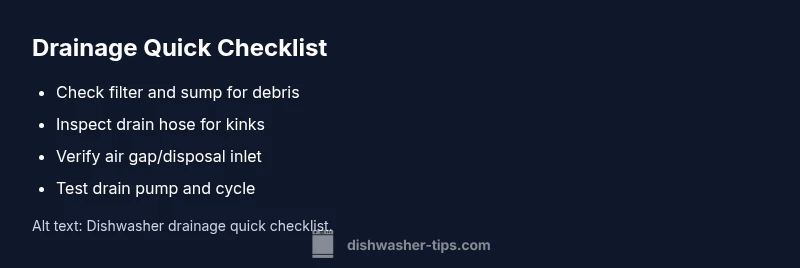
Before pulling apart hoses or tools, perform a few fast checks. First, inspect the dishwasher filter and the sump area for trapped food debris; remove and rinse under running water. Re-seat the filter properly to ensure a clear path for water to reach the pump. Next, examine the drain hose behind the machine for kinks or crimps; straighten any twists and ensure the hose is securely connected to the garbage disposal or air gap as applicable. If your sink and disposal are nearby, run the disposal briefly to clear a blocked inlet, then run a quick dishwasher cycle to see if drainage improves. Finally, test the air gap at the faucet (if you have one) by removing the cap and ensuring water can flow freely through the gap. If water still pools, you’re ready to move to the diagnostic flow.
These quick checks address the most common, low-effort causes. If you notice pooling only after certain cycles or if the water drains partially, save the more thorough checks for later steps. As you work, stay mindful of safety: unplug the unit or switch off the breaker before touching electrical components.
According to Dishwasher Tips, straightforward checks like filter cleaning and hose inspection resolve a surprising share of drainage problems without professional help.
Diagnostic Flow: Symptom to Solution
A clear, repeatable approach helps you isolate the fault without guesswork. Start with the simplest explanation: water remains in the tub after a cycle because of a clog, not because the entire unit failed. Map symptoms to a likely cause: (1) water remains at the bottom after a finished cycle, (2) dishwasher stops mid-cycle with water visible, or (3) poor drainage observed only on certain programs. From there, test each potential cause in order: confirm filter cleanliness, inspect drain hose and connections, verify the pump operation by listening for the hum during draining, and check the air gap or disposal inlet. If you identify a clogged filter or hose, fix it and re-test. If the pump seems weak or noisy, you may have a failed impeller or worn bearings. If the problem persists after these checks, professional service should be considered.
Dishwasher Tips analysis shows that most root issues fall into a few categories: filter debris, hose problems, air gaps, and pump faults. Following the diagnostic flow helps you prioritize tasks and avoid unnecessary repairs. Keep a simple checklist handy, and document what you test so you or a technician can pick up from the last known state.
Step-by-Step Fix for the Top Cause: Clogged Filter
Fixing a clogged filter is usually the quickest path to regained drainage. The fix consists of several small but important steps performed in sequence to ensure the path for water is clear. First, power off the dishwasher and, if possible, unplug it or switch off the circuit breaker. Remove the lower spray arm and the filter assembly, then inspect for trapped debris. Rinse the filter under warm running water, using a soft brush to dislodge stubborn particles. Reassemble the filter carefully and run a short cycle with a cup of water to observe drainage. If water still pools, inspect the sump area and remove any remaining particles by hand or with a soft tool. Finally, run a full load to verify consistent drainage before resuming normal use. Pro tip: avoid metal tools that could scratch the filter housing; use plastic or wooden utensils for scrubbing. If the drain path remains blocked, move to the next potential cause in the diagnostic flow.
Prevention and Pro Tips
To prevent future drainage problems, adopt a maintenance routine. Run hot water through the sink before starting the dishwasher to reduce solid buildup, clean the filter monthly, and check hoses for cracks or wear annually. Use the right amount of detergent and a rinse aid to reduce suds and residue that can trap debris. If your model has a disposal connection, ensure it is clear and correctly linked. A quick check after each cycle—look under the door for standing water—can alert you to problems early. Finally, know when to call a professional: if you hear grinding noises, if the pump or motor has become hot, or if you’ve tried the diagnostic flow without improvement, seek service from a qualified technician.
Steps
Estimated time: 30-45 minutes
- 1
Power off and access the drain area
Ensure safety by unplugging the unit or switching off the circuit breaker. Remove the lower rack and access the filter housing to locate the drain pathway.
Tip: Always start with safety; water and electricity can be dangerous. - 2
Remove and clean the filter/sump
Take out the filter assembly, rinse under warm water, and use a soft brush to remove stuck debris. Look for any residual gunk in the sump.
Tip: Don’t use metal tools; they can scratch or damage components. - 3
Inspect the drain hose for kinks
Trace the drain hose from the dishwasher to the connection point. Straighten any bends and ensure it isn’t crushed by items behind or under the unit.
Tip: Check both ends of the hose for secure connections. - 4
Check the air gap and disposal inlet
If your setup includes an air gap, remove the cap and ensure passage is clear. If connected to a disposal, run disposal briefly to clear the inlet.
Tip: A blocked air gap is a common, easily fixed culprit. - 5
Test pump operation and run a cycle
Reconnect power and run a short cycle with a small load to observe drainage. Listen for pump hum and confirm water exits properly.
Tip: If the pump seems noisy or doesn’t run, professional service may be needed. - 6
Reassemble and verify drainage
Replace all parts, run a full cycle with dishes, and confirm complete drainage. If issues persist, escalate to professional repair.
Tip: Document what you tested to aid a future diagnosis.
Diagnosis: Dishwasher won't drain after a cycle
Possible Causes
- highClogged drain filter or sump
- highKinked or blocked drain hose
- mediumBlocked air gap or disposal inlet
- mediumFaulty drain pump or impeller
- lowBlocked or dislodged hose clamp
Fixes
- easyClean or replace the drain filter/sump and remove all debris
- easyInspect the drain hose for kinks, crushes, or blockages; straighten or replace as needed
- easyCheck the air gap and disposal inlet; clear blockages and retest drainage
- mediumTest the drain pump operation; listen for a humming sound and verify flow; replace if necessary
- mediumInspect clamps and connections; reseat hoses to eliminate leaks and air pockets
People Also Ask
Why won't my dishwasher drain after the cycle?
Common causes are a clogged filter, kinked drain hose, or a blocked air gap. Start with the filter and hose inspection, then proceed through the diagnostic flow.
Most not draining issues come from clogs or hose problems. Start by cleaning the filter and checking the hose, then follow the diagnostic steps if needed.
How often should I clean the dishwasher filter?
Clean the filter monthly or whenever you notice standing water after a cycle. A clean filter maintains a clear water path and improves drainage.
Clean the filter about once a month, or whenever you notice drainage problems.
Can a blocked air gap cause not draining?
Yes. A blocked air gap prevents water from flowing into the sink drain. Remove the cap and clear any buildup.
A blocked air gap can stop drainage; clear it and test again.
What should I do if the drain pump is faulty?
If the pump is not running or is making grinding noises, it may need replacement. Check wiring and seals, or contact a technician.
If the pump seems faulty, you’ll likely need a professional replacement.
Is it safe to use chemical drain cleaners in a dishwasher?
No. Chemical cleaners can damage pumps and seals and should be avoided. Use mechanical cleaning methods instead.
Avoid chemical drain cleaners; they can harm the dishwasher.
When should I call a professional?
If you’ve completed the diagnostic flow and the problem persists, or you hear unusual noises, heat, or leaks, call a professional.
If fixes fail or you’re unsure, a pro can diagnose with proper tools.
Watch Video
What to Remember
- Follow quick checks first, starting with the filter and hose.
- Use the diagnostic flow to isolate the fault before replacing parts.
- If you hear grinding or the pump is hot, stop and call a pro.
- Prevent future clogs with regular cleaning and proper detergent usage.