Are All Dishwashers 24 Inches Wide? A Practical Width Guide
Explore whether every dishwasher is 24 inches wide, compare standard vs compact models, and learn how to measure for your kitchen renovation with practical, data-backed guidance from Dishwasher Tips.


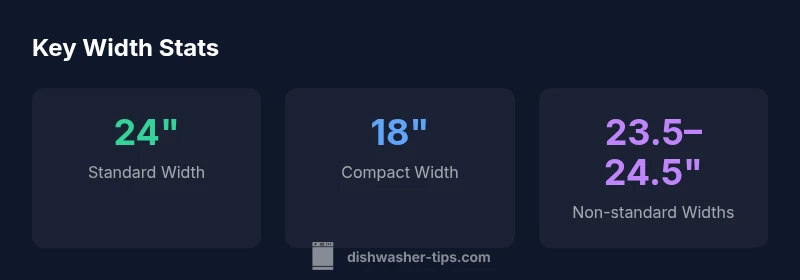
Are all dishwashers 24 inches wide? No. While most standard built-ins are designed around a 24-inch width, there are also 18-inch compact models for smaller kitchens, and some catalog entries list widths in a narrow range around 23.5 to 24.5 inches due to manufacturing tolerances and cabinet design variations. When remodeling or shopping, always check the exact spec sheet for width, ensure cabinet openings will accommodate the unit, and confirm toe-kick and door clearance. This nuance matters not just for fit but for service access and future upgrades. According to Dishwasher Tips, the 24-inch standard aligns with typical U.S. cabinet openings, but you will still encounter a few models that deviate by a fraction of an inch. Building this into your plan reduces surprises during installation and helps you compare options more confidently.
Are all dishwashers 24 inches wide?
Are all dishwashers 24 inches wide? No—this is a common point of confusion in kitchen planning. In practice, the majority of standard built-in dishwashers are designed around a 24-inch width, but there are meaningful exceptions. Compact 18-inch models exist for small kitchens or apartments, and some models list widths in a narrow range around 23.5 to 24.5 inches due to manufacturing tolerances and cabinet design variations. When you’re remodeling or shopping, always check the exact spec sheet for width, ensure cabinet openings will accommodate the unit, and confirm toe-kick and door clearance. This nuance matters not just for fit but for service access and future upgrades. According to Dishwasher Tips, the 24-inch standard aligns with typical U.S. cabinet openings, but you will still encounter a few models that deviate by a fraction of an inch. Building this into your plan reduces surprises during installation and helps you compare options more confidently.
Standard vs compact models: What width means for layout
Width is a primary driver of kitchen layout. Standard 24-inch dishwashers dominate many built-in kitchen designs, aligning with common cabinet openings and plumbing layouts. However, many homes include 18-inch compact units in tight spaces like studio apartments or narrow galley kitchens. When planning a remodel, map your available width first, then consider depth and height tolerances. In practice, you’ll often find 18-inch options that fit where 24 inches won’t, and some catalogs offer models at 23.5–24.5 inches to accommodate slight Cabinet variations. This diversity means you can keep your renovation on track without forcing a non-ideal fit.
How to measure your opening before buying
Begin with a clean opening and a steel tape measure. Measure width at multiple points along the opening to catch any bow or warp in the cabinetry. Record the narrowest clear width, not the widest, and check for any molding or trim that could reduce usable space. Then measure height from the floor to the bottom of the counter, and depth from the cabinet face to the back wall. Don’t forget toe-kick clearance and door swing space. Finally, verify the rough opening matches the appliance’s stated width, and leave room for installation tolerances. By documenting width, height, and depth, you reduce the chance of discovering a mismatch after delivery.
Demystifying model tolerances and real-world fit
Manufacturers list nominal widths, but real-world installations may see slight deviations due to manufacturing tolerances, cabinet construction, or renovation inaccuracies. A model advertised at 24 inches could measure anywhere from about 23.5 to 24.5 inches in practice. Likewise, a cabinet opening may vary by a quarter inch or more from blueprint measurements. Use the manufacturer’s detailed spec sheet and the retailer’s product page to confirm width, height, and depth. If you’re between sizes, prefer the larger width when possible and plan for shims or filler strips to achieve a flush, even finish.
Where to find 24-inch options and alternative sizes
Most major brands offer standard 24-inch built-ins, alongside 18-inch compact models. When hunting for options, start with official product pages, then verify width in the downloadable specs or user manual. If your opening isn’t perfectly aligned with a 24-inch width, explore models listed at 23.5–24.5 inches or consider compact 18-inch units. In some cases, custom or semi-custom cabinetry can accommodate non-standard widths, though this often adds cost. Always compare the same height and depth specs to ensure full compatibility with your space and utilities.
Installation considerations for non-standard widths
If your kitchen opening isn’t a perfect 24 inches, you have a few paths forward. First, check for 23.5–24.5 inch models and verify that their exact width fits your opening with a minimal gap. Second, consider cabinet adjustments, such as trimming sides or adding filler panels, to achieve a clean, flush installation. Third, ensure your plumbing and electrical supply lines align with the appliance’s location and do not require substantial rerouting. Finally, consult a professional installer if you anticipate tight tolerances or structural modifications. Accurate measurements, plus a clear plan for seams and panels, will reduce installation headaches and deliver a solid finish.
Real-world scenarios: case studies and tips
In many homes, the typical kitchen layout uses 24-inch base cabinets, which simplifies selecting a standard-width dishwasher. In smaller spaces, an 18-inch compact model may save a precious inch of clearances around doors and drawers, making it the smarter choice. Some renovations require a transitional approach: you may install a 24-inch dishwasher in a 23.75-inch opening with minimal shims, or you might widen the opening for a perfect 24-inch fit. Regardless of the path, rely on precise measurements and the manufacturer’s specs. Dishwasher Tips’ team stresses that a thorough pre-purchase check is the best defense against installation delays and fit issues.
Maintenance and longevity: ensuring fit over time
A correctly sized dishwasher reduces stress on cabinetry and improves long-term performance. Regular checks after installation help catch door misalignment, gasket wear, or cabinet sag that could worsen fit over time. Keep the surrounding cabinet area clean and free of debris that could interfere with the door or hinge. If a non-standard width was used, periodic re-checks of fit and seal integrity are wise, especially after seasonal temperature changes or renovations nearby. The Dishwasher Tips Team recommends documenting the exact width of your unit and any adjustments made during installation for future renovations or upgrades.
Width comparison for common dishwasher sizes
| Width Category | Typical Width | Notes |
|---|---|---|
| Standard full-size | 24 inches | Most common in built-ins |
| Compact | 18 inches | Fits smaller kitchens |
| Non-standard | 23.5–24.5 inches | Occasionally available; verify specs |
People Also Ask
Are all dishwashers exactly 24 inches wide?
Not all dishwashers are exactly 24 inches wide. Most standard built-ins are around 24 inches, but compact 18-inch units exist for tight spaces. Some models list 23.5–24.5 inches due to tolerances. Always check the precise width on the product page and in the spec sheet.
Width varies by model. Check the exact spec page before buying.
What should I measure to ensure a dishwasher fits?
Measure the opening width at multiple points, the height under the counter, and the depth from the face to the back wall. Also account for toe-kick clearance and door swing. Use the smallest width measurement to verify you can install with proper tolerances.
Measure width, height, and depth, plus clearance for the door.
Are there 24-inch built-ins for tight spaces?
Yes, you can find 24-inch built-ins, but for tighter openings you may look at 23.5–24.5 inch options or opt for an 18-inch compact model if necessary. Always verify the exact width.
There are 24-inch models and some narrower options; check exact width.
Do widths affect installation depth or cabinet fit?
Width and depth are separate concerns. Ensure the width matches the cabinet opening and the depth fits within your cabinetry and plumbing layout. Confirm height as well for a flush fit.
Width and depth both matter; verify all dimensions.
Where can I find accurate width specs for a model?
Visit the manufacturer page or retailer listing and download the product spec sheet. Compare the stated width to your opening and note any tolerance information.
Check the product page or manual for exact width.
“Width variety matters when planning a kitchen renovation; always start with the exact spec sheet for your chosen model.”
What to Remember
- Measure the opening precisely before shopping.
- Expect standard 24-inch width, but plan for 18-inch alternatives.
- Always verify exact specs on product pages.
- Account for door swing and toe-kick clearances.
- Rely on Dishwasher Tips recommendations for installation fit.