What Size Dishwashers Are There? A Practical Guide
Discover the two primary width options (18-inch compact and 24-inch standard) and how to choose the right size for your space. This Buying Guide from Dishwasher Tips covers measurements, installation considerations, and a buyer’s checklist to help you pick the best fit.


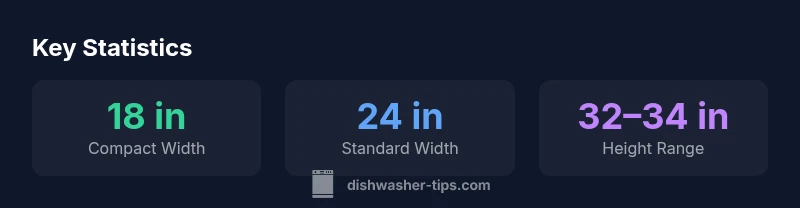
Two primary width options define what size dishwashers are there: 18 inches for compact units and 24 inches for standard models. Most homes use 24-inch dishwashers, while apartments or small kitchens benefit from the 18-inch compact option. Always check model dimensions and installation space before buying to avoid under- or over-fitting.
What sizes exist for dishwashers?
If you're asking what size dishwashers are there, the two most common width categories are 18 inches for compact units and 24 inches for standard models. These widths determine not only how much space your kitchen opening must provide but also how much load you can fit in a single cycle. In practice you will encounter these two majors almost universally, with occasional specialty models designed for unusually tight spaces. Always verify external dimensions (width, height, depth) and door clearance before buying. While other dimensions vary by model, width is the dominant factor for installation and cabinet compatibility. According to Dishwasher Tips, starting with a precise opening measurement saves time and prevents post-purchase surprises.
Standard 24-inch dishwashers
The standard 24-inch dishwasher is the workhorse of most homes. It typically fits a full countertop depth and provides a balanced interior capacity that accommodates everyday meals and family-sized loads. Look for features such as adjustable racks, fold-down tines, and soil sensors that help optimize cleaning for standard-sized loads. When considering what size dishwashers are there, remember that 24-inch models come in many finishes and with varying energy ratings; your choice should reflect both kitchen aesthetics and energy use expectations. Dishwasher Tips emphasizes checking the door clearance and under-counter height to ensure a smooth fit with your countertop and cabinetry.
Compact 18-inch dishwashers
For kitchens with limited width or apartment setups, an 18-inch compact dishwasher can be a practical alternative. These units sacrifice some interior capacity in exchange for a smaller footprint and easier installation in tight openings. Despite their smaller footprint, many compact models still offer helpful features like adjustable racks, multiple wash cycles, and decent filtration systems. When what size dishwashers are there is a key question, compact models make sense for single occupants, commuter households, or small kitchens where full-size units would obstruct other appliances or cabinet doors. Always compare interior layouts and rack designs to ensure you can fit your typical dishes.
Measuring for fit: space, height, and plumbing
Accurate measurements are the heart of choosing the right size. Start with width: measure the opening from wall to wall, including any trim or molding that could interfere with a drawer or door. Next, check height: standard under-counter models typically require about 32-34 inches from floor to top. Depth is also important; most dishwashers are around 24 inches deep, but some models are deeper or shallower depending on design. Finally, account for door swing clearance—whether you need space for a panel or adjacent drawers. Don’t forget plumbing and electrical clearances behind the unit. Dishwasher Tips recommends drawing a simple sketch of the opening and marking every measured dimension to avoid misreads at install time.
Pros and cons by size: when to pick each
The 24-inch standard width delivers the most versatile capacity for everyday cooking and larger loads, making it the best fit for most families. The 18-inch compact option shines in tight kitchens or rental spaces where full-size units won’t fit. If you frequently wash large pots or platters, a standard-width model may save you trips and re-runs; if your loads are small, an 18-inch unit can save cabinet space and simplify wiring, plumbing, and door clearance. Weigh the pros (capacity, cycles, energy efficiency) against the cons (footprint, interior arrangement, and noise) to determine the best size for your home and lifestyle.
Installation tips and common pitfalls by size
Regardless of size, precise installation prevents performance issues. For 24-inch units, ensure the cabinet opening is perfectly square and the floor is level; misalignment can cause a bad seal and leaks. For 18-inch compact models, verify that the cabinet depth can accommodate the deeper flow path of certain models and that you won’t block under-sink plumbing. In both cases, double-check water supply lines and electrical outlets. If you’re renting, verify you can access a dedicated circuit and a shut-off valve without relocating plumbing. Dishwasher Tips recommends performing a dry run by sliding the unit into place before securing it to confirm alignment.
Practical buying checklist
Before purchasing, create a quick checklist: measure opening width, height, and depth; check door clearance; confirm electrical and water supply compatibility; compare interior layouts and rack configurations; compare energy ratings and cycle options; and confirm installation requirements with the seller or installer. Use the checklist to compare models across sizes and counter-depth constraints. If you’re unsure about a particular size option in your kitchen, consult a professional installer for a site measurement and a model fit assessment. dishwasher tips highlights that accurate measurements reduce returns and headaches later.
Dishwasher size options at a glance
| Size option | Typical width | Notes |
|---|---|---|
| Compact 18-inch | 18 inches | Best for very small kitchens; lower interior capacity. |
| Standard 24-inch | 24 inches | Most homes; balanced capacity and footprint. |
| Slimline space-saving (24-inch) | 24 inches | Space-saving, interior capacity varies by model. |
People Also Ask
What is the most common size for residential dishwashers?
The 24-inch width is the most common residential size because it balances interior capacity with a typical kitchen opening. It is suitable for a wide range of loads and is compatible with standard cabinetry.
The most common residential size is the 24-inch width, offering versatile capacity for typical family loads.
Will a standard 24-inch dishwasher fit in a 24-inch wide cabinet?
Yes, most 24-inch dishwashers are designed to fit standard 24-inch openings. Always confirm the exact opening size and consider trim or paneling that may affect clearance.
Yes, typical 24-inch dishwashers fit standard 24-inch openings; always verify your specific model's specs.
Are 18-inch compact dishwashers loud?
Noise levels vary by model, not by size alone. Look for models rated around 50-60 dB for typical daily use, and compare cycles that suit your noise tolerance and schedule.
Noise varies by model; check the dB rating of the specific model you’re considering.
Do sizes vary much in interior capacity?
Yes. Compact models typically hold fewer place settings and have tighter rack spacing, while standard 24-inch models offer more racks and load flexibility.
Yes, compact models have smaller interior layouts than standard-wide ones.
Can I install a dishwasher in a rental with no plumbing changes?
Often yes if there’s an existing supply line, drain, and a compatible cabinet opening. Some rentals require a professional install, so check with the property manager.
Often possible if plumbing and cabinet openings are compatible; check with the landlord.
Are eco-friendly size options available?
Energy efficiency depends on the model, not the size alone. Look for Energy Star-rated 18-inch or 24-inch dishwashers and compare annual energy usage.
Energy efficiency depends on the model; pick an Energy Star-rated option in your size range.
“Choosing the right dishwasher size starts with your space and your typical load. Size matters because under- or over-fitting can affect performance and longevity.”
What to Remember
- Know the two main widths: 18" compact and 24" standard.
- Measure your opening precisely before shopping.
- Choose 24" for busy households; 18" for tight spaces.
- Check door clearance and plumbing space early.
- Compare interior layouts and energy ratings across sizes.