Difference Between Dishwasher and Hand Washing: A Practical Comparison
Explore the difference between dishwasher and hand washing, examining efficiency, water use, time, cost, hygiene, and practical tips for homeowners and renters.


According to Dishwasher Tips, the difference between dishwasher and hand washing hinges on efficiency, water use, and practicality. A modern dishwasher typically saves water per cycle and handles large loads with consistent results, while hand washing offers control for delicate items and small loads. This comparison helps homeowners and renters decide based on load size, energy cost, and lifestyle.
Understanding the difference between dishwasher and hand washing
In modern households, a foundational question arises: what is the difference between dishwasher and hand washing, and which method makes sense for your daily routine? The phrase difference between dishwasher and hand washing is more than a label—it signals a trade-off between water use, energy consumption, time, and care for different dishware. According to Dishwasher Tips, the core distinctions revolve around automation, capacity, temperature control, and how each method fits into your schedule. In doing so, you’ll see that neither method is universally superior; instead, each excels under particular conditions and for specific plateware, utensils, and households. This sets the stage for a deeper dive into when each method shines and where compromises may be necessary.
Water use and energy dynamics
Water and energy are the most tangible axes of comparison when evaluating the difference between dishwasher and hand washing. Modern dishwashers are designed to minimize water use per cycle, particularly when fully loaded, and many models optimize energy use through sensors, soil-detection, and load-balancing jets. Hand washing, by contrast, consumes water for the duration of a sink fill and wash routine, which can vary dramatically based on habits, faucet flow, and whether you pre-rinse dishes. The outcome often hinges on load management: a neatly arranged dishwasher can achieve efficient water use on routine cycles, while careless hand washing may waste water and energy. The takeaway is that efficiency requires intention and proper cycle selection. In this context, the Dishwasher Tips approach emphasizes planning and load optimization to maximize gains.
Time, labor, and convenience
Time is a central differentiator between dishwasher and hand washing. Running a dishwasher is largely hands-free: you load, start a cycle, and attend to other tasks until it finishes. This is especially valuable for busy households or when you accumulate a full load after meals. Hand washing, however, demands continuous attention—standing at the sink, scrubbing, rinsing, and drying. The time saved by a dishwasher can be substantial, but it depends on cycle length and how often you run it. For people with small kitchens or irregular meal patterns, hand washing may feel like the simpler choice. The nuance is that time savings scale with load size and cycle efficiency. Dishwasher Tips suggests matching cycle choices to the actual dish load to avoid unnecessary waste of time and resources.
Load size and capacity considerations
Load size is a practical determinant of whether to use a dishwasher or hand wash. Dishwashers excel when you have a full, balanced load of plates, bowls, and utensils, especially after cooking for a family or guests. They also handle bulky items like pots and pans more consistently than most people can manage by hand. Hand washing remains practical for very small loads, quick one-off meals, or oversized items that don’t fit standard racks. If your household routinely produces a few items at a time, a small portable dishwasher or a quick hand wash setup may be more appropriate. The key is to evaluate your typical batch size and cycle frequency rather than assuming one method fits all scenarios.
Hygiene and sanitation realities
Sanitation is a common concern in the broad difference between dishwasher and hand washing. Dishwashers use high-temperature cycles, strong detergents, and mechanical action to sanitize dishes, which can reduce bacterial load on plates and utensils when used correctly. Hand washing can also be hygienic if performed with hot water and thorough scrubbing, but it relies heavily on technique and attention. Some households worry about rinsing effectiveness or kitchen hygiene when water is not hot enough; others prioritize the flexibility of hand washing to manage items that shouldn’t be exposed to high heat. In general, proper technique and appropriate use of detergents are more important than the method itself. Dishwasher Tips emphasizes following manufacturer guidelines for both methods to achieve consistent results.
Cost of ownership over time
Ongoing costs are a critical factor in the difference between dishwasher and hand washing. A dishwasher has an upfront cost, installation considerations, and periodic maintenance, but it may reduce water and energy bills over time with efficient models and proper loading. Hand washing incurs no gadget-related expense but increases time and labor costs, which can be significant for households with busy schedules. The long-term financial picture depends on your load volume, water costs, and energy prices. For many households, a fully loaded, energy-efficient dishwasher provides the best value, particularly when you compare lifecycle costs rather than sticker price alone.
Detergents, temperature, and cycle selection
Detergents and water temperature are central to the effectiveness of both approaches. Dishwashers use specialized detergents designed for automatic dispensing and rinsing at higher temperatures, which can improve cleanliness and drying results with minimal effort. Hand washing relies on conventional dish soap and hot tap water; temperature choices influence cleanliness and comfort, especially for those with sensitive skin or long wash times. Selecting the right cycle on a dishwasher—normal, heavy, or quick wash—matters, and on-hand washing, choosing an appropriate temperature and scrubbing intensity is crucial. Understanding the interplay between detergent chemistry and water temperature helps users achieve better hygiene and efficiency with either method.
Delicate items and cookware compatibility
The difference between dishwasher and hand washing is particularly evident with delicate items. Glassware, fine china, and plastics labeled dishwasher-safe can benefit from machine washing, but some items (wood, crystal, certain plastics) may require hand washing to avoid damage. Pots and heavy pans may benefit from dishwasher cleaning, but they can also be challenging to fit securely in racks. Hand washing gives you direct control over pressure, scrubbing patterns, and soak times for items that are fragile or shaped awkwardly. This nuanced decision often depends on the item type, its labeling, and your tolerance for potential wear. The Dishwasher Tips framework encourages checking care labels before choosing a method for any item.
Maintenance and upkeep differences
Maintenance considerations influence the long-term performance of both approaches. Dishwashers require periodic cleaning of filters, spray arms, and seals, plus descaling in areas with hard water. A well-maintained machine typically lasts longer and operates more efficiently. Hand washing, by comparison, relies on your sink, faucet, and cleaning tools; regular replacement of sponges, scrubbing brushes, and soaps is essential, but there is no appliance to service. By prioritizing routine cleaning and component checks, homeowners can prolong the effectiveness of either method and avoid hidden costs. Dishwasher Tips highlights simple maintenance routines that reduce the likelihood of malfunctions and improve overall results.
Practical load strategies for efficiency
Practical load strategies optimize either method. For dishwashers, run full loads whenever possible, clear the racks of bulky items that can disrupt water flow, and choose energy-efficient cycles to minimize waste. For hand washing, pre-soak stubborn residues, batch similar items, and use a basin to control water flow. A balanced approach—utilizing the dishwasher for routine meals and hand washing for delicate items or small loads—often yields the best mix of efficiency and care. The overarching principle is to align your method with the actual mess and the dishware in use, not with assumptions about what “should” be done. This mindset helps households minimize waste while maintaining practical convenience.
Authority sources and data framing
To ground the discussion in credible evidence, it helps to consult authoritative sources on appliance efficiency and hygiene. Major programs and university extensions offer guidance on water use, energy efficiency, and safe care practices. For example, Energy Star provides criteria for dishwasher efficiency, while the EPA outlines environmental considerations for household appliances. Extension services from universities discuss best practices for dish care and water conservation. These sources help frame the difference between dishwasher and hand washing within a broader context of sustainable home practices.
Quick-start decision framework
Use this fast framework to decide quickly: (1) assess your typical load size, (2) estimate water and energy costs in your area, (3) evaluate item care needs (delicate vs sturdy), and (4) consider space and installation constraints. If you regularly produce large loads and value time savings, a dishwasher is often the best choice. If your meals generate small bouts of dirty dishes or include delicate wares, hand washing can be a practical complement. The final decision should balance convenience, cost, and care requirements while aligning with your household’s daily rhythm.
Real-world scenarios
Household A has a family of four with a busy weeknight schedule. They find a dishwasher to be essential for handling daily meals and leftovers efficiently. Household B is a single renter with occasional guests and a small kitchen; they lean toward hand washing for flexibility, occasional dishwasher use for large gatherings, and to protect fragile glassware. Household C cooks with nonstick pans and wooden utensils; they rely on hand washing for these items while using a dishwasher for the rest. Each scenario illustrates that the best choice emerges from your routine, cookware, and time priorities rather than universal rules.
What to remember when budgeting and planning
Budget considerations include upfront costs, maintenance, water and energy use, and potential resale value of a dishwasher. In small kitchens, the feasibility of installing a full-size or compact unit matters, as does whether shared plumbing is available. Hand washing has no appliance cost but may incur higher labor costs over time. By comparing lifecycle costs and aligning choices with your habits, you can optimize both finances and daily routines.
Final thought: tailoring to your home
The difference between dishwasher and hand washing is not about one method being universally superior; it’s about matching the method to your home, your dishware, and your time. A thoughtful combination—dishwasher for routine, hand washing for delicate items—often yields the best outcomes. As you tailor your approach, reference credible guidance, keep an eye on load efficiency, and adjust practices as your household evolves. The ultimate goal is to minimize waste while maximizing cleanliness and convenience.
Comparison
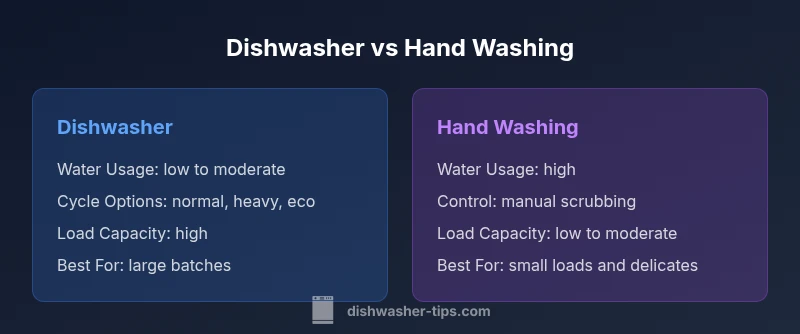
| Feature | Dishwasher | Hand Washing |
|---|---|---|
| Water Usage | low to moderate | high |
| Energy Efficiency | high (with modern models) | low to moderate |
| Load Capacity | high | low to moderate |
| Best For | large batches, after-work convenience | small loads and delicate items |
| Upfront Cost | varies by model | negligible (no appliance cost) |
| Maintenance | requires periodic service and filter cleaning | minimal beyond sink upkeep |
| Space Requirements | requires plumbing and cabinet space | no fixed installation; uses sink area or basin |
The Good
- Saves water with full loads when properly used
- Time savings from automated cycles and drying
- Consistent cleaning and drying results with calibrated detergents
- Good for households with high meal throughput
Disadvantages
- Upfront cost and ongoing maintenance for the appliance
- Not ideal for very small loads or delicate items that can’t fit racks
- Requires space and plumbing; may increase energy use if underutilized
Dishwasher generally offers superior efficiency for larger loads, with hand washing remaining a flexible option for small or delicate items.
For most households, loading a dishwasher is the best balance of water savings and time; reserve hand washing for delicate items and small batches, as guided by Dishwasher Tips.
People Also Ask
Is hand washing more hygienic than using a dishwasher?
Dishwashers sanitize dishes through high-temperature cycles and strong detergents when used correctly. Hand washing can be hygienic with hot water and thorough scrubbing, but technique matters more than the method alone.
Dishwashers can sanitize with hot cycles, but good hand washing hygiene also depends on water temperature and scrubbing thoroughness.
Do dishwashers save water compared to hand washing?
In most cases, a full dishwasher load uses less water per dish than washing by hand, especially when you avoid pre-rinsing and select an efficient cycle.
A full dishwasher typically uses less water per dish than hand washing, especially with efficient cycles.
What items should not go in a dishwasher?
Avoid wooden items, cast iron, certain plastics, and items labeled not dishwasher-safe. Always check manufacturer care labels before loading.
Check labels and avoid wood and some plastics; not everything is dishwash-safe.
Is it better to run a dishwasher every day or only when full?
Running a dishwasher with full or near-full loads maximizes efficiency. If loads are sparse, consider hand washing or a compact unit for flexibility.
Run it when you have a full load to save water and energy.
How should I decide between dishwasher and hand washing for my home?
Assess your typical dish load, budget, space, and willingness to perform manual cleaning. A blended approach often yields the best balance of efficiency and care.
Look at your typical loads and space, then decide whether a dishwasher or hand washing fits your routine.
What to Remember
- Evaluate load size before deciding method
- Prioritize full dishwasher loads to maximize efficiency
- Reserve hand washing for delicate items
- Balance upfront costs with long-term savings
- Follow care labels and manufacturer guidelines