How Many Dishwasher Sizes Are There? A Practical Buying Guide
Learn how many dishwasher sizes exist (18-inch compact, 24-inch standard, and 30-inch pro-style), how to choose based on space and needs, plus a buying checklist and real-world tips from Dishwasher Tips.


How many dishwasher sizes are there? The two main sizes are 18-inch compact and 24-inch standard, with 30-inch pro-style models available for large kitchens. Most homes fit a 24-inch built-in unit, while apartments or small spaces may use 18-inch compact models. Always measure your space, door clearance, and storage before choosing.
Size landscape: the three main widths
In North American homes, dishwashers typically come in three width categories: 18 inches (compact), 24 inches (standard), and 30 inches (pro-style or large-capacity). The 18-inch model is common in apartments, studios, or kitchens with tight floor plans, where every inch counts. The 24-inch is the default and most versatile choice, balancing capacity and footprint for the average family. The 30-inch variety targets households that routinely host gatherings or have open layouts and want extra capacity and a pro look. Not every kitchen will accommodate a 30-inch unit, especially if cabinets or plumbing run close to the opening. Drawer-style dishwashers occasionally appear in wider or specialty lines, but the vast majority of home installations revolve around the 18/24/30 scheme. According to Dishwasher Tips, understanding these width categories early in the planning process helps prevent size-related disappointments later. When comparing models, also consider internal layout: adjustable racks, third racks, and flexible tines add meaningful capacity without changing dimensions.
Measuring for the right size: space, clearance, and fit
Choosing the right size starts with precise measurements. Begin with the rough opening width, then confirm the finished width including trim. Check cabinet depth and ensure the door will swing open fully without hitting appliances or countertops. Height matters too: many built-in machines require a clearance of about 33-34 inches from floor to top of the counter, plus additional space for water lines and drainage. Don’t forget the freestanding or portable options if you’re not replacing cabinetry: these often require different floor space and a dedicated water hookup. The Dishwasher Tips team recommends measuring three dimensions (width, height, and depth) and testing door swing with a cardboard mock-up before ordering. Finally, verify installation clearance around side panels to avoid squeeze points when loading dishes.
Drawer and compact variants to consider
Drawer dishwashers, when available, offer flexible loading with a two-drawer or single-drawer configuration. They can be 24 inches wide or, in some lines, slightly narrower for niche layouts. Compact 18-inch models are particularly appealing in apartments and small kitchens where under-counter space is at a premium. While drawers can be aesthetically pleasing and sometimes more accessible, they may have different rack configurations and load capacities compared with standard front-loading models. If you’re transitioning from a standard 24-inch unit to a drawer format, plan for potential changes in detergent usage, rack height, and third-rack availability. For many households, a traditional 24-inch front-loader remains the best compromise between space and performance.
Capacity, efficiency, and real-world trade-offs by size
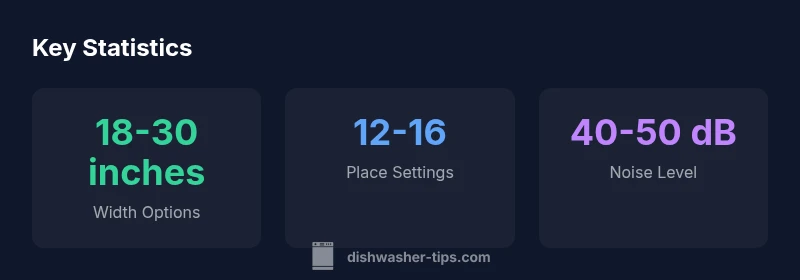
Size directly affects capacity and energy use. An 18-inch compact typically offers around 12-14 place settings and lighter loads, while a 24-inch standard often accommodates 12-16 settings with flexible rack layouts. A 30-inch pro-style model adds capacity and heavier-duty cycles but consumes more space and can be pricier. Noise levels tend to be similar across sizes, with higher-end models sometimes trading lower decibels for additional features. Efficiency is not only about size; look for ENERGY STAR ratings, soil sensors, and auto-dispensers that optimize water and energy use. If your household regularly runs full loads, a larger unit with efficient sensors can reduce overall water and electricity use per dish washed.
Practical buying checklist: size first, features second
- Map your kitchen layout and measure the opening: width, height, depth, and door swing space.
- Decide between 18-inch compact, 24-inch standard, or 30-inch pro-style based on family size, hosting needs, and cabinet depth.
- Evaluate racks and third rack options; ensure adjustable tines and fold-down shelves fit your typical dishware.
- Check installation requirements: water inlet location, drainage, and electrical needs.
- Compare energy usage and noise ratings; prioritize ENERGY STAR claims if long-term savings matter.
- Consider future needs: if you anticipate hosting more, a larger size may be worth the investment.
Size options overview
| Width (inches) | Typical capacity | Notes |
|---|---|---|
| 18 | 12-14 place settings | Compact option for small kitchens |
| 24 | 12-16 place settings | Most homes; standard size |
| 30 | 14-18 place settings | Pro-style or large kitchen |
People Also Ask
What is the most common dishwasher width?
The standard 24-inch width is the most common in residential kitchens, offering a solid balance of capacity and fit. Compact 18-inch models exist for smaller spaces, and 30-inch pro-style units serve larger kitchens with higher capacity needs.
The 24-inch width is by far the most common for homes, with 18-inch options for small spaces and 30-inch models for larger kitchens.
Can you fit an 18-inch dishwasher in a 24-inch opening?
Yes, you can fit an 18-inch unit in a 24-inch opening in many cases, but you may need trim kits or cabinet adjustments to maintain a clean, flush look and proper door clearance.
Yes, but you might need trim or minor cabinet adjustments to ensure a clean fit.
Do drawer dishwashers come in different widths?
Drawer dishwashers are typically found in standard 24-inch widths, with some compact variants depending on the model line. Always verify the exact width in the product specs.
Drawer units can vary; most are 24 inches wide, but check each model.
What factors influence the cost of different sizes?
Larger widths and pro-style features tend to raise price. Installation complexity, build quality, and energy efficiency ratings also affect the overall cost.
Size affects cost, with larger or pro-style units usually costing more, plus installation considerations.
Are 30-inch dishwashers energy efficient?
Many 30-inch models offer energy-efficient cycles and strong performance, but always check ENERGY STAR rating and insulation for long-term savings.
Yes, many 30-inch models are efficient, but verify ENERGY STAR ratings.
“Understanding size options helps homeowners optimize space, capacity, and efficiency without paying for features they won't use.”
What to Remember
- Identify the three main widths: 18-inch, 24-inch, and 30-inch.
- Measure your cabinet opening—width, height, and depth—before buying.
- Most households choose 24-inch standard for a balance of capacity and fit.
- Consider drawer or pro-style options if space and budget allow.
- Check energy efficiency and installation requirements before purchasing.