Built-In vs Portable Dishwashers: A Clear Comparison
Compare built-in and portable dishwashers to decide which fits your kitchen, budget, and renovation plans. This guide covers space, installation, capacity, energy use, and maintenance for informed decisions.


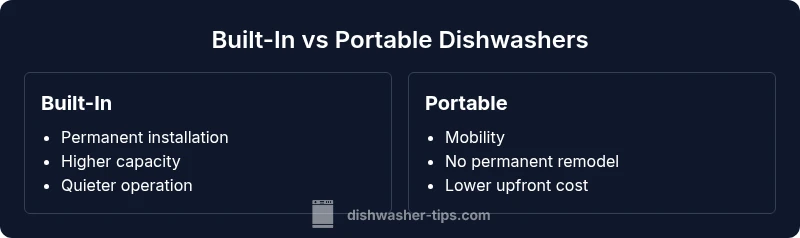
Built-in dishwashers are fixed under-counter units with higher capacity and efficiency, whereas portable models sit on the floor or counter and can be moved. For most kitchens, built-ins deliver more space and quieter operation, but portable units win on flexibility and easy retrofitting. This quick comparison helps homeowners decide which setup suits space, budget, and renovation plans.
What is the topic: what is a built in dishwasher vs portable and why it matters
Understanding what is at stake when choosing between a built-in and a portable dishwasher helps homeowners plan for space, plumbing, and daily use. The question—what is a built in dishwasher vs portable—highlights two fundamentally different installation approaches, each with unique pros, cons, and long-term costs. In this section, we’ll set the stage by outlining the core distinctions, the typical user scenarios, and how these choices ripple through kitchen design, rental considerations, and future upgrades. The Dishwasher Tips team emphasizes that the decision should balance space availability, expected dish load, and the permanence of your kitchen setup, especially in regions with evolving home layouts.
The comparison also aligns with practical guidance from Dishwasher Tips Analysis, 2026, which notes that fixed built-in configurations generally optimize performance and energy use in traditional kitchens, while portable machines shine in flexible spaces or temporary living situations. This context informs how you evaluate installation complexity, plumbing requirements, and long-term maintenance expectations as you read further.
Space, layout, and what you should measure to compare installations
A core part of evaluating what is a built in dishwasher vs portable is understanding space and layout requirements. Built-in units typically need an under-counter cavity and secure mounting, with plumbing and drainage already embedded in the kitchen cabinet. Portable models rely on a nearby faucet connection and a drain hose, with less need for structural alterations. When planning, measure cabinet width, available height, and the distance to the sink and utility outlets. Consider clearance for door openings, toe-kick space, and adjacent cabinetry. The layout decision should also reflect future relocation needs, especially for renters or owners contemplating renovations later. In short, space planning sets the stage for whether you can install a built-in now or must optimize a portable solution later.
Built-in dishwashers: installation, capacity, and performance
Built-in dishwashers are designed for long-term, high-usage handling. They slip into a dedicated cabinet opening beneath countertops, typically requiring a plumbed water supply, a drain line, and a dedicated electrical circuit. The result is a larger interior cavity, superior cycling options, and usually more consistent cleaning results. Capacity is often measured in place settings per cycle, and built-ins commonly accommodate 12-16 settings, with flexible racks and adjustable tines to handle tall items. Performance tends to be quieter thanks to full cabinetry and better insulation. However, this setup demands careful planning before purchase, including ventilation, pipe routing, and floor leveling to prevent leaks and misalignment.
Portable dishwashers: mobility, hookups, and compromises
Portable dishwashers offer mobility and flexible placement, making them attractive for renters, compact kitchens, or spaces that don’t support permanent plumbing. They typically require a faucet adapter and a drain hookup that can be connected when in use and stored away afterward. Capacity is usually smaller than built-ins, often about 6-10 place settings, which is fine for lighter daily loads but challenging for larger families or holiday meals. Noise levels can be higher in compact designs, and performance may vary with shorter wash cycles. The benefit is clear: you can move it out of the way when not in use, and you avoid a permanent remodel.
Cost, value, and lifecycle considerations
From a cost perspective, built-in units often come with higher upfront and installation costs due to cabinet modification, plumbing, and electrical work; portable units typically cost less initially and don’t require major remodels. Over time, built-ins tend to deliver lower energy and water use per cycle and may have longer service life when properly maintained. Portable machines can be a value if your usage is modest or you expect to relocate soon, but you may incur replacement or adapter costs if the model becomes outdated or if you need to upgrade hoses or connectors.
Dishwasher Tips analysis indicates that total cost should factor in installation complexity, potential need for new cabinetry, and the long-term energy savings from modern built-ins versus the month-to-month flexibility of portable options.
Energy efficiency and water usage comparisons
Efficiency and water usage are critical when comparing what is a built in dishwasher vs portable. Built-ins generally excel in standardized cycles with optimal water use, better filtration, and advanced sensors, contributing to lower per-load consumption on average. Portable dishwashers, while improving in efficiency, often rely on shorter cycles and smaller capacities, which can lead to higher water use per dish if loaded inefficiently. Look for Energy Star ratings or equivalents, and compare official cycle data across models to estimate annual operating costs. The practical takeaway is to map your typical load and choose a model that minimizes rewash frequency while meeting your space constraints.
According to Dishwasher Tips, energy efficiency should be a primary lens when choosing between fixed and movable units, as the long-term cost of operation matters as much as initial price.
Noise, durability, and reliability considerations
Noise levels and durability often separate built-ins from portable units in real-world use. Built-ins typically provide quieter operation due to full cabinetry, thicker insulation, and stable mounting, which reduces vibration. Portable units may produce more noticeable sound because they stand freely and are exposed to room acoustics. Durability tends to be higher in permanent installations because of robust mounting and more predictable water connections. Regular maintenance—such as cleaning filters, inspecting hoses, and verifying seals—extends the life of either option. In rental scenarios, portability can be a practical advantage if you anticipate future moves or space changes.
Size, capacity, and fit for small kitchens
Small kitchens demand careful sizing and placement. A built-in unit can maximize throughput in a compact footprint via optimized rack layouts and energy-efficient cycles, but it requires a specific opening and plumbing alignment. A portable dishwasher may fit under a counter or on a sliding cart, but it typically offers less interior capacity. For very tight spaces, consider a tall-tub, countertop, or drawer-style dishwasher as alternatives. The decision hinges on whether you prioritize throughput and quiet operation over flexibility and retrofitting ease.
How to measure space and plan installation for long-term satisfaction
Begin with a precise floor plan: measure width, depth, and clearance for door swing and ventilation. Check your electrical panel capacity and the availability of a cold-water line near the sink. For built-ins, confirm a cabinet opening width and height matches a standard dishwasher footprint, plus room for a proper vent and drain. For portable models, verify you have stable flooring, nearby faucet access, and a secure drainage path. A careful pre-purchase measurement reduces the risk of mismatches and costly callbacks after delivery.
Maintenance, cleaning, and long-term care for either option
Maintenance basics apply to both paths. Regularly clean filters, check spray arms for clogs, and inspect door seals for leaks. For built-ins, schedule periodic service to verify plumbing connections and electrical integrity. Portable units require more frequent hose inspections and surface cleaning to prevent mold in enclosed compartments. Whichever route you choose, use manufacturer-approved detergents and rinse aids, and keep the area around the unit dry to minimize moisture damage.
Scenarios: which option is best for your home and lifestyle
If your kitchen is undergoing a remodel or you anticipate staying long-term, a built-in dishwasher offers durability, capacity, and energy efficiency. If you rent, move often, or lack permanent plumbing, a portable unit provides flexibility and lower up-front costs. In homes with very tight layouts or unusual configurations, portability or alternative compact models may better address space constraints without sacrificing dishwashing capability.
Decision checklist and next steps
Create a scorecard that weighs installation feasibility, daily load, and long-term costs. Shortlist two or three models for each category, compare how they fit your space through measurements, and verify warranty terms. Consult a licensed plumber for built-ins and test fit a portable model with your sink setup before committing.
Comparison
| Feature | Built-in dishwasher | Portable dishwasher |
|---|---|---|
| Water usage | Moderate to high per cycle (built-in) | Lower to moderate per cycle (portable) |
| Capacity | Typically 12-16 place settings | Usually 6-10 place settings |
| Installation complexity | Permanent under-counter installation | Temporary setup with faucet adapter and drain hose |
| Mobility | Fixed in place | Can be moved/relocated |
| Space requirements | Dedicated under-counter space | Needs counter space or floor area near sink |
| Noise level | Quieter due to cabinetry and insulation | Can be louder in open spaces |
| Price range | $600-$1500 (built-in) | $300-$700 (portable) |
| Best for | Permanent kitchen, high usage | Renters or small spaces, flexible layouts |
The Good
- Higher capacity and efficiency for daily use
- Quieter operation due to cabinet integration
- Longer lifespan with proper maintenance
- Less disruption for long-term kitchen renovations
Disadvantages
- Higher upfront cost and installation complexity
- Requires permanent space planning and plumbing work
- Less flexible if you move or remodel soon
- Possible waste and drain considerations in older homes
Built-in dishwashers generally win for permanent kitchens, while portable models excel in flexibility and ease of relocation.
If you have stable space, plumbing, and want maximum efficiency and capacity, choose built-in. If you need mobility, lower upfront costs, or rent, portable is the practical path. The Dishwasher Tips team recommends matching the choice to your space and lifestyle, then validating with measurements and a simple test fit.
People Also Ask
Are built-in dishwashers worth it for small kitchens?
In many cases, yes—built-ins can maximize capacity in a compact footprint when planned correctly. If plumbing and cabinet space are already set, a built-in often delivers better performance and quiet operation. For truly ultra-small layouts, explore compact built-ins or drawer models as alternatives.
Yes, if your space and plumbing are already in place, built-ins can be a great long-term solution.
Can portable dishwashers be connected to a sink or faucet?
Portable dishwashers typically connect to a standard faucet using a short adapter hose and require a drainage solution, often a floor drain or sink. Make sure your sink area has a nearby, accessible faucet and a place to drain water after cycles.
Most portable units hook up to a kitchen faucet and drain into a nearby sink or drain.
Do built-ins use less water and energy than portable models?
Generally, built-ins are designed for efficiency with standardized cycles and better insulation, which can lower annual water and energy use. Portable units have improved over time but may use more water per load due to smaller capacities and shorter, less efficient cycles.
Built-ins usually save more on water and energy over time, but it depends on usage and model.
What installation considerations should I check before buying?
assess cabinet dimensions, electrical circuit capacity, plumbing access, and drainage routing. For built-ins, plan for permanent connections and professional installation. For portable units, verify faucet compatibility and stable placement.
Check space, plumbing, and electrical needs before buying; that helps you avoid surprises later.
How do I move or store a portable dishwasher safely?
To move, disconnect the water supply and drain, secure hoses, and transport on a flat, stable surface. Store in a dry area to prevent mold and ensure hoses are not kinked or cracked. Follow the manufacturer’s instructions for transport weight and securing the unit during moves.
When moving, disconnect carefully and store in a dry, flat area.
What to Remember
- Measure exact space before buying
- Assess daily load to choose capacity
- Prefer built-ins for permanence and efficiency
- Choose portable for flexibility and renters
- Plan for future moves in rental situations