What’s the Difference Between a Built-in Dishwasher and a Portable One
Compare built-in and portable dishwashers to decide which fits your kitchen, budget, and lifestyle. Explore installation, capacity, efficiency, and maintenance factors to help you choose confidently.


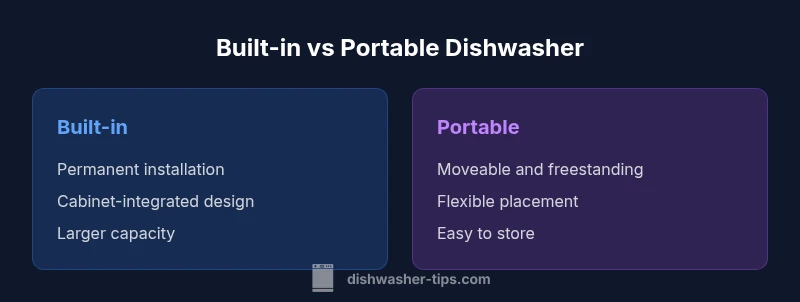
What’s the difference between a built in dishwasher and a portable one? Built-in models are permanently installed under counters and connected to a fixed water supply and drainage line, delivering consistent performance in a dedicated kitchen space. Portable models sit on the floor or counter, can be wheeled or moved to a sink, and are ideal for renters or small living spaces where permanent plumbing isn’t feasible. In short, choose built-in for permanence and efficiency, choose portable for flexibility and portability.
What's the core difference between built-in and portable dishwashers?
When comparing a built-in dishwasher to a portable model, the crucial distinction is permanence. Built-ins are designed to live in a dedicated kitchen cabinet opening, with fixed plumbing and electrical connections, while portable units are freestanding or countertop options that can be moved or stowed away. This fundamental difference drives every other consideration, from installation complexity to daily usage, noise levels, and long-term reliability. For many households, the decision hinges on whether the kitchen layout supports a permanent appliance or prioritizes flexibility for frequent moves or space constraints. Understanding this distinction—specifically how permanence versus mobility affects capacity, cycle options, and maintenance needs—helps homeowners and renters align their purchase with how they live in their space.
Installation and setup differences
Installation is the first practical hurdle that separates built-in from portable dishwashers. Built-in models require a dedicated cabinet opening, precise alignment with cabinetry, and stable hookups for hot water, cold water, and a drainage line. This often means professional installation and potential cabinetry modification, which adds to the upfront cost but yields a seamless, integrated look. Portable models, by contrast, can be placed on the floor or countertop and connected to a faucet or utility hookup via an insulated hose. They are designed for quick setup and easy relocation, making them appealing for renters or homeowners who anticipate moving rooms or apartments. The choice affects how you plan your kitchen workflow and where you have the most flexibility over time.
Size, capacity, and loading layouts
Capacity matters, especially in compact kitchens. Built-in dishwashers typically offer larger internal arrays and taller racks, designed to handle everyday family meals and heavy pots with a more efficient internal layout. Portable units vary in size and capacity; countertop models are compact and best suited for small loads, while freestanding portable units resemble full-size dishwashers but rely on external hookups. For households that regularly entertain, the interior organization—the arrangement of lower and upper racks, the presence of a third rack in some models, and the ability to accommodate tall items—will influence which option yields the best return on space. Regardless of type, consider your common dishware sizes, loading patterns, and the frequency of large pots when evaluating capacity.
Water supply and drainage considerations
Water supply and drainage are central to performance. Built-in dishwashers connect to a dedicated supply line and drain directly into the home plumbing, offering consistent water pressure and reliable draining under normal use. Portable and countertop models pull water from a faucet or a temporary supply hose and drain into the sink or a standpipe. This flexibility comes with caveats: you must manage hoses to avoid kinks, ensure the sink can handle the drain load, and consider the maximum height and gravity-based drainage in certain layouts. For frequent users, the reliability of fixed plumbing in built-ins can translate to fewer operator hassles over time.
Electrical requirements and safety
Electrical considerations are another key differentiator. Built-in units typically require a dedicated circuit with appropriate amperage, a grounded outlet, and sometimes a hard-wired connection, reflecting the long-term integration into a kitchen. Portable models often use standard 115V outlets and don’t require permanent electrical work, though some high-capacity freestanding models might still benefit from a dedicated circuit. Safety involve ensuring GFCI protection near sinks, proper cord length management without creating tripping hazards, and adherence to local electrical codes. If you rent, you may face restrictions on permanent installations, which makes portable options more viable despite potentially more frequent setup and teardown.
Performance, efficiency, and drying results
Performance varies by design and cycle options. Built-in dishwashers generally offer a wider range of cycles, deeper cleaning options, and more consistent drying due to integrated heating elements and insulated interiors. Portable units may deliver strong cleaning in compact form factors, but some models can lag on heavy loads or tall items because of smaller interior volumes or less robust drying strategies. When choosing, evaluate cycle variety, wash action (spray arms and filtration), noise levels, and energy efficiency ratings. In practice, many households find built-ins deliver superior daily reliability, while portable units excel in flexibility for seasonal kitchens or rental scenarios.
Durability, reliability, and maintenance tips
Durability hinges on build quality, components, and maintenance habits. Built-ins benefit from a stable home for their hoses and connections but require routine inspection of seals and spray arms to prevent leaks. Portable units demand careful hose care, secure placement to avoid movement during cycles, and regular cleaning of filters to sustain performance. Maintenance routines for both types include descaling in hard-water areas, periodic filter checks, and ensuring the drain hose is free of kinks. Proactive care reduces breakdowns and extends appliance life, so set a quarterly checklist that covers seals, filters, and hose condition.
Convenience factors for renters vs homeowners
Renters often prioritize mobility and cost control, so portable or countertop options shine. Homeowners, by contrast, usually benefit from the permanence and potential resale value of a built-in. Convenience factors include weekly cycle frequency, the ease of integrating with existing cabinetry, and the potential need for kitchen remodeling or plumbed-in solutions. When evaluating, consider how long you expect to stay in a given home, whether you anticipate changes to your kitchen layout, and how much you value a seamless aesthetic versus detachable flexibility.
Space planning and kitchen layout implications
The spatial footprint is a practical reality. Built-in dishwashers align with cabinetry lines for a cohesive, minimalist look and can optimize kitchen workflow when integrated with other appliances. Portable units, on the other hand, require a strategic plan for storage and movement, particularly in small kitchens or open-plan spaces where you might need to tuck the unit away between uses. Consider line-of-sight, traffic flow, proximity to the sink, and available counter or floor space. The right choice provides a smoother daily routine, minimizes clutter, and complements your overall kitchen design.
Quick-start decision checklist for choosing between built-in and portable
Use this checklist to accelerate the decision:
- Do you plan to stay in one home for several years?
- Is there a fixed cabinet opening available in your kitchen?
- Do you need a moveable unit for seasonal or rental use?
- Is external plumbing or electrical work restricted by your lease or building codes?
- Are your dishwashing needs heavy and frequent or light and occasional?
- Do you prefer a seamless kitchen aesthetic or maximum layout flexibility?
- Can your space accommodate a full-size, built-in model or must you choose a compact portable option?
- Is noise level a critical factor for living areas or open-plan spaces?
wordCount":0}],
comparisonTable_versioned_for_json_massage_placeholder_for_compatibility
prosCons_placeholder
verdictBox_placeholder
keyTakeaways_placeholder
faqSection_placeholder
Comparison
| Feature | built-in dishwasher | portable dishwasher |
|---|---|---|
| Installation and permanence | Permanent, cabinet-integrated | Freestanding or countertop, movable |
| Space and footprint | Designed to fit within cabinetry | Flexible footprint, can be stored away |
| Water supply and drainage | Fixed water line and drain | Hose-fed water supply, sink drain compatibility |
| Electrical requirements | Dedicated circuit often required | Standard outlet usually sufficient |
| Capacity and loading layout | Larger capacity with optimized racks | Smaller or variable capacity based on model |
| Mobility and relocation | Not movable without remodeling | Easy to relocate or store when not in use |
| Typical price range (qualitative) | Higher upfront cost due to installation | Lower upfront cost with installation flexibility |
| Energy efficiency and drying | Often best drying and energy use due to enclosure | Good efficiency but can vary by model and setup |
The Good
- Permanent space integration yields clean aesthetics and resale value
- Generally more consistent performance and reliability
- Long-term ownership tends to be cost-effective in high-use households
- Stable plumbing reduces leak risk with proper maintenance
- Typically higher capacity and better drying in many models
Disadvantages
- Higher upfront installation cost and potential cabinetry work
- Less flexible for renters or frequent movers
- Requires dedicated space and more permanent kitchen planning
- Remodeling or upgrading can be disruptive to existing layouts
Built-in dishwashers win on permanence and performance for long-term kitchens; portable models win on flexibility and renter-friendliness.
If you prioritize a seamless kitchen with strong, consistent washing and you expect to stay put, a built-in is the better choice. If you need movable appliances, temporary setups, or limited space, a portable model provides unmatched flexibility without a full kitchen remodel.
People Also Ask
What is the key difference between built-in and portable dishwashers?
The fundamental difference is permanence: built-ins are permanently installed under counters with fixed plumbing, while portable models are movable and plug into existing outlets. This drives installation, space planning, and long-term costs.
Built-ins stay in place with fixed hookups, while portable units move where needed and plug into a standard outlet.
Can a built-in be converted to a portable if I move?
In most cases, you cannot easily convert a built-in to a portable without significant remodeling. If flexibility is a priority, choose portable or countertop options from the start.
Converting isn’t practical; portable options are the better bet for frequent moves.
Are portable dishwashers as effective as built-ins?
Portable units can clean effectively, especially for small loads, but built-ins generally offer larger capacities and more consistent drying due to integrated heating and insulation. Consider your typical load size.
They can be very effective for smaller loads, but built-ins often perform better over time.
What should renters consider when choosing a dishwasher?
Renters should prioritize portability, ease of installation, and minimal alterations to the rental unit. Look for models that don’t require permanent plumbing and fit within available spaces.
If you’re renting, portability and no-permanent-plumbing options are key.
Do built-in models save energy and water better than portable ones?
Energy and water efficiency depend on the model and cycle selection. Built-ins often achieve strong efficiency due to enclosure and longer-term use, but high-efficiency portable models exist as well.
Energy use depends on the model and cycles you choose; both can be efficient with the right features.
What space considerations matter most when choosing?
Consider the available cabinet space, the location of the sink, and whether you have a flexible layout for a permanent installation or require a movable option that can be stored away.
Space and layout determine whether a built-in or portable unit makes the most sense.
What to Remember
- Choose built-in for permanence and reliability
- Pick portable for renters or space-constrained kitchens
- Assess plumbing and electrical feasibility before buying
- Evaluate capacity and rack layout for your meal patterns
- Plan space carefully to avoid workflow bottlenecks