Dishwasher vs Built-In Dishwasher: A Side-by-Side Guide
Comprehensive, evidence-based comparison of built-in vs portable dishwashers, covering installation, space, capacity, efficiency, and ownership to help homeowners choose the right model.


When comparing dishwasher vs built in dishwasher, the choice is between a built-in model and portable/freestanding options. In most homes, built-ins offer greater capacity, better water and energy efficiency, and a seamless look, while portable models provide flexible placement and easier relocation. In short, dishwasher vs built-in dishwasher: built-ins excel long-term value; portable options win on flexibility and installation speed.
Core differences in design and installation
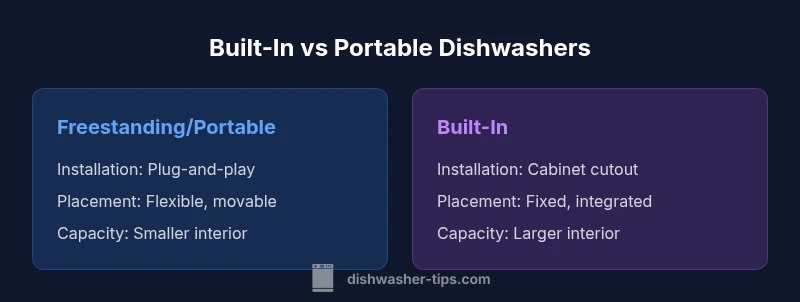
When you start comparing dishwasher vs built in dishwasher, the fundamental distinction is where the appliance lives in your kitchen and how it's connected to plumbing. Built-in models are designed to disappear into cabinetry, with a fixed 24-inch width standard in most homes, a recessed toe-kick, and a direct under-counter mounting. A freestanding or portable unit, by contrast, sits on the floor and can be moved or rolled into place, often requiring only a water supply and a drain hose. The practical effect is permanence versus flexibility. According to Dishwasher Tips, homeowners who plan to stay in one kitchen for several years typically prefer built-ins for a clean, integrated look and optimized performance, while renters or homeowners with limited space may value portability and the ability to relocate as needs change. In this sense, performance and reliability are closely tied to installation context: built-ins are often tuned to kitchen hydraulics and spray patterns for uniform cleaning, whereas portable units can struggle with tight corners or nonstandard cabinet configurations unless carefully chosen. The choice should be guided by your space, lifestyle, and tolerance for potential remodeling during upgrades. As you compare dishwasher vs built in dishwasher, consider how each option maximizes your kitchen’s layout, your daily routines, and your long-term plans for home improvement.
Space and layout considerations
Kitchen space and cabinet layout heavily influence the dishwasher vs built in dishwasher decision. Built-in models assume a dedicated cabinet cutout, with a standard width that aligns with other base cabinets and a depth that matches standard countertops. They integrate with the surrounding cabinetry, creating a seamless aesthetic and potentially improving resale appeal. Portable units, including freestanding 18-inch or 24-inch columns, offer flexibility for apartments, tiny kitchens, or rooms lacking a permanent plumbing drop. They also allow you to relocate the appliance to the sink or away from heavy traffic areas when entertaining. In practice, measure door clearance, toe-kick space, and access to the sink for drainage. The Dishwasher Tips team sees many households underutilize space because they attempt to fit a built-in into a nonstandard cabinet, leading to awkward gaps or insufficient air flow. If you expect frequent changes in housing or room reconfigurations, a portable solution can be a practical hedge against long-term rigidity. However, if your kitchen is designed around a built-in appliance, you may gain more efficient use of space and a more stable installation that reduces vibration during cycles.
Capacity and loading flexibility
Capacity is a central factor in the dishwasher vs built in dishwasher discussion. Built-in units typically offer a full-sized interior with flexible rack systems, allowing you to load heavy pots and tall glasses without compromising other dishes. This tends to translate into better real-world load efficiency and fewer pre-rinse cycles. Freestanding or countertop dishwashers generally provide smaller interior volumes and sometimes more limited rack configuration options. They can be excellent for daily singles or small households but may require more strategic loading to avoid washing loads in multiple cycles. In addition, built-in models often incorporate deeper basins and optimized spray arms, which improve water distribution and cleaning performance without significantly increasing cycle times. If you regularly entertain or have large families, the built-in option is more likely to handle mixed loads with less rearrangement. If your household uses a compact kitchen or rents, a portable model can still deliver solid cleaning results while preserving flexibility for future housing changes. Overall, balance typical load size, frequency, and whether you prefer a one-and-done purchase or a more modular approach to dish care.
Performance and reliability: cleaning quality and cycles
Performance is not just about cleaning power; it includes energy and water efficiency, cycle options, and sound levels. Built-in dishwashers often come with more efficient spray patterns and insulation that reduce energy use and noise, while some portable models have competitive efficiency but may lag behind optimized built-ins in multi-load scenarios. The range of cycle options—heavy, normal, quick, sanitize—appears in both categories, but the real-world impact depends on insulation and motor design. From an analytical perspective, the dishwasher vs built in dishwasher debate tends to favor built-ins for consistent performance across varied loads because of better water flow and balanced hydraulics. Yet modern freestanding machines increasingly emulate these efficiencies with advanced sensors and better insulation. If quiet operation matters in an open-plan home, verify decibel ratings and install options before purchase. The Dishwasher Tips analysis suggests prioritizing models with good soil sensors, efficient motors, and high-quality seals to maximize long-term savings.
Efficiency, cycles, and performance (continued)
When selecting, look beyond flashy features to the core efficiency drivers: soil sensing accuracy, water temperature control, and the quality of seals that prevent leaks. Built-in units often deliver superior performance in sanitize cycles and consistent wash quality across different loads due to solid water distribution and chamber design. Portable models are catching up with better insulation and smarter sensors, but the design constraints of a compact interior can still limit peak performance for heavily soiled cookware. For most households, the best approach is to compare models within your chosen category for energy efficiency ratings and real-world cycle times, then triangulate with user reviews for common load types. The Dishwasher Tips team emphasizes testing in your own kitchen where possible to verify that your chosen model performs as expected under typical daily use.
Installation and plumbing realities
A major practical difference between dishwasher vs built in dishwasher is installation complexity. Built-ins require a cabinet cutout, secure mounting brackets, a water inlet, and a drain connection that aligns with the home plumbing. They often involve professional installation, cabinetry modification, and possibly a dedicated electrical circuit. For renters or DIY-savvy homeowners, portable or countertop dishwashers offer plug-and-play convenience and minimal disruption, which can be a decisive factor if you expect to move soon. However, portable units still require a drainage solution and a reasonably level surface, and some models need external water hookups or adapters. The trade-off is clear: the built-in provides a clean, stable, and efficient platform but with higher initial time and cost commitments, while portable options deliver rapid deployment at the expense of permanence and aesthetic integration. Always check floor compatibility, ventilation (if any), and alignment with your sink’s drainage, since improper installation can lead to leaks or poor performance. According to Dishwasher Tips, choosing the correct installation path is as important as choosing the right model.
Maintenance, reliability, and lifecycle costs
Maintenance needs and long-term costs are essential for the dishwasher vs built in dishwasher decision. Built-ins tend to have more durable fittings, easier external access for cleaning spray arms, and longer service lifespans because they are designed for heavy use and consistent load patterns. They also benefit from better seal design and insulation, which can contribute to lower energy bills and quieter operation over time. Portable and countertop dishwashers often have simpler internals and can be easier and cheaper to service in the short run, but their shorter expected lifespans and higher per-cycle wear may balance out with frequent moves or mid-life upgrades. If you are price-conscious, consider the total cost of ownership: purchase price, energy consumption, repair parts availability, and the frequency of replacements. The Dishwasher Tips team emphasizes lifecycle thinking—rather than just upfront price—helps homeowners understand the real value of built-in vs portable options. A well-maintained built-in can outlast multiple moves, while a compact unit may serve well for renters in short-term housing.
Real-world usage and maintenance tips
In daily use, the dishwasher vs built in dishwasher question becomes practical. Built-ins tend to offer more stable installation, easier load management, and fewer rearrangements during busy weeks. For households that frequently host gatherings, the built-in option can simplify cleanup workflows and ensure a consistent performance across heavy pans and glassware. Portable units can be positioned closer to the sink during heavy-use days, which minimizes hose lengths and reduces clutter, but you may deal with longer hoses that restrict storage space or require extra drain connections. Maintenance tips apply to both: regularly clean filter screens, inspect seals for wear, and monitor spray arms for clogs. Choosing energy-efficient models with good soil sensors can help keep operating costs predictable. The Dishwasher Tips analysis indicates that proactive maintenance can preserve performance longer, especially for portable models that experience more frequent re-installation or movement.
Decision framework: which option fits your lifestyle?
How to choose now: a pragmatic plan
If you are torn between dishwasher vs built in dishwasher, start with a pragmatic plan. List your must-haves: capacity, energy efficiency, noise, and installation constraints. Assess your housing situation: permanent home vs rental, potential remodeling costs, and whether cabinetry changes are feasible. Visit showrooms to compare door alignment, rack flexibility, and wash performance on common dish loads. Use energy labels to compare efficiency and consider total cost of ownership over 5–10 years. For most households, built-in units deliver the best mix of performance, durability, and aesthetic integration, unless flexibility or mobility is your top priority. The Dishwasher Tips team recommends using a deliberate, data-informed approach instead of chasing the latest features.
Comparison
| Feature | Freestanding/Portable Dishwasher | Built-in Dishwasher |
|---|---|---|
| Installation | Plug-and-play/freestanding setup; requires sink access for drain | Requires cabinet cutout and secure mounting; professional installation often recommended |
| Size & Capacity | Typically smaller footprint; 18-inch portable options available | Standard 24-inch width with larger interior capacity |
| Water usage & Efficiency | Varies by model; often efficient but not always optimized for heavy loads | Typically better optimized for efficiency with advanced insulation |
| Noise Level | Can be louder in compact designs; some models are quiet but generally louder | Quiet operation common in modern built-ins |
| Best For | Renters or spaces needing mobility | Households seeking long-term value and integrated kitchen |
| Price Range | Lower upfront cost for portable models | Higher upfront cost but better long-term value |
The Good
- Lower upfront cost for portable/freestanding units
- Flexible placement and mobility for renters
- Quicker installation without cabinetry work
- Wide availability and simpler repair paths
Disadvantages
- Higher long-term cost and less integration for portable
- Lower capacity and less efficient space use
- Potentially more water/energy use per cycle for some models
- Requires sink access and drain setup for portable models
Built-in dishwashers generally offer better long-term value and seamless kitchen integration.
For most homes, built-ins provide the best balance of capacity, efficiency, and aesthetics. Choose portable if you need flexibility and quick deployment, especially in rental scenarios.
People Also Ask
What is the main difference between a built-in dishwasher and a freestanding one?
The built-in is designed to be integrated into cabinetry with a permanent installation, while a freestanding or portable model sits freely and can be moved. The main trade-offs are permanence, capacity, and integration with the kitchen. In most cases, built-ins offer better efficiency and a cleaner look.
Built-ins are fixed in place and integrated into cabinetry, while freestanding units are portable and easier to move.
Can a countertop or portable dishwasher handle heavy loads?
Portable dishwashers can handle everyday loads well, but they often struggle with very large pots or dense stacks compared with a full-size built-in. If you regularly cook for many people, built-ins tend to be more reliable for heavy duties.
They work for daily dishes, but big pots may fit better in a built-in.
Is installation by a pro required for built-in dishwashers?
Most built-ins require professional installation, including cabinet cuts, secure mounting, and proper plumbing connections. If you’re renting or remodeling, factor in installation time and costs when choosing.
Most built-ins need a pro for proper install.
Which is better for renters?
For renters, portable or countertop models are usually best due to their mobility and minimal installation. If the renter plans to eventually stay long-term, a freestanding option can still be a strong interim solution.
Renters should lean portable or countertop models.
Do built-ins save water and energy?
Built-ins often provide more efficient water use and better insulation, which can translate to lower operating costs over time. However, energy efficiency depends on model design and user habits across both categories.
Built-ins can save water and energy over time if well chosen.
What should I consider if I plan to move soon?
If you plan to move soon, portability and non-permanent installation are key. A freestanding unit can be relocated with less effort, while a built-in may require disassembly and potential cabinetry changes before moving.
If you’re moving, portability matters.
What to Remember
- Prioritize built-ins for long-term value and fixed kitchen design
- Choose portable for renters or spaces requiring mobility
- Check space, plumbing, and door clearance before buying
- Compare energy efficiency and noise ratings across models
- Consider total cost of ownership, not just purchase price