Why Use a Bottle Washer Instead of a Dishwasher
Explore when to choose a dedicated bottle washer over a standard dishwasher, focusing on bottle-centric cleaning, efficiency, and practical decision factors for homes and small kitchens.


For households with a heavy emphasis on bottles, baby gear, and narrow-neck items, a bottle washer often outperforms a standard dishwasher for targeted cleaning. It specializes in bottle-centric loads, delivers thorough sanitation for small parts, and can be more energy- and water-efficient when your daily cycles mostly involve bottles. If your typical load is bottle-heavy rather than dishware-heavy, a bottle washer is usually the smarter choice.
Why bottle washers matter for bottle-centric cleaning
When you ask, why use a bottle washer instead of dishwasher, the key answer revolves around load composition and targeted cleaning. A dedicated bottle washer is designed to handle baby bottles, sippy cups, sports bottles, and other narrow-neck items with specialized racks and jets that reach into the neck and base where residue tends to accumulate. In many households, a significant portion of the daily wash consists of bottles and small parts, making a bottle washer more efficient and effective than a conventional dishwasher. According to Dishwasher Tips, homeowners often see meaningful savings in both time and water when their routine comprises mostly bottle-cleaning tasks. This is especially true for families with infants, athletes, or hobbyists who rely on multiple bottles per day. If you frequently clean items that won’t fit well in a standard rack, a bottle washer can transform the cleaning workflow and reduce the need for hand scrubbing. The benefit is not just convenience; it’s also a meaningful hygiene improvement for items that contact food and liquids daily. Finally, the decision hinges on space, budget, and how many bottles you need to clean on a weekly basis.
Top design differences: bottle washers vs standard dishwashers
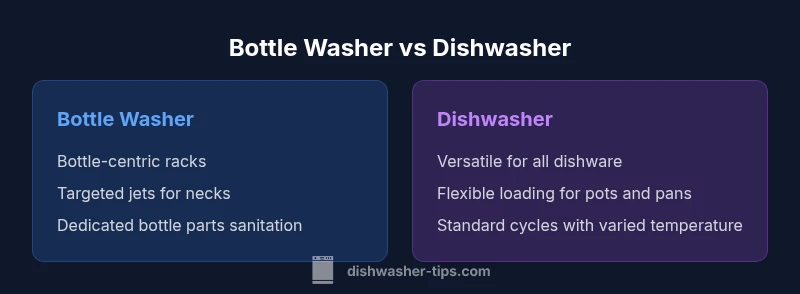
Bottle washers and standard dishwashers diverge in several core areas that matter to daily use. First, bottle washers offer bottle-centric racks, neck adapters, and spray arms calibrated to wash narrow openings without tipping or snagging. This design minimizes missed spots around the neck and reduces hand-scrubbing time. In contrast, traditional dishwashers optimize for flatware, bowls, and larger plates. Their racks can be difficult to configure for bottles, and some models struggle to reach the interior of long-stemmed items. Second, bottle washers often provide dedicated drying or air-drying cycles tailored to small plastics and silicone parts that can warp or retain heat when exposed to high heat in a standard dishwasher. Finally, the filtration and pump design in bottle washers focuses on preventing clogging from detergents and milk residues common in bottle washing. These differences influence not just cleanliness but also cycle duration and energy use. The practical takeaway is that for bottle-heavy households, the specialized hardware makes a bigger difference than upgrading to a generic dishwasher that happens to wash bottles occasionally.
Cleaning performance for bottles and tiny parts
Bottles and tiny caps demand precise jet angles, softened water contact with minimal turbulence, and adapters that fit small openings without sloshing. A purpose-built bottle washer excels at tongue-cleaning, nipple systems, and straw cleaning through targeted jets, soak cycles, and adjustable racks. With the right detergent and a properly arranged load, residue on bottle interiors, threads, and nipples is significantly reduced compared to a standard dishwasher. For many families, this means less pre-rinse and less manual scrubbing after the wash. However, dishware remains important too, and in mixed-use households, you’ll want models that offer flexible loading for non-bottle items. In short, bottle washers are designed to maximize interior bottle cleanliness, while dishwashers deliver overall tableware sanitation. Your choice should align with the heaviest component of your typical load and whether you value bottle-specific performance over all-around versatility.
Energy and water usage: what to expect
Energy and water efficiency often depends on load size and cycle selection. Bottle washers can be highly efficient when used for frequent, bottle-centric cycles, as they avoid wasteful pre-rinse activities and run shorter cycles tailored to small items. Some models emphasize low water consumption per bottle, leveraging compact spray patterns and targeted nozzles to reduce total water use. On the other hand, standard dishwashers are optimized for larger, mixed loads. When your washing pattern is bottle-heavy, running a larger dishwasher at full capacity can be less efficient than a dedicated unit, because you’re paying for energy to heat and circulate water that isn’t being used for other types of dishes. In all cases, look for energy guides and cycle options that allow you to tailor consumption to your exact needs. As Dishwasher Tips notes, small households benefit most from optimizing cycles for the dominant item type, rather than forcing a single machine to handle everything.
Hygiene considerations and sanitization claims
Hygiene is a central concern when cleaning infant gear, water bottles, or medical equipment. Bottle washers often advertise enhanced sanitation options, such as higher-temperature rinse cycles or extended sanitizing phases designed for narrow items. These features can provide an extra margin of safety for items that come into contact with food and liquids. A strong advantage of bottle washers is the reduced risk of cross-contamination between bottle components and other dinnerware, thanks to dedicated compartments and separate rinsing channels. Yet, hygiene claims vary by model, so it’s important to review cycle temperatures, drying methods, and certifications. If you depend on the highest level of sanitization for bottles and nipples, verify the machine’s sanitation ratings and ensure detergents are compatible with your materials. Dishwasher Tips emphasizes checking for NSF/ANSI sanitation compatibility where relevant and validating whether cycles truly reach the recommended temperatures for your application.
Size, capacity, and space considerations in small kitchens
One practical constraint is space. Bottle washers typically occupy a footprint similar to compact dishwashers but with layouts optimized for bottle racks. When evaluating dimensions, consider the height clearance for adding taller bottle shelves and the ability to rearrange racks for long-nosed bottles. If you rent or have a small kitchen, travel-time and installation requirements matter: some bottle washers plug into standard outlets and require minimal plumbing, while others may demand more permanent connections. Additionally, consider the daily workload: if you usually wash dozens of bottles but only a few dishes, a dedicated bottle washer can be surprisingly space-efficient and more convenient than a standard, heavier dishwasher. In limited kitchens, modular units or drawer-style bottle washers can provide compact options without sacrificing accessibility for other tasks.
Detergent chemistry and compatibility
Bottle washers benefit from detergents designed for plastics and silicone. Some formulas are gentler on bottle materials while still delivering effective cleaning of milk residues and sweetened beverages. Always check whether detergents are compatible with your bottle materials, nipples, caps, and seals. A major advantage of a bottle-focused setup is the ability to use smaller quantities of detergent per cycle, reducing chemical exposure for sensitive items. For mixed-use dishwashers, manufacturers often caution about potential residue on plastic parts and the need for frequent wiping of bottle interiors. If you regularly clean a mix of bottles and tableware, you’ll need to balance detergent choices to avoid film on lids and valve openings while maintaining overall cleanliness. Dishwasher Tips recommends testing a few detergents to determine which provides the best bottle cleanliness without harming plastics.
Practical scenarios: baby care, sports bottles, and more
In households with infants, the daily demand for bottle washing is high, making a bottle washer particularly attractive. For sports enthusiasts, many bottles are made of hard plastics and stainless steel that require careful cleaning to remove sugar, electrolyte residues, or odor-causing compounds. A dedicated bottle washer can reduce scrubbing time and help you maintain hygienic gear for longer. Conversely, households that frequently entertain and have a wide range of cookware and dishware may prefer a traditional dishwasher for its broad versatility. The right choice depends on your daily rhythm, the proportion of bottle-related items, and how much flexibility you need for non-bottle loads. Real-world testing shows that bottle washers can deliver superior interior cleanliness for bottles, while dishwashers excel at handling plates, pans, and glassware on larger cycles.
Cost of ownership and return on investment
Upfront costs for bottle washers can be higher than entry-level dishwashers, particularly for models with premium bottle-accessories or specialized racks. Over time, the per-cycle cost often decreases when you factor in reduced pre-rinse effort and lower detergent usage. Return on investment depends on your load composition: households with frequent bottle washing typically recoup costs faster through time savings and improved sanitation, while mixed-use kitchens may see a slower payback. When evaluating, consider not only purchase price but also installation requirements, service availability, and warranty terms. If you expect to maintain bottle-centric routines for years, a bottle washer can offer a favorable long-term ROI according to Dishwasher Tips analyses and real-world user feedback.
How to install and set up a bottle washer
Installation typically requires a dedicated electrical outlet and a stable water supply, with some models requiring a drain hookup. Start by measuring the available space and confirming venting and drainage compatibility. Install the racks according to the user manual, then run a test cycle with a non-critical load to verify proper water distribution and drying. Pay attention to bottle orientation and ensure caps, nipples, and seals are accessible for effective cleaning. If you’re replacing an existing dishwasher, consult a professional about securing the new unit, drainage routing, and any required electrical adjustments. A well-placed bottle washer will simplify daily routines and reduce the need for hand-cleaning on bottles and accessories.
Maintenance tips to keep performance high
Regular maintenance ensures the bottle washer keeps delivering optimal results. Clean spray arms and filters to prevent clogs, inspect gaskets for wear, and check that shelves and adapters remain properly seated. Use manufacturer-recommended detergents and softeners, and avoid harsh chemicals that could degrade plastic components. Periodically run a cleaning cycle with a rinse aid to prevent water spots on glassware and plastics. If you notice reduced cleaning performance or unusual noises, consult the user manual for troubleshooting steps or contact customer support. Keeping a simple maintenance routine will extend the life of the unit and preserve its bottle-centric effectiveness.
Summary: choosing the right appliance for your situation
The decision to use a bottle washer instead of a dishwasher hinges on your load profile, space, and hygiene priorities. Bottle-centric households benefit from the specialized design, enhanced bottle interiors cleaning, and potential energy savings. Mixed-use homes should weigh the convenience of a traditional dishwasher against the added efficiency of a bottle-focused unit for frequent bottle washing. The key is to map out your typicalcycles, assess the proportion of bottle-related items, and then choose a model that aligns with your daily workflow. The Dishwasher Tips team notes that the best choice often combines both approaches: a bottle washer for bottle-centric tasks alongside a conventional dishwasher for general dishware needs. This dual-setup delivers targeted performance where it matters most while preserving overall kitchen functionality.
Comparison
| Feature | Bottle Washer | Dishwasher |
|---|---|---|
| Targeted cleaning for bottles and small parts | Excellent with bottle-centric racks and jets | Good but less specialized for necks and small parts |
| Neck access and bottle-specific racks | Dedicated bottle racks and adapters | Limited bottle-specific access in standard racks |
| Water usage per cycle | Typically lower per bottle-heavy cycle | Higher for mixed loads and larger cycles |
| Energy efficiency | High efficiency on bottle-focused cycles | Varies by model; often optimized for larger loads |
| Detergent compatibility | Optimized for plastics and silicone residues | Designed for general dishware detergents |
| Best for | Bottle-centric routines (baby gear, sport bottles) | General dishware with mixed items |
| Upfront cost | Typically higher for bottle-centric units | Lower for standard dishwashers |
| Maintenance frequency | Regular bottle-system checks; simple upkeep | General maintenance for dishwashers; broader parts |
The Good
- Better bottle-specific cleaning and sanitization
- Reduces cross-contamination risk for baby gear
- Potentially lower per-cycle water use for bottle loads
- Faster turnaround for bottle-heavy households
- Less pre-rinse required for bottles
Disadvantages
- Higher upfront cost than entry-level dishwashers
- Limited capacity for non-bottle items in single cycles
- Less versatile for diverse cookware loads
- Requires dedicated space and potential installation considerations
Choose a bottle washer when bottle-centric cleaning dominates your routine; opt for a traditional dishwasher if you regularly wash a wide range of dishware.
If most of your loads are bottles and small parts, a bottle washer offers superior bottle cleaning, hygiene, and potential efficiency gains. For households with varied cookware and tableware, a standard dishwasher remains more versatile, with the option to use bottle-specific cycles when available.
People Also Ask
What is a bottle washer and how does it differ from a dishwasher?
A bottle washer is a specialized appliance designed for cleaning bottles, nipples, caps, and small parts with targeted jets and racks. It emphasizes bottle interior cleanliness and gentle handling of plastics. In contrast, a standard dishwasher is built for a wide range of dishware and relies on adjustable racks to accommodate different items, but may not clean bottle interiors as effectively.
A bottle washer cleans bottles with specialized racks and jets, while a standard dishwasher handles plates and bowls with general cycles.
When should I choose a bottle washer over a dishwasher?
Choose a bottle washer if your daily routine revolves around bottles, nipples, and small parts. It offers superior bottle interior cleaning and reduces manual scrubbing. If you need to wash a wide variety of cookware and tableware, a traditional dishwasher provides more versatility.
Pick a bottle washer if bottles are your main wash; pick a dishwasher for mixed dishware.
Are bottle washers more energy-efficient?
Energy efficiency depends on load size and cycle selection. Bottle washers can be very efficient for bottle-heavy cycles, especially when designed to minimize water use per bottle. Compare models’ energy guides and cycle options to determine which offers lower consumption for your typical loads.
They can be, especially if you mostly wash bottles and use targeted cycles.
Can a bottle washer handle other kitchen items?
Yes, many bottle washers offer adjustable racks or modes that accommodate small utensils and certain cups. However, they are not as versatile as standard dishwashers for large pots, pans, and bulk dinnerware. Check the manufacturer’s loading guidelines to avoid crowding and ensure thorough cleaning.
Some can handle small items, but they’re not as versatile as full-size dishwashers.
What maintenance is required for bottle washers?
Regular maintenance includes cleaning spray arms, filters, and gaskets, and inspecting racks for wear. Use compatible detergents and run occasional cleaning cycles to prevent buildup. If performance declines, consult the manual or support resources for troubleshooting steps.
Keep spray arms clean, check gaskets, and use the right detergent.
What to Remember
- Assess your daily load: bottle-heavy vs mixed loads
- Consider upfront cost against long-term savings
- Check rack configurations for neck access
- Factor in space and installation needs
- Verify sanitation standards and detergent compatibility