Dishwasher vs Bottle Sterilizer: An In-Depth Comparison
Compare dishwasher vs bottle sterilizer to decide which method best fits your home. This detailed guide covers hygiene, efficiency, costs, and tips for households with baby bottles.


Defining the Comparison: dishwasher vs bottle sterilizer
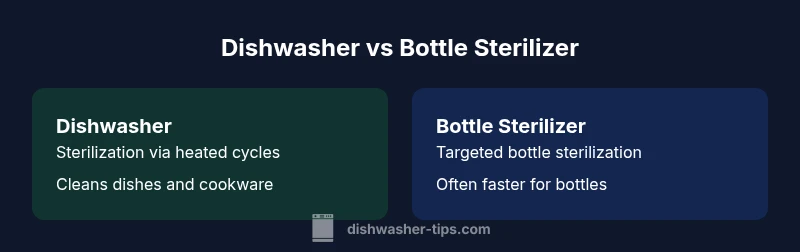
Choosing between a dishwasher and a bottle sterilizer hinges on distinguishing a broad sanitation tool from a targeted hygiene device. A standard dishwasher cleans general kitchenware using high-temperature cycles and rinse agents, effectively sanitizing dishes, pots, and utensils. A bottle sterilizer, by contrast, is designed specifically for baby bottles, nipples, rings, and small parts, employing rapid sterilization cycles that minimize handling and potential contamination. According to Dishwasher Tips, the core question is how often you need bottle-specific sterilization versus overall kitchen hygiene, and how much space you can allocate in your kitchen. Understanding these roles helps households tailor a solution that maximizes hygiene while minimizing clutter and energy use.
In practice, many homes blend both approaches: a dishwasher handles ordinary dishware, while a compact bottle sterilizer covers daily bottle cleaning and quick sanitization of feeding gear. This blended approach can balance throughput, space, and energy costs without forcing a single appliance to shoulder everything. The decision often comes down to bottle volume, cycle speed requirements, and whether you value centralization of cleaning tasks over dedicated bottle sanitation.
For families with high bottle usage, a dedicated sterilizer’s design focus on bottle geometry and part accessibility can reduce dead zones where bacteria might linger. For others, the dishwasher’s versatility offers a simpler setup, especially in kitchens where space is constrained. The trade-offs include cycle duration, energy impact per cycle, and whether you prefer a single machine or a two-appliance workflow. The practical takeaway: map your daily tasks and choose an approach that minimizes extra chores while maximizing predictable hygiene outcomes.