Can You Get Dishwasher Powder? A Practical Guide
Explore whether you can get dishwasher powder, how it compares to pods, proper dosing, storage, and troubleshooting tips. This guide from Dishwasher Tips helps homeowners choose the right detergent and achieve spotless dishes.


Can you get dishwasher powder? Yes. The Dishwasher Tips team confirms that dishwasher powder is widely available and compatible with most modern machines. This quick answer previews a detailed guide on choosing between powders and pods, how to dose correctly, and signs that your detergent setup needs adjustment. If you're troubleshooting, this page will help you optimize cleaning performance with powder detergents.
Can You Find Dishwasher Powder Today?
According to Dishwasher Tips, powder detergents remain a common choice for many households. If you ask, 'can you get dishwasher powder', the answer is yes in most home improvement stores, grocery aisles, and online retailers. Powder formats are especially ample in regions with hard water because they often include water-softening boosters. This section explains where to look for reliable brands, what to check on the label, and how powder availability can vary by region. Consumers should pay attention to packaging integrity and to the recommended dosage on the label. For renters and homeowners, this matters: consistent supply prevents improvisation with alternative products, which can compromise results.
Powder detergents are not a niche product; they form a core part of many households’ dishwashing routines. In practice, you’ll find several reputable brands offering a powder option with clear instructions. This is where brand reliability becomes important. The Dishwasher Tips team notes that a well-stocked kitchen with a reliable powder brand reduces last-minute shopping trips and helps you avoid mixing detergents that could cause suds or residue issues.
How Powder Detergents Work in Dishwashers
Powder detergents dissolve in hot wash water, releasing surfactants that lift grease and food particles from dishes. The powder composition often includes builders that soften minerals and additives that help emulsify fats. In modern dishwashers, the wash cycle uses precise water temperatures and spray patterns, allowing powder to disperse efficiently. When used correctly, powder detergents can yield bright plates and sparkling glassware, especially if you choose a formula designed for hard water or HE cycles. One practical note: avoid pre-wetting powder with water in the dispenser, which can cause clumping and under-dosing. This section also discusses how formulation differences (low-foaming for HE machines) affect performance.
Powder vs Pods: Choosing the Right Detergent
Powder and pods both clean effectively, but they behave differently in practice. Powders give you control over dosage per load, can be cost-effective per use, and often include cleaning boosters for mineral-heavy water. Pods offer convenience and consistent dosing but can be pricier and sometimes underperform on heavily soiled loads if the cycle chosen isn’t optimal. Brand reliability matters here: not all pods work equally well with every model. The Dishwasher Tips team recommends trying both formats in a few loads to see which yields better results for your kitchen and water conditions.
Dosing Guidelines for Dishwasher Powder
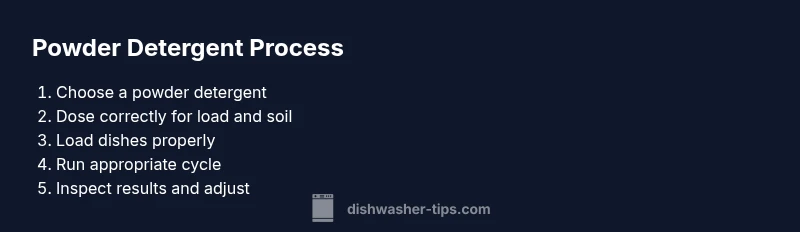
Dosing powder correctly is crucial for optimal cleaning and avoiding residue. Always follow the package directions, and adjust for soil level and water hardness. For light loads or quick cycles, use a lighter dose; for heavy soils, increase the dose slightly. If you have very hard water, consider a formula with water-softening boosters or add a rinse aid to prevent filming. It’s best to keep powder in a dry, cool place to avoid clumping; reseal after each use. The goal is a clean cycle with minimal buildup on glassware and dish surfaces.
Proper Loading Techniques for Powder Detergents
To maximize powder performance, load dishes properly so water can circulate freely. Place heavily soiled items facing the spray nozzles, and avoid blocking the detergent dispenser with oversized objects. For the detergent cup, ensure the cup door is dry and free of obstructions before adding powder. Some users find it helps to run a pre-wash or short cycle to dissolve powder thoroughly on heavily soiled dishes. A well-loaded dishwasher reduces the risk of powder not dissolving completely and leaving residues.
Storage, Shelf Life, and Safety for Powder Detergents
Store powder detergent in a cool, dry place away from moisture, sunlight, and chemicals that could degrade the formula. Seal the container tightly after each use to prevent clumping. Check the expiry date on the package; even if a powder is older, it may perform well if kept dry, but efficacy declines if exposed to moisture. Keep detergents out of reach of children and pets, and never transfer the powder to an unmarked container. Good storage practices help prevent clumping and maintain formula stability.
Troubleshooting Powder Detergent Performance
If dishes come out with spots, filming, or cloudy glassware, review your dosing and loading. Overdosing can leave residue, while underdosing leads to poor cleaning. In some cases, rinse aid usage or water-hardness adjustments may be necessary. Run a maintenance wash with a cleaning solution to remove any buildup in the dishwasher tub, and consider a cycle with hotter water to improve detergent attack on cooked-on residue. The goal is consistent, reliable results across a range of loads.
Quick Reference: Powder Cleaning Tips
- Always read the label and adhere to recommended dosing guidelines.
- Avoid mixing detergents; use a single powder formula that’s compatible with your dishwasher model.
- If you have hard water, select a formula with mineral-softening boosters.
- Store powder in a dry place; prevent moisture contact to avoid clumping.
Tools & Materials
- Dishwasher detergent powder(Powder form; keep in original packaging; reseal after use.)
- Measuring scoop or provided cup(Use exact scoop size for consistent dosing.)
- Periodically test water hardness(In hard water areas, consider a water hardness test strip.)
- Soft cloth(Wipe dispenser cup dry before adding powder.)
- Rinse aid(Optional for hard water to prevent spots.)
- Gloves(Wear when handling detergents if sensitive.)
Steps
Estimated time: 25-35 minutes
- 1
Check compatibility and load detergent cup
Before loading, verify that your dishwasher supports powder detergents by reading the user manual and the detergent label. Ensure the dispenser is dry and free of old residue to prevent clumping.
Tip: If the cup is damp, powder can clump; dry it with a cloth first. - 2
Measure the correct powder dose
Use the scoop provided with the powder or the manufacturer’s recommended amount. Add powder directly into the detergent cup or the dedicated dispenser compartment.
Tip: Avoid overfilling; start with the recommended dose and adjust for soil. - 3
Load dishes properly
Arrange dishes so water can reach all surfaces; avoid blocking spray arms and the detergent cup. Place bowls at an angle for drainage.
Tip: Heavily soiled items should be positioned to face the spray nozzles. - 4
Choose the right cycle
Select a cycle that matches soil level and water temperature; hotter cycles improve powder dissolution for stubborn residue.
Tip: For heavily soiled pots, run a longer cycle with higher wash temp. - 5
Run and inspect
Run the cycle and check dishes for residue or spotting; if needed, run a quick second rinse on problematic loads.
Tip: If you see powder residue, verify dose and dispenser dryness. - 6
Maintenance after use
Wipe the dispenser, seals, and door to remove powder residue; this helps prevent buildup over time.
Tip: Regular maintenance reduces future residue issues.
People Also Ask
Is dishwasher powder as effective as pods or gels?
Yes, powder detergents can be as effective as pods or gels when dosed correctly and used with the appropriate cycle settings. They offer more control over dosing, which can improve cleaning in variable soils or water conditions.
Powder detergents work well when dosed properly and used with the right cycle settings.
Can I use powder in high-efficiency (HE) dishwashers?
Most modern HE dishwashers are compatible with powder detergents labeled for HE use. Look for low-foaming formulas to prevent suds and ensure proper rinsing.
Yes, if it's labeled for HE use and low-foaming.
Where should I put the powder?
Place the powder in the detergent cup or dispenser as directed by the machine's manufacturer. Ensure the cup is dry before adding powder to prevent clumping.
Put powder in the detergent cup as directed, and keep it dry.
How can I prevent powder residue on dishes?
Dose correctly for soil level and water hardness, avoid overloading, and consider a rinse aid in hard water conditions. If residue persists, run a maintenance wash to remove buildup.
Dose properly and consider rinse aid for hard water.
How long does dishwasher powder last?
Most powders remain effective for a long period when stored in a dry, cool place and kept sealed. Check the manufacturer expiry date and replace if it seems compromised.
Store it in a dry place and replace when it looks off or near expiry.
What should I do if I see powder on dishes after a cycle?
Verify the dose, ensure the dispenser lid closes properly, and check water temperature for adequate dissolution. If needed, run a maintenance cycle.
Check dose and temperature, run a maintenance cycle if needed.
Watch Video
What to Remember
- Powder detergent is widely available and effective when dosed correctly
- Follow label directions and consider water hardness
- Load dishes to maximize circulation and complete dissolution
- Store powder in a dry, sealed container to prevent clumping