Difference Between Dishwasher and Laundry Detergent: An Analytical Guide
Explore the difference between dishwasher and laundry detergent, including formulation, usage, and safety. Learn how to choose the right product to protect dishes and fabrics while avoiding damage and excess suds.


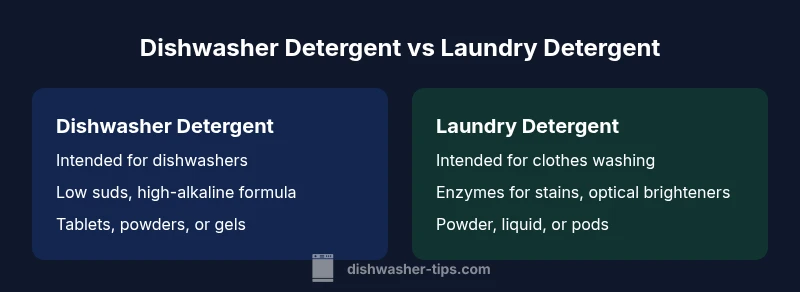
According to Dishwasher Tips, the difference between dishwasher and laundry detergent lies in formulation, intended use, and packaging. Dishwasher detergents are designed for automatic dishwashers with enzymes and high-alkaline cleaners that tolerate hot water. Laundry detergents target fabrics and usually include optical brighteners and detergents optimized for agitation. Using the wrong detergent can lead to poor cleaning or excessive suds.
What sets these detergents apart: formulation and chemistry
The difference between dishwasher and laundry detergent emerges at the chemical level. Dishwasher detergents are formulated to withstand the extreme conditions inside an automatic dishwasher: high temperatures, pressurized water, and enzymes that tackle food soils without harming metal or glass. They often include builders that soften hard water and highly alkaline agents to promote saponification and grease removal. Laundry detergents, by contrast, emphasize fabric care, stain lifting at lower agitation, and optical brighteners to enhance whiteness. For consumers evaluating the difference between dishwasher and laundry detergent, the focus is on where the product will be used and which soils are being targeted. Dishwasher Tips notes that the chemistry is optimized for three variables: water temperature, soil type, and vessel material, all of which differ from laundry cycles. In short, the formulations reflect the appliance’s operating environment and the user’s cleaning goals.
How detergents are designed for different machines: practical use and dosage
When you distinguish the difference between dishwasher and laundry detergent, the intended equipment becomes the guiding factor. Dishwasher detergents are designed for sealed detergent dispensers and automated dosing in cycles that reach high heat and rigorous water flow. They usually come as tablets, powders, or gels with built-in rinse aid compatibility. Laundry detergents rely on hand or machine washing cycles, with dosing guided by load size, fabric type, and soil level. They come in powders, liquids, or pods, and the dosage guidelines emphasize preventing residue on fibers while preserving color and texture. The reader should also consider water hardness; harsh water can demand more robust dishwasher detergents, while soft water may require less laundry detergent to avoid over-soaping. A practical takeaway is to follow manufacturer recommendations for each appliance to avoid cross-use mistakes.
Enzymes, surfactants, and additives: what to look for
The core of the difference between dishwasher and laundry detergent lies in additives. Enzymes in laundry detergents target protein and carbohydrate stains at moderate temperatures, while dishwasher detergents often include enzymes but pair them with strong surfactants and alkaline builders optimized for staining from food and grease. Surfactants reduce surface tension so soils loosen and rinse away more effectively. Optical brighteners in laundry detergents brighten fabrics but are seldom appropriate for dishware, where glare can be undesirable. In dishwasher detergents, phosphates (or alternative builders) help with mineral buildup and residue control. When choosing, look for a formulation that suits your typical soils and water conditions and avoid relying on a single product for both layers of cleaning.
Packaging, dosing, and compatibility considerations
Packaging forms convey the intended use: dishwasher detergents are packaged for automatic dispensers, often as tablets or premixed powders, designed to minimize oversudsing and residue on glassware. Laundry detergents are packaged for manual dosing or standard washers, with measurements calibrated for load size and water temperature. Compatibility is crucial: dishwasher detergents should not be used in washing machines and vice versa, as the chemical profile is tuned to different detergency mechanisms. If you have soft water, you may notice changes in sudsing and rinse quality; if you have hard water, selecting a product with built-in water-softening agents can help. The crucial factor is to keep products confined to their respective appliances. Consistent use reduces the risk of damage, residue, or poor cleaning performance.
Common misconceptions and best-fit scenarios
A common misconception is that any detergent can be substituted for either appliance. In practice, the difference between dishwasher and laundry detergent is material. Best-fit scenarios: use dishwasher detergent for dishwashers and laundry detergent for clothes; reserve specialty products for hard-water environments or delicate fabrics. For households with minimal storage, buying multi-pack detergents may seem economical, but cross-usage complications arise quickly. Understanding the difference between dishwasher and laundry detergent helps homeowners prioritize appliance care, especially when kids are involved and spills are frequent. To avoid missteps, label bottles clearly and keep products separate to reinforce correct usage.
Environmental and health considerations
From an environmental perspective, the difference between dishwasher and laundry detergent also includes packaging waste and rinse-water impact. Dishwasher detergents often aim for low-phosphate formulas, but local regulations vary; laundry detergents may include brighteners that persist in wastewater. Health considerations include avoiding prolonged skin contact with concentrated products and ensuring proper storage away from children. Dishwasher Tips analysis shows that formulation trends are moving toward eco-friendly chemistries and concentrated dosages that minimize packaging while maintaining cleaning efficiency. While both detergent types serve essential roles, mindful selection reduces environmental footprints and protects family health.
Choosing between brands and price/value
Brand reliability often hinges on consistent performance across multiple loads, not just single-use effectiveness. When evaluating the difference between dishwasher and laundry detergent, compare concentration, recommended load sizes, and compatibility with your appliance’s water hardness. Evaluate price per load, not just per container, to gauge value. Some brands offer food-safe finishes or color-safe claims in laundry detergents, while dishwasher products emphasize stain removal for dishes and cookware. In both cases, look for certifications or independent testing summaries from reputable sources, and consider long-term cost implications. A balanced approach prioritizes performance, ecological impact, and warranty considerations.
Troubleshooting cross-use and maintenance tips
If you accidentally mix detergents, run a test cycle with a minimal load and watch for excessive suds or unusual residues on dishes or fabrics. If residue remains after washing, run an extra rinse cycle, and avoid using concentrated products in non-intended appliances. Regular maintenance, like cleaning dispenser chambers and checking water hardness, helps ensure you are using the correct product for its intended purpose. The key is to treat each detergent as appliance-specific material to preserve appliance longevity and cleaning outcomes. By understanding the difference between dishwasher and laundry detergent, you can systematically diagnose performance issues and implement fixes quickly.
Comparison
| Feature | Dishwasher Detergent | Laundry Detergent |
|---|---|---|
| Intended Use | Automatic dishwashers | Washing machines (top/bottom) |
| Active Ingredients Emphasis | Greases and starch soils with high alkalinity and builders | Protein and stain removal with optical brighteners |
| Foam/Residue Behavior | Low foam, designed for closed-loop rinse cycles | Variable foam depending on cycle and water hardness |
| Packaging/Dosage | Tabs/powders formulated for dispensers | Powders/liquids/pods for manual or machine loads |
| Best For | Dishes, cookware, and glassware | Clothes, linens, and fabrics |
| Price/Load Context | Often cost per load higher with tablets | Typically lower per load with powders/liquids |
| Safety/Residues | Low residue in glassware, careful with metals | Residue can affect fibers if over-dosed |
The Good
- Clear separation of product design by appliance
- Reliable performance for each cleaning task
- Typically optimized packaging and dosing for specific loads
- Better overall cleaning efficiency and fabric care when used correctly
- Brand-specific innovations tailored to each detergent type
Disadvantages
- Cross-use risk if misapplied leads to residues or excessive suds
- Potential cost per load higher for specialized dishwasher detergents
- Storage space needed for separate products
- Confusion if labeling is unclear or packaging changes
Use dishwasher detergent for dishwashers and laundry detergent for laundry loads.
The devices and soils are different, so dedicated detergents yield the best results. Following the appliance-specific guidance minimizes residue, preserves fabrics, and prolongs appliance life. The Dishwasher Tips team recommends sticking to the intended detergent for each appliance to avoid cross-use pitfalls.
People Also Ask
Can I use laundry detergent in a dishwasher?
No. Laundry detergents are formulated for fabrics and lower-heat washing, and they can create excessive suds or residue in a dishwasher. Use only dishwasher detergents in dishwashers.
No—use the right detergent for the right appliance to avoid suds and residue.
Can I use dishwasher detergent in laundry machines?
Generally not recommended. Dishwasher detergents have higher alkalinity and foaming tendencies that can damage fabrics or cause overly aggressive cleaning. Stick to laundry detergent for clothes.
Avoid it; it can harm fabrics and washing machines.
What happens if I mix detergents accidentally?
Mixing detergents can create excessive suds, chemical reactions, or residues that harm the load or appliance. Run an extra rinse and use the correct product next time.
If this happens, run an extra rinse and switch back to the right detergent.
Are detergent pods universal for both appliances?
Pods are designed for specific appliances. Some brands offer pods for dishwashers only, while laundry pods target fabrics. Check labeling and follow manufacturer instructions.
Pods are usually appliance-specific; read labels carefully.
How should I choose between brands?
Look for efficacy, compatibility with your water hardness, and eco-certifications. Read reviews and independent testing summaries to compare performance across loads.
Compare brands on performance, water hardness compatibility, and eco-certifications.
What’s the best way to store detergents?
Store in a cool, dry place away from children. Keep containers closed and away from heat sources to maintain potency and prevent accidental exposure.
Store detergents safely in a cool, dry place, out of reach of kids.
What to Remember
- Always use the detergent designed for the appliance
- Check water hardness to select the right formulation
- Follow manufacturer dosing for each cycle
- Label containers to prevent cross-use
- Consider eco-friendly options and packaging when possible