Dishwasher Detergent: Powder, Pods vs Tablets — A Practical Comparison
A data-driven comparison of dishwasher detergent options—powder, pods, and tablets. Learn how cleaning power, cost per load, dissolution, and environmental impact shape performance for your home dishwasher.


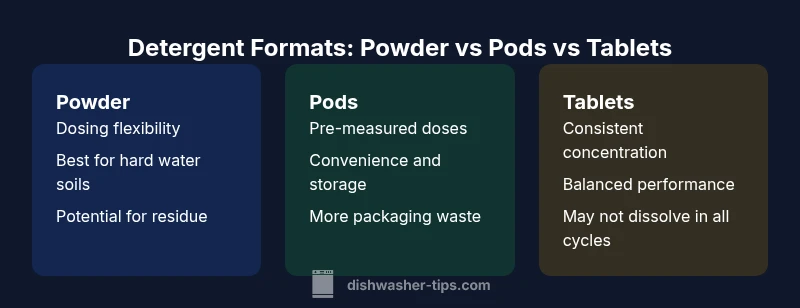
Overview: Dishwasher detergent comes in powder, pods, and tablet forms. Pods and tablets simplify dosing and storage, while powders excel in hard water and tough soils. This quick comparison helps homeowners choose a format that fits water hardness, budget, and dishwasher model. For many households, tablets balance convenience and performance, with powder a fallback for stubborn stains.
Why Dishwasher Detergent Format Matters
Dishwasher detergent choice deeply influences cleaning performance, residue control, and dryness across a wide range of loads. According to Dishwasher Tips, the best format often hinges on your water hardness, typical soil types, and how you use your machine. In this section we unpack how powder, pods, and tablets differ in chemistry, dispensing behavior, and user experience so you can tailor your detergent strategy to your kitchen situation. You’ll learn how to optimize dosing, minimize residue, and maintain a reliable finish on plates, glasses, and plastics. We'll also cover storage safety, compatibility with high-efficiency (HE) cycles, and practical tips for testing whether your current choice delivers consistently good results.
Feature Comparison
| Feature | Powder | Pods | Tablets |
|---|---|---|---|
| Dosing ease | Moderate (scoop required, adjustable) | Very easy (pre-measured single-use pods) | Very easy (pre-measured tablets) |
| Cleaning performance on standard loads | Strong plain-clean performance for everyday dishes | Excellent for standard soils and grease removal | Very reliable for standard loads with balanced action |
| Dissolution reliability | Can be affected by low water temperature or insufficient agitation | Dissolves quickly in most cycles | Dissolves quickly and consistently in most cycles |
| Cost per load (general) | Low to moderate when buying bulk | Moderate to high per load, but convenient | Moderate per load with consistent dosing |
| Environmental impact & packaging | Plastic-free scoops or cardboard, packaging varies | Plastic pods with protective outer wrap, recycling varies by region | Plastic-wrapped tablets with sealed packaging |
| Best for | Hard water loads and costly soils | Compact storage and convenience | Balanced cleanup with minimal handling |
The Good
- Pods/tablets simplify dosing and storage, reducing measurement errors
- Powder offers flexible dosing for water hardness and soil levels
- Tablets provide consistent concentration and easy counting
- Powder generally cheaper per load when bought in bulk
- Broad dispenser compatibility across many dishwasher models
Disadvantages
- Pods can be more expensive per load than bulk powders
- Powder may cause residue if not measured accurately or if moisture is present
- Pods/tablets create plastic packaging waste
- Tablets may fail to dissolve in very cold cycles on some machines
Tablets strike the best balance of convenience and performance for most households
Tablets offer reliable dissolution and consistent dosing across typical loads. Powders excel in hard-water environments and when cost per load matters most, while pods maximize convenience at a higher per-load price. Your best choice depends on water hardness, budget, and your dishwasher’s dispenser design.
People Also Ask
What is dishwasher detergent and how does it work?
Dishwasher detergent is a cleaning formulation designed to break down food soils, suspend grease, and prevent redeposition on dishes during the wash cycle. It releases cleaning agents when added to the dispenser, thenB works with hot water and agitation to lift soils from surfaces.
Dishwasher detergent cleans by breaking down soils in hot water during the wash cycle. It suspends grease so it can be rinsed away.
Can I use powder detergent in high-efficiency dishwashers?
Yes, you can, but choose a formula labeled for HE machines to prevent excessive suds. Use the recommended amount for your load size and avoid overdosing, which can leave residue or reduce rinse effectiveness.
Powder is fine in HE dishwashers if it’s HE-rated and used in the right amount for the load.
Are dishwasher pods safe for households with children and pets?
Dishwasher pods carry a choking hazard if ingested or mishandled. Keep them in their original container, out of reach, and never puncture or crush pods. Dispose of packaging responsibly after use.
Pods should be kept away from kids and pets; store them securely and use them as directed.
How do I choose between powder, pods, and tablets for my dishwasher?
Start with your water hardness and typical load types. If convenience matters most, tablets or pods win. For hard water or stubborn soils, powders can offer more control, while testing multiple formats helps confirm what works best for your home.
Pick based on water hardness and how much effort you want to spend on dosing and testing.
Do detergents have fragrance or additives that could affect kitchen scent or allergies?
Detergents may include fragrances, enzymes, or optical brighteners. If sensitivity is a concern, choose fragrance-free or hypoallergenic formulas and check labels for ingredients that may trigger reactions.
If fragrances bother you or someone at home is sensitive, look for fragrance-free options.
Is it better to follow the dishwasher manufacturer’s detergent recommendations?
Yes. Manufacturers test detergents with their own designs and dispenser systems. Following their guidance reduces residue risks and ensures compatibility with wash cycles and recommended chemistries.
Always start with the manufacturer’s detergent guidance for best results.
What to Remember
- Choose tablets for reliable, convenient cleaning with easy dosing
- Keep powder on hand for hard-water loads and bulk savings
- Assess cost per load when buying in bulk or switching formats
- Check your dishwasher’s dispenser compatibility and manufacturer guidance
- Test one format for a few weeks to confirm no residue or drying issues