Dishwasher Powder vs Pods: A Practical Comparison
An analytical comparison of dishwasher powder vs pods, covering dissolution, performance, cost, safety, and environmental impact to help homeowners decide which detergent makes sense for their loads.


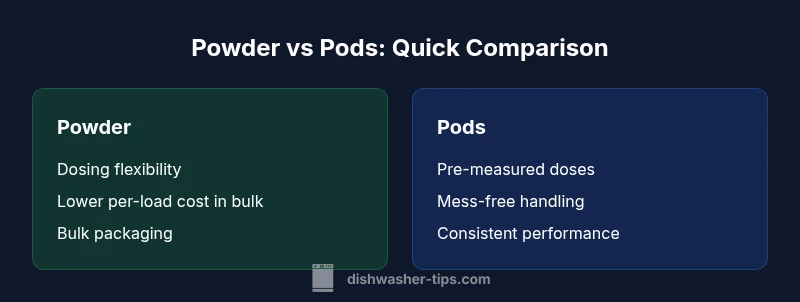
When weighing dishwasher powder vs pods, you want reliability, cost, and ease of use. According to Dishwasher Tips, the best choice depends on soil level, water hardness, and budget. Powder offers flexible dosing and strong value when bought in bulk, especially for heavily soiled loads. Pods deliver convenience with pre-measured doses and less mess, though at a higher per-load cost. This quick comparison highlights practical differences you’ll feel in day-to-day use.
What is dishwasher powder vs pods? This section explains how dishwasher powder vs pods differ in composition and usage. Dishwasher powder is a loose granule you scoop into the dispenser, providing flexibility in dosing and strength; they often include builders and surfactants to handle minerals and grease. Pods are pre-packaged, water-soluble doses that dissolve automatically during the wash cycle, delivering a consistent amount of detergent for each load. The choice between the two hinges on load size, soil level, water hardness, and how much you value convenience versus price, with powders favored for bulk savings and pods favored for mess-free operation.
How dissolve and interact with water chemistry. Detergent dissolution is a core difference between powder and pods. Powders rely on water temperature and adequate mixing to fully dissolve; in cool cycles or very hard water, you may need to adjust dosing or add a rinse aid for the best results. Pods typically dissolve quickly and predictably in standard cycles, reducing the risk of powder residue but sometimes behaving differently in extremely cold water or unusual water chemistry. In practice, this means your dishwasher’s cycles, water temperature, and even your water hardness can influence whether powder or pods deliver the best clean. According to Dishwasher Tips, pod formulations are often optimized for typical household water conditions, whereas powders reward careful dosing in challenging water.
Cleaning performance across soil levels. Heavily soiled dishes, pots, and pans benefit from a detergent with stronger buffering and active cleaners. Powder allows precise adjustment for different loads — you can tailor the dose for heavy soils, sticky sauces, or baked-on residue. Pods provide dependable performance for everyday loads and mid-range soils, but very dirty cookware may require an extra wash or a second cycle. In households with calcium-rich water, powder’s buffering agents can be more forgiving if you calibrate the amount used. The result is a spectrum: powders shine with variable soils; pods excel in consistent, predictable results for typical dish loads.
Impact on dishwasher life and maintenance. Detergent choice can influence residue and buildup inside the dishwasher. Powder detergents can leave fine powder dust if not fully dissolved, which over time may collect around the dispenser or seals if dosed improperly. This is more likely in older machines or cycles with insufficient water. Pods minimize mess and residue risk when used as directed but rely on their protective packaging to contain the concentrated detergent. Regular maintenance, such as cleaning the filter and occasional rinse cycles, helps ensure either option performs reliably and avoids unpleasant odors or clogs.
Environmental impact and packaging. Powder detergents typically come in cardboard or paper bags or bulk containers, which can be more recyclable but may also lead to bulk storage. Pod detergents are packaged in plastic film or pouches, which adds plastic waste per cycle. If you’re environmentally conscious, consider the total plastic footprint per wash and look for recyclable packaging, refill formats, or brands offering concentrated powders that reduce packaging. Both formats have legitimate sustainability considerations, so choose based on your household’s waste-reduction goals and recycling capabilities.
Cost considerations and value over time. Powder detergents tend to be cheaper per load when bought in bulk or family-sized containers, particularly if you regularly run large or heavily soiled loads. Pods offer the convenience of pre-measured doses, which can reduce waste and protect against overuse but often come with a higher per-load price. Backyard or garage storage constraints, stockpiling, and the frequency of cycles all shape total cost. Dishwasher Tips analysis shows powders can be more cost-effective on a per-load basis for households willing to manage dosing, while pods work well for busy homes seeking consistency and convenience.
Safety and usage tips for households with kids. Pods pose a well-known safety risk if accessible to children; their compact, colorful appearance can be mistaken for candy, and ingestion is dangerous. Store pods out of reach, use a child-resistant container if possible, and never leave loose powder in open containers where a curious child could access it. Household safety also depends on following the manufacturer’s instructions for water temperature, dosage, and ensuring the dispenser is clean and functioning properly.
How to choose between powder and pods for your household. Start with your typical cycle—do you routinely wash heavily soiled cookware or rely on quick daily loads? If you have hard water, powder may provide better cleaning if you dose accurately and add rinse aid. If you value convenience and predictability, especially in a busy home with kids, pods offer ready-to-use convenience and safer handling in many households. Your selection should also consider packaging preferences, storage space, and budget across monthly washes.
Practical quick-start guide and common pitfalls. For powders: purchase a bulk formulation with clear dosing instructions, store in a dry location, and periodically check the dispenser for powder buildup. For pods: use one pod per full load unless manufacturer guidance suggests otherwise, avoid tearing or cutting pods, and keep them sealed in a cool, dry place. Common pitfalls include under-dosing on heavily soiled loads or overloading the rack, which can reduce cleaning efficiency and hamper rinse efficiency.
Comparison
| Feature | Dishwasher powder | Dishwasher pods |
|---|---|---|
| Dissolution & residue | Can leave powdery residue if not fully dissolved in cool water | Pods usually dissolve quickly and predictably in standard cycles |
| Ease of use | Requires scooping and careful measuring; potential for spills | Pre-measured dose; minimal handling and mess |
| Cost per load | Typically lower per-load cost when bought in bulk | Higher per-load cost but with predictable dosing |
| Packaging & environment | Bulk packaging; less plastic per load if buying in bulk | Plastic packaging for pods; higher plastic waste per load |
| Performance on heavy soils | Better control over dosing for tough soils; dependent on correct amount | Consistent performance for typical soils; may require extra wash for very dirty dishes |
| Hard water compatibility | Dosing flexibility can be optimized for mineral content | Formulations often optimized for standard water conditions |
| Safety for households with kids | Powders pose spill hazards; keep dry and sealed | Pods pose ingestion risk if accessible; store securely |
| Storage & shelf life | Long shelf life when kept dry; bulk storage is convenient | Good shelf stability; space-friendly but needs protective packaging |
The Good
- Flexible dosing for variable soils and load sizes
- Lower cost per load when bought in bulk or family sizes
- Long shelf life and easy bulk stockpiling
Disadvantages
- Potential for powder dust and spills; needs careful handling
- Powder may leave residue if not fully dissolved or in cold cycles
- Pods have higher per-load cost and can be a safety hazard for children
Powder is best for budget-conscious households with heavy soils; pods excel in convenience and safety for families
Powder wins on value and customization for large households, while pods win on convenience and safety. The Dishwasher Tips team recommends selecting based on soil level, water hardness, and household priorities to maximize cleaning results.
People Also Ask
Is powder better for heavy soils or baked-on food?
Powder detergents give you dosing flexibility to tackle heavy soils. For baked-on residue, you can increase the dose or pre-soak with a separate cycle, then run a standard wash. Pods may handle many loads well, but powders let you tailor cleaning strength.
Powder gives you more control for tough soils. Try adjusting the dose or adding a soak before washing.
Are dishwasher pods safe for households with kids?
Pods can be a choking risk if accessed by children. Store pods in a locked cabinet and use child-resistant containers if possible. Always follow manufacturer safety guidelines.
Pods can be dangerous for kids; store them securely and never leave them where children can reach.
Can I use powder in all dishwashers or do some machines prefer pods?
Most dishwashers work with either powder or pods, but always check the manufacturer’s detergent recommendations. Some older models may have specific dispenser designs that work better with one format.
Check your dishwasher’s detergent recommendations to confirm compatibility.
Do powders or pods affect the dishwasher's longevity?
Both formats can be safe for your dishwasher when used correctly. Avoid overloading and ensure proper rinsing. Regular maintenance, such as cleaning filters, helps prevent buildup that can affect performance over time.
Use the right amount and keep your dishwasher clean to protect it over time.
How should I store powder and pods to maximize performance?
Store powders in a dry, cool place in an airtight container. Keep pods in their original packaging or a sealed container away from moisture. Avoid humid areas to prevent caking or clumping.
Keep powders dry and pods sealed to maintain effectiveness.
Are there eco-friendly or hypoallergenic options for both formats?
Yes, many brands offer environmentally friendly and hypoallergenic formulas for both powders and pods. Look for labels like biodegradable or phosphate-free, and consider concentrated formulas to reduce packaging waste.
There are eco-friendly options for both powders and pods; read labels for specifics.
What to Remember
- Assess soil levels and water hardness to choose powder or pods
- Powder offers cost savings with bulk purchases
- Pods provide predictable dosing and minimal handling
- Be mindful of safety with pods around children
- Consider packaging and environmental impact in your decision