How Many Dishwasher Tablets to Use: A Practical Guide
Discover the right number of dishwasher tablets for standard, heavy, and large loads. Learn how water hardness and load type affect dosage, plus tips to avoid residue and maximize cleaning.


Most dishwasher cycles require one tablet. Use two tablets only for very large or heavily soiled loads, and only if the detergent label and dishwasher manual permit it. According to Dishwasher Tips, start with one tablet per cycle and adjust based on load and water hardness. If you have hard water, consider rinse aid and check residue after the cycle.
Quick Dosage Guidelines for Dishwasher Tablets
Most households will find that one tablet per normal load delivers clean dishes and a dry finish. Two tablets should only be considered for exceptionally large loads or dishes with heavy, baked-on soil—provided the detergent label and your dishwasher’s manual allow it. The Dishwasher Tips team emphasizes sticking to the tablet’s guidance, as over-dosing can lead to residue, poor rinsing, and wasted detergent. Always check the product’s instructions and your machine’s recommendations before deviating from the standard one-tablet rule. For households in areas with hard water, you may still achieve good results with one tablet, but you should monitor residue and consider additional rinse-aid options if needed. This practical approach keeps your glassware sparkling and your dishwasher’s performance steady over time.
Factors that Influence Tablet Dosage
Dosage isn’t a one-size-fits-all matter. Several variables can push you toward adjusting the number of tablets you use. The most common influencers include load size, soil level, water hardness, and the specific detergent formulation. For example, heavily soiled pots and pans may benefit from a stronger cleaner or multiple tablets, while light, quick loads typically require less detergent to avoid foaming and residue. The Dishwasher Tips analysis highlights that adhering to the detergent’s guidelines and your dishwasher’s capacity yields the most reliable results. Additionally, different tablet strengths (standard, multi-dose, or triple-action) can shift the amount you should use per cycle. Always tailor dosage to the cycle and soil.
How to Adjust Dosage for Common Loads
- Small to medium loads with light soil: use 1 tablet; avoid extra washing cycles that consume more product. 2) Medium to large loads with average soil: stick to 1 tablet; consider a second tablet only if the cycle designer allows it and the soil is stubborn. 3) Very large loads or heavy soil: you may need up to 2 tablets if your detergent’s label permits it, but never exceed manufacturer guidance. 4) Mixed loads (pots and plates): place the tablet as directed by the dispenser and ensure nothing is blocking the tablet from dissolving. 5) If residue appears, inspect rinse aid settings and load alignment, then try one tablet first in subsequent cycles. 6) For frequent stubborn soils, pre-rinse highly dirty pieces to reduce soil transfer during the wash.
Water Hardness and Detergent Strength
Water hardness plays a meaningful role in how detergent performs. Hard water can reduce suds and make minerals bind with grease, leading to cloudiness or mineral deposits on glassware. Dishwasher Tips recommends using a rinse aid in hard-water areas and selecting a tablet designed to combat mineral buildup. If you notice residue or cloudy glass, review your water hardness information and adjust dosage accordingly. Your local utility or water supplier can provide hardness levels, and many detergent brands publish hardness-adapted guidance on their labels.
Common Mistakes That Waste Detergent
Avoid over-dosing with high-strength tablets or triple-dose formulas unless explicitly recommended. Do not place tablets directly in cups or on the bottom of the drum; use the designated detergent dispenser to ensure full dissolution. Do not pre-wash dishes excessively, as pre-rinsing can remove soiling that the tablet is designed to tackle, leading to more cycles and wasted detergent. Finally, store tablets in a cool, dry place away from moisture to prevent premature dissolution or clumping.
Practical Dosing Guidelines by Load Type
- Standard loads (plates, silverware, and light pans): 1 tablet per cycle. - Large loads or large pots with moderate soil: 1 tablet, monitor results and consider 2 if permitted. - Heavily soiled cookware or baked-on sauce: 1 tablet, then run a second cycle only if required and permitted by the detergent label. - Hard water areas: use a rinse aid and consider a tablet formulated for hard water; follow manufacturer’s directions for dosage. - Short, express cycles: 1 tablet, but ensure the cycle completes with adequate water contact and proper dwell time.
Real-World Scenarios and Troubleshooting
Scenario A: You run a standard cycle in a typical kitchen with normally soiled dinnerware. Action: Use one tablet and inspect the result. If residue appears, switch to a rinse aid and verify dishwasher settings. Scenario B: You have a large family dinner with heavy, baked-on dishes. Action: Check the detergent label for whether double-dosing is advised and consider pre-rinsing the heaviest items. Scenario C: You notice cloudy glassware and mineral deposits. Action: Increase rinse aid usage, verify water hardness, and ensure you’re using the correct tablet strength for your water type. The Dishwasher Tips team notes that consistent results come from following the label and your machine’s guidelines.
The Dishwasher Tips Verdict: Practical Dosage for Real Homes
The Dishwasher Tips team advocates starting with the manufacturer’s recommended dosage (usually one tablet per cycle) and only increasing for specific cases as permitted by the product guidelines. In most situations, one tablet is sufficient, helping prevent residue and saving money. For very hard water areas or persistent soils, select a detergent formula designed for hard water and monitor results across several cycles. Consistency in loading and cycle choice matters as much as the exact tablet count. The goal is clean dishes without residues or wasted detergent.
AUTHORITY SOURCES
- Energy.gov: Appliance efficiency and maintenance guidance relevant to dishwashers and detergents. https://www.energy.gov/
- EnergyStar: Official dishwasher information and best practices for performance. https://www.energystar.gov/products/appliances/dishwashers
- Consumer Reports: Independent testing and guidance on dishwasher detergents and performance. https://www.consumerreports.org/cooking-dishwashers/
Tools & Materials
- Standard dishwasher tablets (or pods)(Choose a tablet compatible with your dishwasher and cycle type)
- Your dishwasher manual(Consult for model-specific dosage and cycle guidance)
- Water hardness information(Hardness can influence dosage and rinse performance)
- Optional rinse aid(If your tablet lacks rinse aid, consider adding rinse aid separately)
Steps
Estimated time: 15-25 minutes
- 1
Read the label and machine guidance
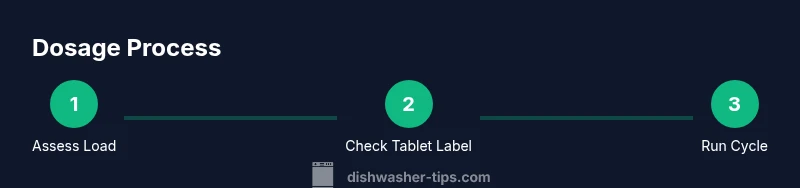
Start by locating the tablet's dosage guidance on the packaging and review your dishwasher’s manual for any model-specific limitations. This establishes the baseline for how many tablets to use per cycle.
Tip: If the label mentions hard water, note that you may need to adjust with rinse aid or a specialized formula. - 2
Assess the load size and soil level
Evaluate whether the load is standard, large, or heavily soiled. This helps determine if you should stick with one tablet or consider the manufacturer’s guidance on a second tablet.
Tip: Sort heavily soiled items to maximize cleaning efficiency while avoiding overloaded dispensers. - 3
Place the tablet in the detergent dispenser
Open the detergent dispenser and insert the tablet in the appropriate compartment as directed. Ensure nothing blocks the tablet from dissolving during the wash.
Tip: If your tablet is triple-dose or if you have a two-compartment dispenser, choose the correct compartment and close securely. - 4
Run a normal wash cycle
Close the dispenser and start a standard or auto cycle. Allow the detergent to dissolve fully and contact all dishes during the wash phase.
Tip: Avoid pre-rinsing too much; modern tablets are designed to work with typical soil residues remaining on dishes. - 5
Evaluate results after the cycle
Check for clean dishes and residue. If needed, adjust by using one tablet for future cycles and add rinse aid or upgrade to a formula designed for your water type.
Tip: Residual spots often indicate mineral deposits or insufficient rinse aid in hard water regions. - 6
Store remaining tablets properly
Keep tablets in a cool, dry place. Moisture can cause tablets to clump or dissolve prematurely, reducing effectiveness.
Tip: Keep out of reach of children and follow packaging safety instructions.
People Also Ask
How many tablets should I use for heavily soiled dishes?
For heavily soiled dishes, check the detergent label; many brands allow one tablet per cycle, with a potential second tablet if the label and machine permit. Avoid guessing—follow the product guidance and manual.
For heavily soiled dishes, follow the label and your machine’s guidance. Often you’ll still use one tablet, but some cycles may allow a second tablet if the product says so.
Do tablets work differently in hard water vs soft water?
Yes. Hard water can reduce cleaning efficiency and increase mineral buildup. Use a rinse aid and consider a detergent designed for hard water; test and adjust dosage if you notice residue.
Hard water can affect how well a tablet cleans; use rinse aid and choose a hard-water formula if needed.
Is powder detergent better than tablets for control over dosage?
Powders give more dosing control, but tablets offer convenience and consistent dosing. Choose based on your preference and the dishwasher’s guidance, not just convenience.
Powder gives more dose control, but tablets are convenient. Pick based on your dishwasher’s instructions.
What should I do if I see residue after washing?
Residue often points to over-dosing, hard water, or rinse aid underuse. Adjust by reducing tablets to one per cycle, ensuring proper rinse aid usage, and checking loading technique.
Residue usually means too much detergent or hard water. Try using one tablet and add rinse aid.
Can I use two tablets on a regular cycle if not heavy soil?
Only if the detergent label and dishwasher manual approve it. Otherwise, double-dosing can lead to residue and poor rinsing.
Only use two tablets if the product and machine say it’s okay; otherwise stick to one.
How does load size affect dosage beyond just one vs two tablets?
Larger loads with mix of dishes or increased soil typically require adherence to the label and potential adjustments per the manual. Start with one tablet and increase only if allowed and necessary.
Larger or dirtier loads may need more detergent, but always follow the label and manual.
Watch Video
What to Remember
- Use one tablet for typical loads.
- Two tablets only if allowed and needed for heavy soil/large loads.
- Consider water hardness and rinse aid to prevent residue.
- Always follow detergent and dishwasher manuals for best results.
- Store tablets properly to maintain effectiveness.