How Much Dishwasher Soap to Use: A Practical Guide
Learn precise dosages for dishwasher soap across powder, liquid, and pods. Understand how load size and water hardness affect cleaning, with practical, waste-free tips.


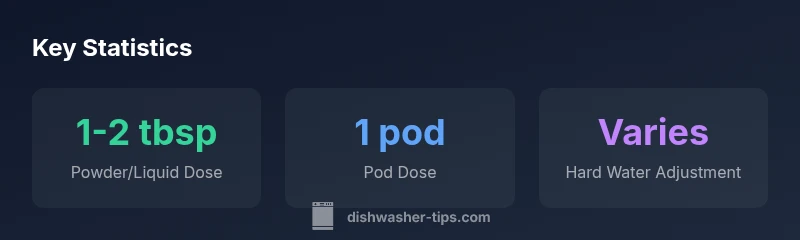
Typically, aim for 1-2 tablespoons (15-30 ml) of powder or liquid dishwasher detergent per load, or one detergent pod per cycle. For heavily soiled dishes or hard water, you may need a slightly higher dose, but never exceed the packaging guidance. When in doubt, start with the lower end and adjust after testing a few cycles.
Understanding Detergent Types
Dishwashers rely on three mainstream formats: powder, liquid, and pods/tablets. Each format has a slightly different dissolution profile and dosing guidance. Powder and liquid detergents are flexible and allow small dose adjustments, which can be handy for light loads or gently soiled dishes. Pods, tablets, and pre-measured pods offer convenience and consistent dosing but require adherence to the single-dose recommendation on the package. When considering how much dishwasher soap to use, start from the format’s recommended baseline and adjust based on soil level, water hardness, and cycle type. The key is to avoid under-dosing (which leaves residue or greasiness) and over-dosing (which causes suds and rinse issues). For many households, this means a standard dose of 1-2 tablespoons for powder/liquid or one pod per cycle, with small tweaks as needed. This guidance aligns with the approach used in Dishwasher Tips analyses for 2026.
Dosing Guidelines by Detergent Type
Powder detergents work well in most modern dishwashers and allow precise dosing. A standard load often uses 1-2 level tablespoons (about 15-30 ml). Liquid detergents are similarly dosed, though users should pour over a measuring cup to avoid over-pouring. Pods and tablets are pre-measured; use exactly one per load unless the packaging specifies otherwise for heavily soiled loads. Keep detergents away from heat and moisture to preserve effectiveness. Always check the detergent packaging and your dishwasher manual for any format-specific notes. In cases of very hard water, a higher dose can improve cleaning, but be mindful of residue and rinse-aid recommendations.
How Water Hardness and Load Size Change Dosage
Water hardness and load size are two of the most influential factors in determining the detergent dose. In hard water, minerals can bind with soap, reducing cleaning efficiency and potentially increasing the need for detergent. A common practical approach is to maintain the standard dose but consider a slight increase (for example, 0-1 extra spoonful for very hard water) if you notice films or cloudy dishes. Larger loads or heavily soiled dishes may require a modest dose increase, while smaller or lightly soiled loads can use the lower end of the dose range. Always observe the results over a few cycles to avoid overuse.
Reading and Using Pod-Dosage vs Powder/Liquid
Pods offer a convenient, pre-measured dose but require careful handling and storage. One pod per load is the typical recommendation, regardless of load size, unless the package specifies otherwise. Powder and liquid detergents provide flexibility to tailor the dose to the load. When using powder, level off the scoop; with liquids, measure accurately to avoid oversoaping. For best results, place the detergent in the dedicated dispenser before starting the cycle and avoid mixing different formats in the same load.
Manufacturer Recommendations and Common Myths
Manufacturers provide guidelines tailored to their formulations and machines. Following the package directions helps avoid residue and foaming problems. A common myth is that “more soap always cleans better.” In practice, excess detergent can lead to suds, unfinished rinses, and mineral buildup. Conversely, under-dosing can leave food particles and grease. The middle-ground approach—adhere to the recommended dose, consider modest adjustments for hard water, and test on a few cycles—usually yields consistent results.
Practical Dosage Scenarios and Quick Checks
Scenario A: You have a typical load of plates and glasses with moderate soil. Dose: 1-2 tablespoons powder/liquid or 1 pod. Scenario B: Heavily soiled pots/pans. Dose: 2 tablespoons or 1.5 pods, if allowed by packaging. Scenario C: Very hard water. Dose: Maintain baseline but monitor for residue; consider a rinse aid supplement and a higher dose if confirmed by results. Quick checks include inspecting a finished cycle for residue, film, or cloudy glass, then adjusting accordingly.
Detergent dosing by type with pros and cons
| Detergent Type | Typical Dose | Pros | Cons |
|---|---|---|---|
| Powder | 1-2 tablespoons | Flexible dosing; cost-effective | Can cloud/dust; inconsistent in very soft water |
| Liquid | 1-2 tablespoons | Easy to measure with cup; good for short cycles | Potentially spills; can be wasteful if over-poured |
| Pods/Tabs | 1 per load | Convenient; consistent dose | More expensive per load; limited dosing control |
People Also Ask
What is the recommended dose for a heavily soiled load?
For heavily soiled dishes, you can increase the detergent dose slightly within the manufacturer's guidelines, or run a longer cycle with a warm wash. Start from the upper end of the standard range and observe results over a few cycles to avoid residue.
For very dirty dishes, start with the upper end of the usual dose and test a cycle. If needed, adjust gradually.
Does water hardness affect how much soap I should use?
Yes. Hard water can reduce cleaning efficiency, sometimes requiring a small dose increase or the use of a rinse aid. In soft water, you can typically stick to the standard dose. Test a few cycles to find the best balance.
Water hardness can change dosing—start with the standard dose and adjust if you notice film or residue.
Can I use more soap to speed up drying?
Using more soap won’t speed up drying and can cause more suds or residue. Rinse aid and proper dishwasher cycles are more effective for drying. Always follow product guidelines.
More soap won’t dry better. Use rinse aid and proper cycles instead.
Are dishwasher pods safe to use with all dishwashers?
Pods are designed to work with most standard dishwashers, but always check the detergent packaging and your machine’s manual. Some older machines may have issues with certain pod formulations.
Pods work for most machines, but check compatibility on packaging and your manual.
What happens if I use too little soap?
Using too little soap can leave grease, spots, or film on dishes. If you notice stubborn residue after a cycle, try increasing the dose slightly and ensure the dispenser is functioning properly.
Too little soap can leave residue—slightly increase the dose and check the dispenser.
“Effective dishwasher dosing is about matching the detergent to the load, cycle, and water quality. Start with a conservative dose and adjust based on real results from several cycles.”
What to Remember
- Start with the base dose per format and adjust after testing.
- One pod per load is standard for pods/tabs.
- Hard water may require minor dose increases for effective cleaning.
- Avoid over-dosing to prevent residue and suds.
- Always follow manufacturer directions for your detergent and dishwasher.