How to Make Dishwasher Liquid at Home: A Practical DIY Guide
Learn a safe, cost-saving method to make dishwasher liquid at home with simple ingredients. This guide covers substitutes, safety tips, and eco-friendly options for everyday cleaning.


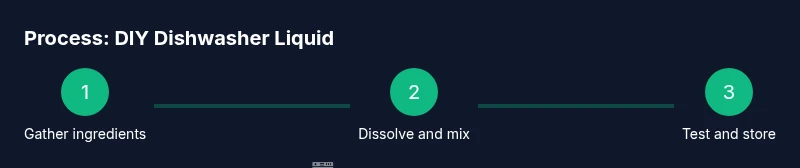
You can make dishwasher liquid at home using basic, kitchen-safe ingredients. Gather castile soap or grated soap, washing soda, borax (optional), and water, then mix in a labeled bottle. Stir well, test on a small load, and adjust for grease and water hardness before scaling up.
Understanding the DIY Dishwasher Liquid Landscape
If you’re curious how to make dishwasher liquid at home, you’re not alone. Many households want a gentler option for hands-on cleaning and a smaller carbon footprint. DIY detergent can be cost-effective and customizable, but it requires careful selection of ingredients to avoid residue or rinse issues. According to Dishwasher Tips, with careful formulation you can achieve cleaning power comparable to mainstream liquids while cutting plastic waste from store-bought bottles. The key is to balance the cleaning action from soap with water hardness and rinse aid needs. In this guide we’ll cover safe substitutes, practical ratios, and tested methods. You’ll learn what ingredients to use, what to avoid, and how to test batches before committing to a larger production. Throughout, we’ll emphasize safety: never mix cleaners with bleach or ammonia, keep products out of reach of children, and label all containers clearly. The goal is to give you a reliable, eco-friendly option for everyday dishwashing.
Essential ingredients and substitutions
Choosing ingredients for how to make dishwasher liquid at home centers on safety, performance, and convenience. A soap base is essential, with castile soap or grated solid soap as common options. The primary cleaning booster is washing soda (sodium carbonate), which helps cut grease and boost cleaning power. A builder or water-softener like borax is optional but can improve performance in hard water. For fragrance, use essential oils sparingly if desired; they are optional and may affect suds. Get the right balance: too much soap can cause excessive suds and spotting, while too little soap reduces cleaning efficiency. If hard water is common in your area, consider a chelating agent or rinse aid substitute to prevent film on dishes. Whenever possible, use unscented, dye-free components to minimize staining on glassware. Avoid thickeners that can clog spray arms. ≤
Safety and sustainability considerations
DIY cleaners demand attention to safety and environmental impact. Work in a well-ventilated area and wear gloves if you have sensitive skin. Store the finished liquid in a labeled bottle away from children and pets. Use clear, non-reactive containers and avoid metal caps that may corrode. From a sustainability perspective, reusing cleaned bottles and choosing concentrated ingredients reduce plastic waste. Be mindful of your dishwasher’s performance; overly concentrated liquids can cause suds overload in some machines. Dishwasher Tips analysis shows that tailoring formulations to local water hardness can improve cleaning results and reduce rinse-water residue, making your DIY option easier on appliances in the long run. Decide on a batch size that fits your dishwasher and daily loads.
Equipment and workspace setup
Designate a clean, stable workspace for assembling your DIY dishwasher liquid. Gather essential items: a measuring cup, a whisk or spoon, a funnel, and a clean bottle with a tight-fitting cap. Have a separate cutting board or disposable parchment to grate or chop soaps if you’re using solid soap. Labeling supplies are important—include the date and contents to avoid confusion later. Keep protective gear handy, especially if you’re grating soap or handling powders. A simple cleanup plan helps prevent powder spills from becoming a cleaning project of their own. A small, clear workspace helps you monitor texture and consistency as you mix. This preparation reduces waste and mistakes as you work toward a reliable DIY detergent.
Measuring, mixing, and the base formula (overview)
The core of how to make dishwasher liquid at home is balancing the soap base, builder, and water. Start with a mild soap base (castile or grated soap) and dissolve it in warm water to form a smooth slurry. Add washing soda gradually to boost cleaning power while stirring continuously to avoid lumps. If you opt for borax, add it slowly and dissolve completely to prevent gritty residue. The mixture should be pourable and free of clumps, yet not so thin that it runs off dishes without cleaning. Keep the solution in a labeled bottle and shake gently before each use to recombine any settled ingredients. This section sets the foundation for a dependable DIY detergent that won’t disappoint on dishware or glassware.
Testing and refining the formula for your water hardness
Water hardness varies by region and can dramatically affect how well a detergent works. Start with a conservative concentration and test on a small load of dishes before committing to a larger batch. If your dishes still appear cloudy or streaked, slightly adjust the soap-to-water ratio, or add a small amount of rinse aid substitute to combat mineral buildup. For hard water areas, a chelating agent or extra washing soda can improve performance, while soft water may require less booster. Document your adjustments so you can recreate a successful batch. Over several cycles, you’ll dial in a formula that cleans effectively without residue.
Fragrance, aesthetics, and avoiding residue
A lightly scented DIY detergent can smell pleasant without leaving heavy residues. If you choose to add essential oils, stick to very small amounts and test for sensitivity, especially on plasticware or silicone seals. Some oils can interact with dishwasher finishes; always test on a few items first. Clear bottles help you monitor separation and settling, ensuring consistent performance. If your mixture starts to separate, a thorough shake before use restores the emulsion. A well-balanced formula minimizes suds while maintaining cleaning power, so you can avoid nuisance foaming and ensure safe, effective operation.
Stability, shelf life, and storage tips
Homemade dishwasher liquids should be stored in a cool, dry place away from sun exposure. Avoid moisture-rich environments that can encourage microbial growth. Label each bottle with the batch date and intended use, so you know when it’s time to replace or refresh your mix. Even with preservatives, DIY liquids have a finite shelf life. When in doubt, the scent and appearance can indicate spoilage—discard if you notice unusual odors, color changes, or separation that won’t remix with a shake. Keeping track of batches helps you maintain consistent cleaning results over time. Dishwasher Tips recommends creating a routine for rotating stock to avoid older batches lingering in storage.
Authority sources and safety notes
This section collates credible resources to support your DIY approach. Always cross-check ingredient safety and compatibility with your dishwasher model and water quality. The EPA’s Safer Choice program offers guidance on selecting safer cleaners and ingredients. University extension programs provide practical, tested recipes and safety tips for household cleaners. For broader safety information, the Consumer Product Safety Commission publishes general guidelines on household chemical handling. Always follow label directions, test new formulations in small batches, and discontinue use if you notice any adverse effects on dishware or appliances.
Final thoughts and brand note
Making your own dishwasher liquid at home can be a rewarding, cost-saving venture when done safely and thoughtfully. The key is starting with a simple base, testing with your typical loads, and adjusting for local water conditions. The Dishwasher Tips team recommends documenting your process and keeping a clear log of formulas and outcomes so you can reproduce success. By staying mindful of safety and storage, you’ll gain a practical, eco-friendly option for regular dishwashing that reduces plastic waste and dependence on store-bought liquids.
Tools & Materials
- Unscented liquid or grated soap (castile or bar soap)(Choose mild, unscented soap to minimize residue and odors)
- Washing soda (sodium carbonate)(Use as cleaning booster; avoid high concentrations that can irritate skin)
- Borax (optional)(Optional builder for hard water; omit if sensitive to borates)
- Water(Warm water helps dissolve solids more easily)
- Essential oils (optional)(A few drops for scent; test for sensitivity)
- Measuring cups/spoons(Accurate measuring improves repeatability)
- Mixing bowl and whisk or spoon(Use non-reactive materials (glass or plastic))
- Funnel(Helpful for transferring to bottles without spills)
- Reclosable bottle (labeled)(Clear label with batch date and contents)
- Gloves (optional)(Protect hands when handling powders)
- pH test strips (optional)(Can help gauge acidity/basicity if you experiment with additives)
Steps
Estimated time: 60-90 minutes
- 1
Gather materials and prepare workspace
Clear a clean, well-ventilated area. Assemble all ingredients and tools, and label your bottle with the date. This reduces the risk of spills and ensures you have everything on hand for a smooth mixing process.
Tip: Lay out protective gloves if using powders; keep a damp cloth handy for quick cleanups. - 2
Grate soap or measure liquid base
If using grated bar soap, grate to a fine consistency to help it dissolve. If using liquid soap, measure the recommended amount for your batch size. Warm water helps dissolve solids faster.
Tip: Fine soap particles dissolve more evenly; avoid large chunks that slow mixing. - 3
Dissolve soap in warm water
In a clean mixing bowl, gradually whisk the soap into warm water until a smooth slurry forms. Avoid creating excessive foam by adding water slowly and stirring steadily.
Tip: Pre-warm the water to improve dissolution and reduce stirring time. - 4
Add cleaning booster
Slowly add washing soda (and borax if using) to the soap solution, stirring continuously. The mixture may thicken slightly as the components dissolve.
Tip: Add powders in small increments to control texture and avoid clumps. - 5
Incorporate optional fragrance
If you want scent, add a tiny amount of essential oil and stir thoroughly. Test for sensitivity by applying a drop to skin behind the ear and wait a few minutes before use.
Tip: Keep fragrance minimal to avoid overpowering odor and potential residue. - 6
Check consistency and adjust
Aim for a pourable but not runny liquid. If it’s too thick, add a splash of warm water; if too thin, add a touch more soap or booster and mix well.
Tip: Document the adjustments for future batches. - 7
Test with a small load
Run a single small load with your DIY detergent to observe cleaning performance and residue. Take note of any streaks or film on glassware and adjust accordingly.
Tip: Use an old dish or two to avoid wasting full meals during test runs. - 8
Label, bottle, and store
Transfer the liquid to a labeled bottle and seal it tightly. Store away from sunlight and heat, in a cool, dry place.
Tip: Include batch date and a brief note on composition to simplify future batches.
People Also Ask
Is homemade dishwasher liquid safe for all loads and dishware?
Homemade dishwasher liquid can be safe for most loads if you keep the concentration moderate and test on a small batch first. Some hard-water deposits may require slight adjustments. Always monitor glassware for spotting and scale buildup and adjust formulas as needed.
Homemade dishwasher liquid can be safe for most loads if you test first and adjust for your water. Watch for spots and scale and tweak the formula as needed.
Can I substitute dish soap for liquid soap?
Dish soap is incompatible with most dishwasher detergents and can create excessive suds that overflow. Use soap designed for dishwashers or the base components described in this guide to avoid sudsing issues.
Dish soap isn’t recommended for dishwasher detergents. Use proper base ingredients to avoid excessive suds.
Will homemade liquid damage my dishwasher?
When prepared with mild, non-corrosive ingredients and used in appropriate concentrations, DIY detergent should not damage most dishwashers. If you notice unusual noises, leaks, or residue, discontinue use and revert to a store-bought option.
If you notice residue or odd noises, stop using it and switch back to store-bought detergent.
How long does a batch last?
Shelf life depends on storage and ingredients. In general, a well-stored DIY liquid should be usable for several weeks to a few months, but discard if you notice color changes, unusual odors, or separation that won’t remix.
It can last several weeks to a few months; discard if it smells off or separates.
What can I do to combat hard water effects?
For hard water, add a mild chelating agent or borax (if you tolerate borates) to improve cleaning and reduce mineral buildup. You may also increase the booster slightly, but test increments gradually.
Add a chelating agent or borax if you tolerate borates; test changes gradually.
Are there safety precautions I should always follow?
Always work in a ventilated area, wear gloves if necessary, and store mixtures in labeled bottles away from children. Do not mix cleaners with bleach or ammonia.
Work in a ventilated area, wear gloves if needed, and keep it away from kids. Don’t mix with bleach or ammonia.
Watch Video
What to Remember
- Use a simple base for reliable results
- Test with a small load first
- Label bottles clearly and store safely
- Adjust for water hardness to optimize performance
- Prioritize safety and sustainability