How to Make Dishwasher Soap at Home
Learn how to make dishwasher soap at home with simple, safe ingredients. This step-by-step guide covers powder and tablet methods, safety tips, and storage for clean, residue-free dishes.


According to Dishwasher Tips, you can make effective dishwasher soap at home using a simple powder blend of washing soda, borax, and citric acid. This guide covers a basic recipe, tablet options, safety tips, and how to test for residue. By following precise measurements and storage guidelines, you can tailor cleaning power to water hardness and load size.
Why DIY Dishwasher Soap Makes Sense
Making your own dishwasher soap at home can save money and reduce packaging waste, which aligns with eco-friendly living. For many households, standard store detergents contain additives and fragrances that aren’t necessary, and a simple dry blend can do the job just as well. The core idea is to balance alkalinity with chelating agents to handle typical dishwasher soils and mineral deposits. By using common, inexpensive ingredients, you can tailor cleaning strength to water hardness and load size. This article, powered by the Dishwasher Tips team, walks you through practical recipes, safety measures, and testing methods to ensure you get clean dishes without residue or damage to glassware. According to Dishwasher Tips, the approach emphasizes accuracy in measurements and proper storage to prevent clumping and loss of effectiveness. If you’re new to DIY cleaners, start with a small batch to gauge performance before expanding, and keep all ingredients separate from children and pets.
Ingredient Options: Powder vs Tablets
DIY dishwasher soap comes in two main forms: a dry powder you scoop into the dispenser, and tablets you press and cure for a compact, ready-to-use product. Powder is simple to adjust for water hardness and load size, and it tends to dissolve quickly in most machines. Tablets are convenient and less dusty, but achieving consistent dissolution requires careful curing and sometimes a binder. When deciding which to make, consider your dishwasher model, typical load types, and whether you want the ease of use or adjustable cleaning strength. The same base ingredients can usually be used for both forms, with minor adjustments to texture and moisture control. In this guide, you’ll learn practical, tested methods to produce reliable results for most households, while keeping your recipes transparent and easy to reproduce.
Basic Powder Recipe
A straightforward powder recipe uses three core dry ingredients measured by volume:
- 1 cup washing soda (sodium carbonate) – the cleaning base
- 1 cup borax (sodium borate) – boosts cleaning power and soil suspension
- 1/2 cup citric acid – helps remove mineral deposits and soften water Optional additions include 1/4 cup kosher salt to aid scrubbing in hard water and a drop or two of essential oil for fragrance (use sparingly, as oils can affect dispenser seals). After measuring, sift or whisk the dry ingredients to break up any clumps, then store in an airtight container. This preparation yields a reliable, inexpensive powder that cleans effectively when used with your dishwasher’s normal cycle.
Tablet Method: Pressing and Curing
If you prefer tablets, begin with the same dry base and dampen just enough to form a crumbly paste. For tablets, pack the mixture into silicone molds or a ice-cube tray and press firmly to ensure compact tablets. Allow the tablets to cure in a dry, ventilated area for 24–48 hours. Proper curing prevents crumbling and ensures consistent dissolution in the dishwasher. Once cured, remove from molds and store in an airtight container. The tablet method offers convenience and less mess, but requires patience during the drying phase to achieve reliable performance.
Testing and Troubleshooting Residue
Before using homemade soap on every load, run a test with a small batch of dishes that includes glasses, some plasticware, and a few dirty utensils. Observe for any residue, clouding, or dullness on glassware. If residue appears, try adjusting the ratio by adding a bit more citric acid or salt, or switch to the tablet method if you were using powder. Water hardness and detergent concentration both influence results, so it’s common to iterate 1–2 batches to dial in the perfect mix for your home. Keep notes on measurements and results so you can reproduce success.
Storage, Shelf-Life, and Safety
Store DIY dishwasher soap in a cool, dry place away from moisture. Moisture is the primary cause of clumping and reduced effectiveness, especially in humid climates. An airtight jar with a tight-fitting lid is ideal for long-term storage. Label batches with the date you made them so you can track freshness. When handling the powders, use protective measures like gloves if needed and avoid inhaling fine dust. Keep all ingredients, especially citric acid and borax, out of reach of children and pets. Following these practices helps maintain product quality and safety over time.
Adjusting for Water Hardness and Load Size
Water hardness significantly affects dishwasher performance. If you notice mineral spots or film on glassware, increase citric acid by small increments (e.g., 1–2 tablespoons per batch) or consider using a slightly higher ratio of the cleaning agents in the base formula. For large families with heavy dish loads, prepare larger batches in advance and store them properly, adjusting only the storage container size. In regions with soft water, you may reduce citric acid slightly to avoid overly acidic residue. Always start with conservative adjustments and test on a typical load to verify results.
Authoritative Sources
For additional context and safety considerations, you can consult reputable sources on home chemistry and cleaning practices. While this guide provides practical steps, it’s helpful to understand the broader context from the following sources: • EPA cleaning guidelines and safe chemical handling (https://www.epa.gov) • University Extension resources on household cleaning and safe chemical use (https://extension.illinois.edu) • University Extension guidance on water hardness and cleaning efficacy (https://extension.oregonstate.edu)
Tools & Materials
- Washing soda (sodium carbonate)(Base cleaning powder; store in a dry place)
- Borax (sodium borate)(Boosts cleaning power; unscented if possible)
- Citric acid(Helps soften water and prevent mineral deposits)
- Measuring cups and spoons(Accurate measurements are essential for consistency)
- Mixing bowl(Sturdy, wide-mouthed for thorough blending)
- Whisk or spoon(For even distribution of dry ingredients)
- Airtight storage container or jar(Prevents moisture and clumping; label clearly)
- Silicone molds (for tablets, optional)(If making tablets; ensures uniform shapes)
- Protective gloves (optional)(Helps avoid skin irritation when handling powders)
Steps
Estimated time: Active prep: 30-45 minutes; tablet curing: 24-48 hours; total project time varies by batch
- 1
Measure dry ingredients
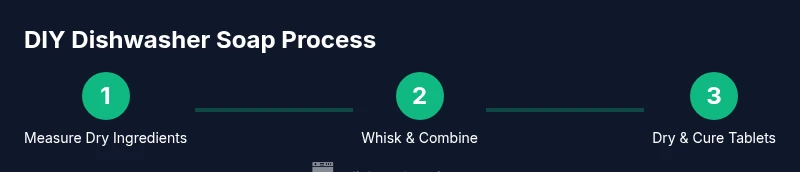
Use separate measuring cups to scoop 1 cup washing soda, 1 cup borax, and 1/2 cup citric acid into a large mixing bowl. This ensures the correct balance of cleaning power and mineral-removing agents. Set aside any lumps by sifting before combining.
Tip: Sifting eliminates clumps that can cause uneven cleaning. - 2
Whisk to combine
Whisk or stir the dry ingredients together for 30–60 seconds until the mixture is uniform in texture and color. Even distribution helps prevent hotspots that can stain dishes.
Tip: Whisk in a figure-eight motion for consistent mixing. - 3
Add optional additions
If desired, add 1–4 tablespoons of kosher salt for improved scrubbing in hard water or a few drops of a safe fragrance. Stir gently to avoid introducing moisture.
Tip: Keep fragrance to a minimum to protect dispenser seals. - 4
Press to form tablets (optional)
If making tablets, lightly spritz the mixture with water to form a crumbly paste, then press firmly into silicone molds or an ice tray. Ensure they are compact and level.
Tip: Do not over-wet; a small amount of moisture is enough to hold shape. - 5
Dry and cure tablets
Let the formed tablets dry in a warm, dry area for 24–48 hours before removing from molds. Proper curing reduces crumbling and improves dissolution.
Tip: Rotate trays if humidity is uneven to promote even drying. - 6
Test with a small batch
Run a test load with 1 tablet (or 1–2 tablespoons of powder) to assess cleaning and residue. Observe glass clarity and any film on plastics.
Tip: Record results to adjust future batches. - 7
Store properly
Store finished detergent in an airtight container away from moisture. Label with preparation date and batch details for future reference.
Tip: Keep away from children and pets; use a dry scoop when measuring.
People Also Ask
Can I replace borax with baking soda?
Baking soda alone is not as effective as borax for soil suspension and cleaning power. If you substitute, plan to adjust other ratios and test on a small load to verify cleaning performance.
Baking soda alone isn’t as strong as borax for cleaning. If you substitute, test with a small batch first to make sure it cleans well.
Is homemade dishwasher soap safe for septic systems?
DIY detergents made with common, water-soluble ingredients are generally compatible with septic systems when used as directed and without excess additives. Avoid phosphates and harsh chemicals.
Generally safe for septic systems when used as directed and avoiding phosphates. Always test and use sparingly.
Will homemade tablets dissolve in all dishwasher models?
Most dishwashers will dissolve tablets, but some models or cycles may prefer powder. If dissolution is slow, switch to the powder form or adjust curing.
Most models dissolve the tablets, but if you notice residue, try the powder form or adjust curing.
How long do DIY detergents last once made?
When stored in a dry, airtight container away from moisture, DIY detergents can last for several months. Check for clumping or changes in texture as a sign to re-mix or discard.
Stored dry and airtight, these detergents last for several months. Look for clumping as a sign to replace part of the batch.
Are essential oils safe to use in DIY detergent?
Essential oils can be used sparingly, but some oils may corrode seals or cause residue. Use only a tiny amount and avoid if you’re unsure about dishwasher compatibility.
Essential oils can be used sparingly, but they may affect seals or residue. Use very little and test first.
Watch Video
What to Remember
- Measure ingredients accurately for consistent results
- Choose powder or tablet form based on preference and dishwasher model
- Test with a small load before scaling up
- Store in a dry, airtight container to prevent clumping