How to Use Dishwasher Gel: A Step-by-Step Guide
Learn how to use dishwasher gel correctly, dose accurately, adjust for water hardness, and store gel to keep dishes spotless. This step-by-step guide is designed for homeowners and renters seeking practical, AI-informed tips.


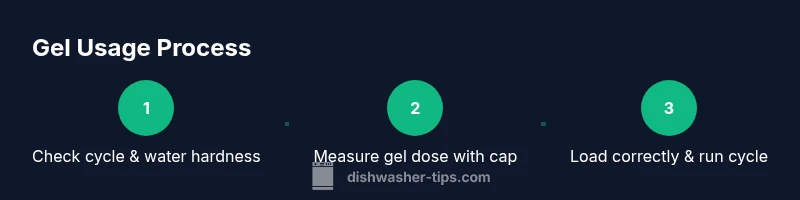
By the end of this guide you will know how to use dishwasher gel correctly, measure the right amount, and adjust for water hardness and load size. You’ll also learn common mistakes to avoid, such as overusing gel or using the wrong type for your dishwasher. Follow these steps for sparkling dishes with minimal residue.
What dishwasher gel is and how it works
Dishwasher gel is a liquid detergent formulated specifically for automatic dishwashers. It combines surfactants, rinse aids, and builders to break down food soils, lift grease, and help water sheet off surfaces during the cycle. The gel form is designed for consistent dispersion, which reduces clumping and film on glassware. When you run a cycle, the gel dissolves in the wash, delivering cleaning agents evenly across the rack. Understanding how to use dishwasher gel begins with recognizing that its viscosity and composition are chosen to improve dosing accuracy and minimize residue. According to Dishwasher Tips, selecting a gel with a balanced blend of cleaners and rinse aids is essential for reliable results while protecting your machine. This guide walks you through selecting the right gel, dosing correctly, and avoiding common errors that leave spots and cloudy glass.
Why brand choice and formulation matter
Gel detergents come in several formulations. Some include enzymes that help break down proteins and starches, while others rely on surfactants alone. The choice can affect how well the gel works on baked-on foods versus light soils. For most households, a general-purpose gel that is compatible with your water hardness and dishwasher model is sufficient. Reading the label for dishwasher compatibility, enzyme content, and recommended cycle types helps you choose a gel that aligns with your cleaning goals. Keep an eye out for gels labeled as safe for septic systems if that’s a concern, and prefer fragrance-free options if you have sensitive skin or a sensitive nose in shared spaces.
Quick note on dosing and cycles
Dosing isn’t the same as using powder or tablets. Gel is often measured with the cap or a dedicated dosing cup, and the amount depends on load size and soil level. High-efficiency (HE) washers may require smaller doses than traditional models, but always follow the label instructions. This approach minimizes chemical waste and reduces the chance of excess suds that can leak from the unit or leave a film on dishes. Remember, gel is designed to work with a standard wash cycle; for stubborn soils, you may need to adjust load arrangement or cycle length rather than simply adding more gel.
Tools & Materials
- Dishwasher gel detergent(Gel formulated for automatic dishwashers; check label for compatibility with water hardness)
- Measuring cap or cup(Use to measure the gel amount according to load size)
- Water hardness testing strip (optional)(Helps tailor gel dosing for very hard water)
- Soft cloth or towel(For quick wipe-down of seals and tub after loading)
Steps
Estimated time: 15-25 minutes
- 1
Check dishwasher settings and water hardness
Inspect your dishwasher settings and confirm the cycle you plan to use. If you know your water hardness, note whether you’ll need a stronger gel dose or a rinse aid adjustment. This pre-check helps ensure the gel dosing aligns with the cycle and soil level.
Tip: Consult the user manual to locate the detergent compartment and the water hardness recommendations for your model. - 2
Prepare the gel dose using the cap
Measure the gel amount with the cap or cup according to the load size and soil level. For a light load with soft soils, use a smaller dose; for heavily soiled dishes, you may need a slightly larger dose within label guidance.
Tip: Avoid pouring gel directly into the tub; use the dosing container to prevent spills and misdosage. - 3
Open the detergent compartment and add the gel
Open the detergent compartment and pour the measured gel into the correct chamber. Close the compartment securely to prevent leaks during loading and running the cycle.
Tip: If your model requires you to insert a cup or insert the cap first, follow the manufacturer’s sequence for the compartment. - 4
Close the compartment and load dishes
Close the detergent lid and arrange dishes with space for water and detergent to circulate. Load bowls facing downward, cups upside down, and avoid blocking spray arms.
Tip: Position heavily soiled items at the bottom rack for thorough cleaning. - 5
Load properly to optimize gel performance
Spread out items to maximize water flow and prevent nesting, which traps soils. Avoid stacking items in contact with one another to prevent redeposition of soils.
Tip: Leave space between utensils and bowls so the gel can reach all surfaces. - 6
Select an appropriate wash cycle
Choose a cycle based on soil level and energy needs. Gel detergents perform well on standard cycles, but very soiled loads may benefit from a longer wash or higher temperature, if your model supports it.
Tip: Avoid running extra-long cycles solely to squeeze more cleaning power from the gel. - 7
Start the dishwasher
Start the chosen cycle and let the machine do the rest. Do not interrupt the cycle or add more gel mid-cycle unless your user manual allows for re-dosing.
Tip: Ensure the door is fully closed to prevent leaks. - 8
Wait for cycle completion
Allow the cycle to complete fully, including the drying phase. If your dishwasher has an eco mode, understand its impact on the soil removal and rinse performance.
Tip: Do not open the door mid-cycle as it can spill hot water and disrupt the cleaning process. - 9
Inspect dishes for residue
Open the door and check for any residue, spots, or film on glassware. If needed, run a quick rinse or a short cycle with a fresh dose in a future load.
Tip: Rinse residue-prone items such as coffee cups separately if you consistently see streaks. - 10
Clean the gel bottle and cap after use
Wipe spills and residues from the cap and bottle neck to prevent clogging and maintain accurate dosing for the next load.
Tip: Store the bottle upright in a cool, dry place away from heat or sunlight. - 11
Adjust dosing for future loads
If you notice crystal spots or residue, adjust the dose slightly in small increments for future cycles. Keep a simple log to track what works best for your water and soil level.
Tip: If you have particularly hard water, consider using a rinse aid or a water-softening additive as recommended. - 12
Store gel properly and maintain the dishwasher
Keep gel in its original container sealed tightly between uses. Regularly clean the filter and seals to maintain overall dishwasher performance.
Tip: Avoid exposing gel to extreme heat, which can degrade its efficacy.
People Also Ask
Can dishwasher gel be used in all dishwasher types?
Most automatic dishwashers accept gel detergents, but always check the manufacturer’s guidance for your model. If you have a high-efficiency (HE) washer, use the dose recommended for HE units on the label.
Most dishwashers can use gel detergents, but check your model’s manual for HE-specific dosing.
How do I know how much gel to use?
Follow the label’s dosing chart based on load size and soil level. Start with the recommended amount and adjust in small increments if you notice residue or film.
Start with the label’s amount and fine-tune based on how your dishes look after a cycle.
What if my dishes still come out dirty?
Check loading, water temperature, and cycle choice first. If soils persist, increase dose slightly within label guidance or run an extra rinse in a future cycle.
Try refilling dosing and consider an extra rinse if soils persist.
Is dishwasher gel safe for septic systems?
Many dishwasher gels are labeled as septic-safe. If yours is, it can be used with a septic system, but never mix with other cleaners that could upset the septic balance.
Yes, if labeled septic-safe, but avoid mixing with other cleaners.
Should I pre-rinse dishes before loading with gel?
Pre-rinsing is often unnecessary with a good gel formula, especially on light soils. For heavy soils, use the full wash cycle and proper loading rather than pre-rinsing.
Usually not; trust the gel and load arrangement for heavy soils instead.
Can I use gel during eco or energy-saving cycles?
Yes, many gels are designed to work with eco cycles, but ensure the dose matches the soil level and cycle duration for best results.
Yes, but adjust dose and loading to fit the eco cycle’s limitations.
Watch Video
What to Remember
- Measure the gel dose accurately for each load.
- Match gel dose to cycle and soil level, not to the dish count alone.
- Adjust for water hardness and consider a rinse aid if needed.
- Load dishes properly to maximize gel exposure and avoid residue.
- Store gel correctly and clean the bottle after use.