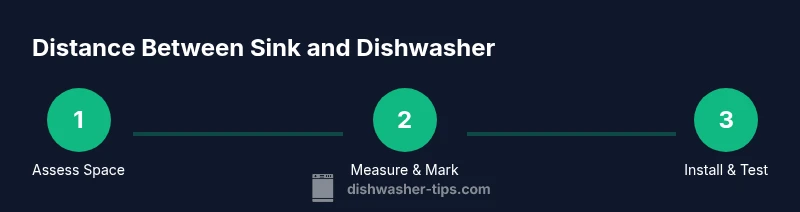
How Far Should a Dishwasher Be From the Sink? A Practical Guide
Discover practical guidelines for placing your dishwasher relative to the sink, including typical distances, measurement steps, and installation tips to prevent leaks and ensure smooth operation. Dishwasher Tips provides actionable, AI-informed guidance for homeowners.


For most kitchens, the recommended distance for how far a dishwasher from the sink is typically 18 to 24 inches. This spacing accommodates plumbing hookups, door clearance, and countertop overhang while keeping the drain hose length manageable. Always verify with local codes and your dishwasher’s installation manual.
Why Distancing Matters
In kitchen planning, the distance between the sink and the dishwasher is more than a matter of preference—it directly influences how easily you route water lines, the drain hose, and electrical connections. According to Dishwasher Tips, the most common target is around 18–24 inches, a range that aligns with standard cabinet widths and typical drain hose lengths. Answering how far dishwasher from sink helps you set practical clearances for hoses, wiring, and the door’s swing arc. If the gap is too small, you risk pinched hoses or cramped service access; if it’s too large, you waste cabinet space and complicate waste-line routing. This balance supports safer operation, easier maintenance, and smoother daily use. Start with a working target of 18–24 inches and adjust based on your kitchen’s layout and appliance spec sheets.
Why Distancing Matters
In kitchen planning, the distance between the sink and the dishwasher is more than a matter of preference—it directly influences how easily you route water lines, the drain hose, and electrical connections. According to Dishwasher Tips, the most common target is around 18–24 inches, a range that aligns with standard cabinet widths and typical drain hose lengths. Answering how far dishwasher from sink helps you set practical clearances for hoses, wiring, and the door’s swing arc. If the gap is too small, you risk pinched hoses or cramped service access; if it’s too large, you waste cabinet space and complicate waste-line routing. This balance supports safer operation, easier maintenance, and smoother daily use. Start with a working target of 18–24 inches and adjust based on your kitchen’s layout and appliance spec sheets.
In practice, you’ll want to document your measurements and keep a copy of the dishwasher’s installation manual. The exact maximum hose length, required air gaps, and panel alignments can vary by model. When in doubt, consult the manual and local code requirements before drilling or cutting into cabinetry. By understanding the purpose behind the distance, you’ll make more informed decisions that pay off during installation and over the life of the appliance.
The distance also affects serviceability. A properly spaced unit makes it easier to pull the dishwasher away for maintenance or replacement without disconnecting supply lines. It gives you room to use tools in a clear workspace and reduces the risk of damaging water lines or electrical components. Remember: your goal is not merely to meet a number, but to achieve reliable plumbing, accessible service, and a safe, functional kitchen workflow.
Tools & Materials
- Measuring tape(Prefer 25 ft (7.6 m) or longer for flexibility when marking multiple layouts)
- Carpenter's pencil(For marking layout lines on cabinets and walls)
- Level(Ensures the dishwasher is perfectly level to prevent leaks and improper door sealing)
- Masking tape(Temporary marks on countertops or cabinets)
- Safety gloves(Protect hands when prepping under-sink area and handling hardware)
Steps
Estimated time: 60-90 minutes
- 1
Power down and prep
Shut off the circuit breaker or unplug the dishwasher. Confirm power is off by testing a control panel or using a non-contact tester. This step prevents electrical shock during measurements and installation.
Tip: Double-check by testing the control panel with the unit unplugged. - 2
Inspect plumbing and clearance
Look over the drain hose length, supply lines, and the P-trap area. Ensure there is slack for movement without kinking or pulling on fittings. Note any tight corners that will influence best placement.
Tip: Take photos of existing hookups to guide future adjustments. - 3
Measure space and mark location
Use the measuring tape to determine the distance from the sink edge to the planned dishwasher rough-in. Mark the target with painter’s tape and jot down the measurement for reference.
Tip: Record multiple measurements from different sink points to confirm a consistent distance. - 4
Assess door swing and cabinet clearance
Verify that the dishwasher door will clear the sink, adjacent cabinetry, and any drawers. If clearance is tight, consider adjusting cabinet faces or relocating the unit slightly.
Tip: If needed, relocate nearby cabinetry to accommodate the door swing. - 5
Prepare connections and bring the unit in
Remove obstacles, slide the dishwasher toward the rough-in, and practice level adjustments before final connection. Align the unit so that the water inlet, drain, and electrical plug can reach without strain.
Tip: Use shims under the front feet to achieve a level install without stressing connections. - 6
Test fit, then connect and verify
Secure the dishwasher, connect water supply, drain hose, and electrical as per the manufacturer’s manual. Run a short cycle to check for leaks and verify proper drainage, then readjust if needed.
Tip: Run a quick leak test with the panel off to inspect hose clamps and fittings.
People Also Ask
What is the standard distance between the sink and dishwasher?
A common guideline is 18-24 inches, but always verify with your cabinet layout and model specs.
Most installations place the dishwasher about 18 to 24 inches from the sink, but always check your model manual.
Can a dishwasher be installed directly next to the sink?
Yes, but ensure there’s room for hookups, door swing, and venting; avoid crimping hoses and wires.
Yes, as long as there’s space for connections and the door can open fully.
Does distance affect drainage?
Distance can affect drain hose routing and trap placement; keep hose length within manufacturer limits and maintain a proper loop.
Yes—too much distance can complicate drainage; stay within the model's guidelines.
What if I have a compact kitchen?
In small kitchens, you may need to position the dishwasher closer or farther based on cabinet layout; consider narrow or drawer-style models.
In tight spaces, plan carefully and consider compact options.
Do I need special codes for the distance?
Code requirements focus on safe electrical and plumbing connections; follow local codes and the manual.
Local codes govern clearance around hookups; follow them and the appliance manual.
How can I adjust distance after installation?
Adjustments usually require reworking cabinet alignment or repositioning the unit, then re-testing for leaks.
You may need to adjust cabinet positions or reinstall the unit and test again.
Watch Video
What to Remember
- Space 18–24 inches between sink and dishwasher for most layouts
- Ensure door clearance and proper hose routing to prevent leaks
- Follow model-specific instructions and local codes
- Verify connections with a test run before finishing
- Keep records of measurements and layout for future maintenance