How to Clean Dishwasher Soap Residue: A Step-by-Step Guide
Learn practical, step-by-step strategies to clean dishwasher soap residue, prevent buildup, and keep your dishwasher performing at its best. This guide covers detergent types, safe cleaners, maintenance routines, and troubleshooting tips for homeowners and renters.


You will learn how to safely remove soap residue from the dishwasher soap dispenser, prevent future buildup, and maintain optimal detergent flow. This guide covers compatible detergents, cleaning frequency, and a practical, repeatable routine you can apply to most homes. According to Dishwasher Tips, regular maintenance reduces clogging and improves overall wash quality.
Why clean dishwasher soap matters
Soap residue in the dishwasher soap compartment can transfer to dishes, leave a cloudy film, and reduce cleaning performance. When soap accumulates, it can clog the dispenser, causing irregular dosing and soap streaks on glassware. A routine that targets the clean dishwasher soap compartment ensures the detergent remains effective and residue-free. The result is fewer rewashes and consistently clean dishes. For homeowners and renters, this is a simple maintenance task with tangible benefits for your kitchen workflow. As part of a broader maintenance mindset, cleaning the soap area also helps when you inspect filters and spray arms for debris, ensuring uniform water coverage during cycles. Regular care minimizes surprises and keeps your dishwasher running efficiently over time.
How soap chemistry affects residue
Detergent formulations are designed to dissolve in water, but water hardness and cycle temperature influence how well they perform. A clean dishwasher soap that is mismatched with your water type may leave mineral films or soap scum. Some users notice more residue with hard water, while softer water can reveal impurities in the detergent itself. Dish soap designed for mechanical reliability often reduces rinse streaks when used with appropriate wash temperatures. According to Dishwasher Tips Analysis, 2026, adopting a compatible detergent and cleaning routine lowers the likelihood of persistent residue and improves overall cleanliness. This section explains how chemistry and water interact, helping you tailor a routine that keeps residue to a minimum.
Detergent types and residue tendencies
Powdered detergents, liquids, and pods each interact differently with dishwasher mechanics. Powder detergents can accumulate in the dispenser if not fully dissolved, especially in short cycles. Liquids may produce fewer clogs but can promote streaking if the rinse cycle isn’t hot enough. Pods deliver pre-measured doses but can leave a film if the seal fails or if the dispenser is partially clogged. When you aim for a truly clean dishwasher soap outcome, test a few options to see which type yields the least residue for your water and load patterns. The goal is consistent dissolution and complete rinsing, which minimizes film and chalky spots on dishes. Using a clean dishwasher soap that is designed for your detergent type is a practical first step toward a spotless result.
Cleaning frequency and maintenance plan
A quarterly check of the soap dispenser, gasket, and housing is often enough for typical households, but high-use kitchens or hard-water areas may require monthly attention. Establish a simple calendar reminder to inspect the dispenser, clean the pocket, and remove trapped residues before they harden. Regular maintenance reduces the chance of odors and ensures even detergent dosing. A predictable routine also makes it easier to track issues and avoid reactive fixes. If you notice consistent buildup, bump up your cleaning frequency and consider a more thorough disassembly workflow to refresh seals and springs.
Safe cleaners and routine maintenance
Avoid harsh chemical mixing that could damage dishwasher components. Warm water, mild dish soap, and a soft-bristled brush are usually enough for gentle cleaning. White vinegar can help dissolve mineral deposits, but use it sparingly and avoid mixing vinegar with bleach or any chlorine-based cleaners. Baking soda acts as a gentle abrasive that can lift residue without scratching plastics. A spray bottle with warm water, plus a microfiber cloth, is a convenient combination for quick cleanups between full disassemblies. Always dry the area after cleaning to prevent new buildup and to keep electronics and motors safe from moisture damage.
Troubleshooting common signs of soap residue
If you notice cloudy films on dishes, soap streaks in corners, or the dispenser not opening fully, these are common indicators of residue buildup. Check the soap pocket for obstructions, confirm the seal is intact, and inspect the spray arms for clogs. Residue can also be a symptom of using too much detergent or selecting a cycle that runs too cool. By correlating cycle selection with observed cleanliness, you can adjust future loads. If problems persist, a deeper disassembly might be required to clean the internal channels and ensure flow remains unobstructed.
Preventive measures to avoid buildup
To prevent recurring residue, rinse dishes before loading sparingly, use the correct amount of detergent, and choose cycles that run hot enough for your detergent type. Clean the dispenser area at least every 1–3 months, depending on usage and water hardness. Periodically check seals and gaskets for wear that could cause leaks or mis-dispensing. Keeping the dishwasher interior clean extends the life of moving parts and helps maintain effective cleaning power. Small habits, like wiping the dispenser after a cycle and avoiding high-mineral detergents in very hard water, contribute to long-term performance.
Choosing the right dishwasher soap for clean results
Your goal is a clean dishwasher soap that dissolves reliably in your typical load. Some users find that high-efficiency machines benefit from formulas designed for low-temperature operation, while older models may require more robust detergents. If you live in a hard-water area, consider formulas with built-in water-softening agents to reduce mineral deposits around the dispenser. Check the packaging for instructions specific to your dishwasher model and water hardness. Pair a suitable soap with regular dispenser cleaning to achieve consistent, residue-free results and overall better dish cleanliness.
Tools & Materials
- Latex-free gloves(Protect hands from cleaners; choose powder-free if sensitive)
- Microfiber cloths(Lint-free for streak-free drying)
- Soft-bristled toothbrush(Gentle scrubbing for tight corners)
- Bowl of warm water(Soak parts and rinse thoroughly)
- White vinegar(Dissolve mineral deposits; use sparingly)
- Baking soda(Gentle abrasive for spot cleaning)
- Spray bottle(Mist cleaners and rinse aid as needed)
- Plastic scraper(Gently lift residue without scratching)
Steps
Estimated time: 25-40 minutes
- 1
Clear access to dispenser
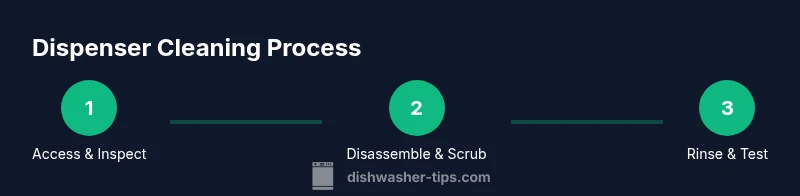
Remove the bottom rack and pull out the spray arm if needed to reach the soap dispenser. This gives you clear visibility and room to work. Why: better access prevents accidental damage to hinges or wiring.
Tip: Have a towel handy to catch spilled water. - 2
Inspect dispenser and overflow area
Open the dispenser cover and inspect for loose springs or cracked seals. Look for soap buildup that could prevent the door from opening fully. Why: a stuck or slow-dispensing door is a common cause of residue on dishes.
Tip: Take a quick photo before disassembly for reference. - 3
Disassemble components safely
Carefully detach any removable covers or caps following the manufacturer’s guidance. Keep track of screws and small parts. Why: proper reassembly prevents leaks and mis-dispensing.
Tip: Do not force parts; if resistance is felt, recheck guides. - 4
Scrub and soak parts
Soak detachable parts in warm water with a drop of dish soap for 5–10 minutes, then scrub with a soft brush. Rinse well and dry. Why: soaking loosens dried detergent residue that can block the mechanism.
Tip: Use baking soda as a gentle abrasive if needed. - 5
Rinse, reassemble, and test
Reassemble the dispenser, ensure the door seals properly, then run a hot water cycle with an empty dishwasher to verify even dispensing. Why: a test cycle confirms the fix without risking dirty dishes.
Tip: Pay attention to any leaks around the dispenser during the test. - 6
Document maintenance and schedule
Record the date of cleaning and set a reminder for the next interval (e.g., every 1–3 months). Why: regular reinforcement reduces the chance of buildup and ensures ongoing performance.
Tip: Pair with quarterly filter checks for efficiency.
People Also Ask
Why is there soap residue on dishes after washing?
Soap residue can result from an obstructed dispenser, incorrect detergent type, or hard water minerals. Inspect the dispenser, switch to a formula suited for your water, and consider a mineral-removing rinse aid. A periodic cleaning of the dispenser helps prevent recurring residue.
Residue happens when the dispenser is blocked or the detergent isn't matched to your water. Clean the dispenser, try a better detergent, and use a rinse aid if you have hard water.
Can I use vinegar to clean the dispenser?
Yes, diluted white vinegar can help dissolve mineral deposits, but avoid mixing vinegar with bleach or ammonia. Use vinegar in moderation and rinse well after use.
Diluted vinegar can help with minerals, but never mix with bleach. Rinse thoroughly afterward.
How often should I clean the soap dispenser?
Clean the dispenser every 1–3 months based on usage and water hardness. Increase frequency if you notice films or clogging during cycles.
Most households do this every few months, more often if you have hard water.
Is it safe to disassemble the soap dispenser?
Disassembly is safe if you follow the manufacturer’s guidance and disconnect power if required by your model. Use gentle tools and keep track of small parts to avoid losing components.
Yes, as long as your model allows it and you follow instructions carefully.
What detergent should I use to prevent residue?
Choose detergents designed for your water hardness and dishwasher model. If you have hard water, look for formulas with built-in water softeners and avoid overloads of detergent.
Pick a detergent suited to your water and dishwasher. In hard water, use ones with softeners.
Will running hot cycles help remove residue?
Yes, hot cycles assist in dissolving and flushing away stuck-on residue. Use a maintenance wash on hot settings after cleaning the dispenser.
A hot cycle helps flush out residue after cleaning.
Watch Video
What to Remember
- Inspect the soap dispenser regularly to prevent buildup.
- Choose detergent type that matches your water hardness for clean results.
- Disassemble safely and clean with gentle tools to avoid damage.
- Run hot cycles after cleaning to flush residue completely.
- Document maintenance to build a dependable routine.