Dishwasher and Washing Machine Cleaner: A Practical Guide
Explore how to choose and use dishwasher and washing machine cleaner, compare types, best practices, and maintenance tips for spotless appliances.


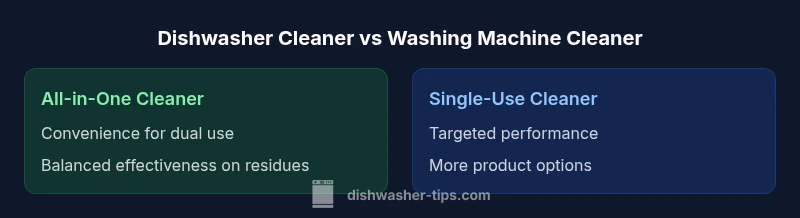
TL;DR: An all-in-one dishwasher and washing machine cleaner usually delivers the best balance of convenience and results for most homes. If you run both appliances regularly, a dual-use formula simplifies maintenance and reduces clutter. For heavy mineral buildup or persistent odors, you may prefer appliance-specific cleaners used according to the manufacturer's guidance. See our full comparison chart for nuances.
Why a Dedicated Cleaner Matters for Dishwasher and Washing Machine
A dishwasher and washing machine cleaner specifically formulated for both appliances helps address common residue types—detergent scum, mineral deposits, and odor-causing bacteria—that generic cleaners may miss. When you invest in a cleaner designed for dual-use, you simplify your maintenance routine and reduce the risk of cross-contamination between cycles. According to Dishwasher Tips, using a purpose-built cleaner tailored for the dual demands of these appliances can yield more consistent results than repurposing bathroom or kitchen cleaners. This is especially relevant for households with hard water, where mineral buildup accumulates more quickly and can impact performance over time. The goal is not only clean dishes and fresh laundry but also preserved seals, hoses, and gaskets.
By adopting a routine that includes a dedicated cleaner, you create a predictable maintenance cadence that keeps appliances performing efficiently and reduces the likelihood of costly repairs down the line. The Dishwasher Tips team emphasizes that consistency matters as much as the product you choose. A carefully selected cleaner aligned with your water type and usage patterns makes maintenance straightforward rather than a guessing game.
**bold
Comparison
| Feature | All-in-one dishwasher & washing machine cleaner | Single-appliance cleaner (dishwasher-only or washer-only) |
|---|---|---|
| Active ingredients | Enzymes and mineral-scavengers designed for shared residues; formulations aimed at both machines | Tailored agents optimized for a specific appliance type, often stronger on appliance-specific deposits |
| Usage frequency | Monthly or as needed for both appliances in a dual-use routine | Monthly for the designated appliance, with separate cycles for the other if used |
| Ease of use | One product, one routine, reduced storage | Two products mean more planning and storage, but precision for each appliance |
| Cost per cycle | Moderate cost with shared usage | Potentially lower per-device cost but higher combined spend |
| Best for | Homes with both appliances, seeking convenience and consistency | Homes focusing on maximal performance for a single appliance |
The Good
- Consolidates maintenance into a single routine for dual-use households
- Reduces clutter by using one cleaner for two appliances
- Often formulated to combat odors and mineral buildup across surfaces
- Improves perceived cleanliness and ease of use
Disadvantages
- May be less specialized for extreme mineral buildup in one appliance
- Could be less effective for stubborn deposits compared with appliance-specific formulas
- Availability can vary by region or retailer
- Storage and shelf-life considerations when using multiple products are minimized but still present
All-in-one cleaners are best for households with both appliances, offering convenience and solid results; reserve appliance-specific formulas for stubborn buildup.
Choose an all-in-one cleaner when you want a streamlined routine that covers both devices. If you encounter persistent mineral deposits or odor issues, supplement with appliance-specific options as needed and follow label guidance to prevent warranty concerns.
People Also Ask
Do I really need a cleaner designed for both dishwasher and washing machine, or can I use separate products?
A dual-use cleaner can simplify maintenance by covering residues common to both appliances. If your usage is light or you notice persistent buildup in one device, an appliance-specific product may be warranted. Always follow the product label and consider your water type and detergent usage.
A dual-use cleaner is convenient for mixed-use homes, but consider specialty formulas if one appliance shows stubborn buildup.
Can I use natural cleaners or homemade mixtures for these appliances?
Some natural approaches can work for routine maintenance, but most dishwasher and washing machine cleaners are formulated to target mineral deposits and bacteria in both devices. Check for compatibility with seals and gaskets and avoid vinegar or bleach mixes that may damage certain materials.
Natural options can help, but read labels to ensure compatibility and avoid damage.
How often should I run a cleaning cycle on each appliance?
A regular cleaning cycle schedule helps prevent buildup. In general, run a cleaner cycle on each appliance according to the product instructions and your usage intensity—often monthly or quarterly, depending on water hardness and cycle frequency.
Keep a steady cleaning rhythm—monthly or quarterly—based on your water and use.
Will using a cleaner affect warranty coverage?
Most manufacturers approve recommended cleaners when used as directed. Always verify compatibility with your appliance model and read warranty terms. Avoid mixing cleaners not intended for dual-use if your warranty requires specific products.
Check the warranty terms and product compatibility to avoid voiding coverage.
What signs indicate it’s time to clean the appliances again?
Look for lingering odor, less effective cleaning performance, cloudy glassware, or visible residue buildup on seals and drum surfaces. If these occur, it’s a good time to run a cleaning cycle with a suitable cleaner.
If odors or residue persist, schedule another cleaning cycle with the right cleaner.
Are there risks of mixing cleaners or using too much cleaner?
Mixing cleaners or using excessive amounts can create harmful fumes, residues, or damage seals. Always follow the label instructions and avoid combining products unless the manufacturer approves.
Don’t mix cleaners and don’t overuse them; follow label directions.
What to Remember
- Adopt a dual-use cleaner for convenience in mixed appliance households
- Choose based on water hardness and residue level
- Read labels to match ingredients with your needs
- Maintain a simple, recurring cleaning schedule for best results
- Consider brand reliability and warranty implications when selecting products