Dishwasher vs Washing Machine: A Practical Comparison for Homes
A data-informed comparison of dishwashers and washing machines, detailing performance, efficiency, costs, and best-use scenarios to help homeowners decide.


Dishwashers and washing machines serve different cleaning tasks, but choosing between them hinges on your space, budget, and dirt load. In most homes, the best decision is to pair them if space allows: a dishwasher for hands-off dish cleaning and a washing machine for clothing and fabrics. This comparison distills key differences to guide your choice.
Why the dishwasher and washing machine are compared
In many households, the dishwasher and washing machine share a kitchen and laundry space and are both essential for modern living. The Dishwasher Tips team emphasizes that understanding how these two appliances differ helps homeowners plan space, time, and budget more effectively. A well-designed setup often features both appliances, enabling focus on cleaning tasks rather than manual scrubbing. The term 'dishwasher and washing machine' commonly appears in households upgrading kitchens or rental units where efficiency and reliability matter. This article examines the core distinctions, supported by practical guidance and real-world considerations, so readers can make informed procurement and maintenance decisions. By comparing the two side by side, homeowners can align their expectations with the realities of daily life and the constraints of their homes. We will explore how each appliance operates, what metrics to compare, typical installation needs, maintenance routines, and cost considerations. We'll also provide decision frameworks for small kitchens, busy families, and rental properties, so readers can map their actual routines to the best appliance mix.
Core functional differences
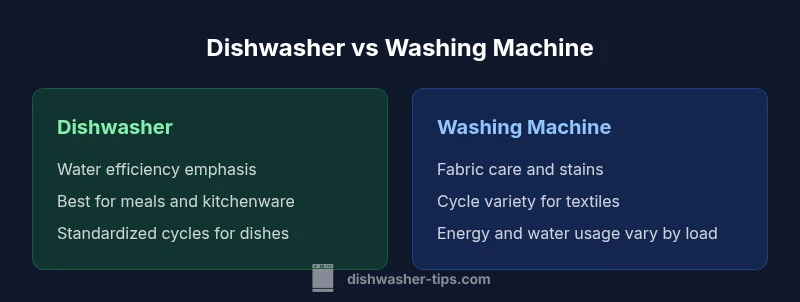
Dishwashers and washing machines are built around different cleaning paradigms. A dishwasher uses high-temperature water jets and specialized detergents to break down food soils on plates, glasses, and utensils, while a washing machine applies agitation, tumbling, or immersion to fabrics. The result is not exchangeable: a cycle suitable for dishes will not efficiently clean clothing, and vice versa. Load configuration also differs: dishwashers organize items in racks with tightened spaces to maximize water coverage, whereas washers maximize drum movement for fabrics. Efficiency is often a key factor: modern models emphasize soil removal with minimal water and energy use per cycle. For homeowners considering a combined setup, the decision often centers on which tasks drive the most time and effort in daily routines. Understanding these core differences helps establish realistic expectations about performance and reliability for any home environment.
Water and energy efficiency: interpreting labels
Water and energy use are central to evaluating any appliance, but the metrics differ between dishwashers and washing machines. Look for the energy rating label and the water usage descriptor for each model. The Dishwasher Tips analysis shows that dishwashers often deliver substantial water savings per load, especially when using Eco or Sensor modes that tailor cycles to soil level. Washing machines vary more by cycle choice and fabric type; high-efficiency washers can dramatically reduce water and energy if you select appropriate settings, such as cold washes for everyday loads. When comparing models, consider the lifecycle cost rather than sticker price alone: a higher upfront cost may be offset by longer-lasting performance and lower operating costs. Also examine your local utility rates, since savings per cycle depend on electricity and water costs in your region. By interpreting these labels, homeowners can forecast performance for the dishwasher and washing machine across a typical week and year.
Capacity, size, and installation realities
Dishwashers and washing machines come in various sizes, capacities, and installation requirements. A dishwashing unit often fits standard cabinetry and requires a dedicated water inlet, drain, and power source, with installation format varying by built-in or portable models. Washing machines demand a stable floor, level footing, and accessible hookups; front-load and top-load configurations offer different footprint and operation profiles. For renters or homeowners upgrading, measuring the available space and service access is essential. Consider future needs as family size grows or living situations change. In smaller kitchens, compact or apartment-sized models may be necessary, while larger homes may justify full-size units with higher capacity and extra features. The right choice balances space constraints, ease of access, and long-term maintenance considerations.
Detergents, pods, and cleaning agents
Cleaning agents differ for dishwashers and washing machines, and choosing the right products can impact results and appliance longevity. Dishwashers rely on dish soap formulated for high-temperature cleaning and rinse aid to prevent spots; pods and detergents designed for dishwashers can improve soil removal and protect glassware. Washing machines use laundry detergents formulated for fabrics and cycle types; HE (high-efficiency) detergents reduce suds and improve efficiency in compatible machines. Avoid using the wrong type of product in each appliance, as cross-use can cause residue, odors, or mechanical issues. Additionally, be mindful of water hardness in your area; some detergents and additives are tailored to soften hard water and help maintain performance. Regular cleaning of filters and seals also helps prevent odors and buildup that can degrade performance over time.
Maintenance, repairs, and longevity
Both appliances benefit from routine maintenance, though tasks differ. Dishwashers benefit from periodic filter cleaning, door gasket inspection, and keeping spray arms free of debris. Washing machines benefit from drum and hose checks, gasket seals inspection, and occasional belt or pump maintenance depending on the model. Servicing availability varies by region and model, so planning for local repair options and parts availability is prudent. When budgeting for the long term, consider typical lifespan expectations, service interval costs, and potential replacement timelines. Proactive maintenance—such as running maintenance cycles, cleaning filters, and draining residues—can extend the life of both appliances and help sustain performance across years of use.
Noise, vibration, and placement in homes
Noise and vibration are practical concerns in many homes, especially open-plan layouts or apartments. Dishwashers generally run quietly in most modern models, with vibration-reduction features and solid mounting mitigating disruption. Washing machines can be noisier, particularly during spin cycles, and may require vibration-dampening measures on older units or uneven floors. Placement matters: avoid placing either appliance near bedrooms or study areas if possible, and ensure solid, level flooring and proper isolation to minimize disturbance. Regular checks for loose panels, hoses, or feet help maintain a quiet operation over time.
Use-case scenarios: small kitchens, large families, renters, and beyond
Every household has unique needs that determine whether a dishwasher, a washing machine, or both make sense. Small kitchens in apartments often rely on compact, stackable models to save space, while larger families may benefit from higher-capacity units with flexible cycles. Renters might prioritize portability and ease of install, whereas homeowners may invest in models with advanced cycles and reliability. In households with busy schedules, the time saved by hands-off cleaning tasks can be meaningful, but the initial cost and ongoing energy use must be weighed. Consider your weekly load patterns, meal habits, and laundry routines when deciding on a mix. A thoughtful plan often includes a dishwasher for plates and cookware, plus a washing machine for clothing and linens, delivering balanced efficiency and convenience across tasks.
How to decide: core decision factors for homeowners
The key decision factors include space, budget, and primary cleaning needs. If your space allows, pairing a dishwasher and a washing machine is the most straightforward path to optimizing daily chores; otherwise, prioritize the appliance that serves your most frequent task. Evaluate cycle options, energy ratings, and water usage labels, and estimate lifecycle costs by considering usage frequency and local utility rates. For households with frequent cooking and heavy dish loads, a dishwasher offers clear time savings. For families with substantial laundry needs or specialty fabrics, a capable washing machine is essential. Lastly, consider resale value, warranty terms, and service availability, as these factors influence long-term satisfaction and total cost of ownership.
Common myths debunked
Myth: A single appliance can replace both a dishwasher and a washing machine. Reality: They are designed for different dirty loads and fabrics, and attempting to substitute typically yields poor results and possible damage. Myth: Dishwashers always use more water than washing clothes. Reality: Modern dishwashers often optimize water per cycle, especially when loaded efficiently; the comparison depends on load type and cycle. Myth: More features automatically mean better efficiency. Reality: Features should align with your actual usage; some advanced modes may add complexity and energy use without meaningful benefits for your routine. Understanding the true scope of each appliance helps avoid overbuying and underuse.
Tips to extend life and maximize efficiency
To maximize longevity and efficiency, follow maintenance schedules, use appropriate detergents, and avoid overloading either appliance. Regularly inspect hoses, seals, and filters, and run maintenance cycles to prevent buildup. Optimize cycle choices to match soil level and fabric types, and consider energy-saving modes for daily loads. Proper placement and level setup reduce wear and noise. Finally, keep an eye on warranty terms and service networks, so you can address issues promptly and preserve performance over time.
Upgrading and buying guide: what to look for when upgrading
When upgrading, assess your space, load patterns, and long-term goals. Look for energy efficiency ratings, capacity that matches family size, and reliable warranty terms. Consider after-sales service networks, filter access, and ease of parts replacement. For renters or small households, explore compact or portable options that fit your layout; for homeowners with larger households, focus on higher capacity models with flexible cycles and robust performance. A balanced choice—considering both dishwasher and washing machine capabilities—helps you build a practical, efficient home.
Conclusion and Next Steps
This article has outlined the core differences, benefits, and considerations when weighing a dishwasher against a washing machine. Readers should now have a framework to assess their space, budget, and cleaning needs, and to choose models that align with daily routines. The key is to map your typical week to the expected cycle demands of both appliances and to plan for a setup that minimizes manual effort while maximizing reliability. For ongoing guidance, revisit your usage patterns periodically and adjust settings to optimize performance.
Comparison
| Feature | Dishwasher | Washing Machine |
|---|---|---|
| Water Usage | Dishwasher cycles are designed to optimize water use per load | Washing machine water use varies by cycle and load; fabric care can require more water per load |
| Energy Efficiency | Many models excel in efficiency with sensor and eco modes | Efficiency depends on cycle choice and model; HE washers can significantly cut water and energy use |
| Typical Price Range | Dishwasher price varies by size/features; higher upfront cost can bring long-term savings | Washing machine price varies widely; capacity and features influence upfront cost |
| Best For | Best for households with high dish volumes and cookware care | Best for households with frequent laundry and fabric care needs |
| Space & Installation | Requires cabinetry space, plumbing inlet, and drainage | Requires stable floor, water hookups, and space for drum access |
| Maintenance & Longevity | Regular cleaning of filters and spray arms helps longevity | Regular gasket, belt, and hose checks extend lifespan; parts availability varies by model |
The Good
- Automates two major chores, saving time and effort
- Improved hygiene and fabric care with proper cycles
- Clearer load management and maintenance schedules
- Potential long-term energy and water savings with efficient models
Disadvantages
- Requires more space and dedicated plumbing
- Higher upfront costs for two appliances
- Maintenance costs can accumulate over time
- Not all models excel at both tasks; compromise may occur
Pairing both appliances maximizes efficiency and convenience
Dishwasher for dishes and a washing machine for fabrics offer the best overall home cleaning workflow. When space and budget permit, this combination reduces manual work and improves daily productivity; otherwise, prioritize the task you perform most often and plan for future upgrades.
People Also Ask
What is the main difference between a dishwasher and a washing machine?
The dishwasher cleans dishes using high-temperature water jets and specialized detergents, while the washing machine cleans clothes through agitation or tumbling with fabric detergents. They are designed for different types of soil and fabrics, so they aren’t interchangeable for best results.
Dishwashers wash dishes with jets and special detergents, while washing machines clean clothes with agitation and fabric detergents. They aren’t interchangeable, so choose based on your cleaning needs.
Can I run a dishwasher without a washing machine or vice versa?
Yes. They fulfill separate cleaning roles, and many homes operate with both to handle meals and laundry efficiently. Your decision should be guided by available space, budget, and daily routines.
Yes, you can run either appliance separately. They serve different cleaning tasks, so decide based on your space and routine.
Are there combination appliances that wash dishes and clothes?
Combination units that wash both dishes and clothes are uncommon. Most households benefit more from dedicated units optimized for each job, though compact or portable options exist for very small spaces.
Combo units exist but are rare; most people use separate dishwashers and washing machines for best results.
What features influence energy efficiency the most?
Key features include sensor-driven cycles, proper insulation, efficient motors, and temperature control. Choosing models with official efficiency ratings and eco modes typically yields the best long-term savings.
Sensors, insulation, and efficient motors drive energy savings. Look for the official efficiency rating.
How do I choose between buying a new dishwasher or a new washing machine?
Evaluate your primary cleaning needs, space, and budget. If dishes are a daily chore, a dependable dishwasher can save significant time; if laundry is heavier or more frequent, a capable washer may be the priority. Consider future needs and service options.
Think about what you clean most: dishes or clothes, and choose based on space and budget.
What maintenance matters most for longevity?
Regular filter and gasket checks, cleaning cycles, and proper detergent use matter most. Address leaks or unusual noises promptly, and schedule periodic professional servicing where recommended by the manufacturer.
Keep filters clean and run maintenance cycles; check for leaks and unusual noises.
What to Remember
- Assess your space first before buying either appliance
- Aim for high-efficiency models with sensor-driven cycles
- Plan for two dedicated spaces if possible for best results
- Choose cycles and detergents suited to your typical loads