How to Clean Bosch Dishwasher Filter: Step-by-Step Guide
Learn to clean your Bosch dishwasher filter to restore performance, improve drainage, and prevent odors. This step-by-step guide covers locating, removing, cleaning, and reassembling the filter with safe techniques for Bosch models.


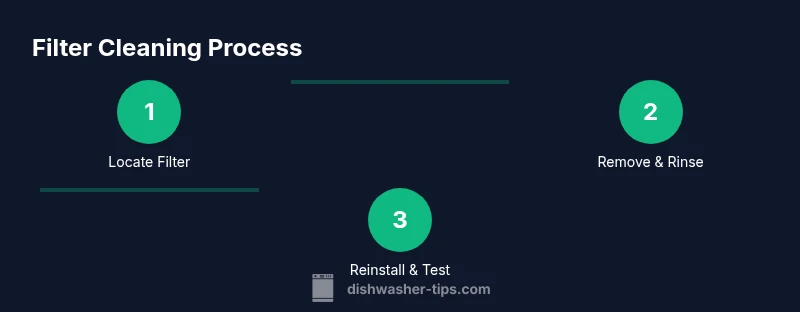
By following these steps, you can clean the Bosch dishwasher filter to restore cleaning performance and prevent odors. You’ll need a soft brush, warm water, mild soap, and a towel. Start by locating the filter, removing it, rinsing under running water, scrubbing away residue, and reinserting it securely before running a test cycle.
Understanding Bosch filter design and why it clogs
Bosch dishwashers employ a combination of coarse and fine filters to trap food particles before water recirculates. Regular cleaning keeps water flow efficient, prevents persistent odors, and maintains peak cleaning performance. According to Dishwasher Tips, neglecting the filter can reduce washing effectiveness and lead to recurring residue on dishes. This section explains how the filter works, what debris tends to accumulate, and why consistent maintenance matters for any Bosch model.
Filter location and model variations in Bosch dishwashers
Most Bosch models position the filter assembly at the bottom of the tub near the sump. Access usually requires removing the lower rack and lifting a circular or rectangular grate. Some newer models integrate the filter into the spray arm housing or use a two-part system with a coarse screen above a fine mesh. Always consult your user manual for exact locations and removal steps for your specific model.
Inspecting for wear, damage, and seal integrity
Before cleaning, inspect the filter and seal for cracks, warping, or sticky buildup. A torn or deformed seal can cause leaks and poor drainage even after cleaning. Gently twist and wiggle the filter to check for looseness or misalignment when reinstalled. If you notice cracks or deep scratches, consider replacing the filter assembly to protect against future clogs and water leaks.
Removing the filter safely and preparing for cleaning
Power down the unit and clear the area around the dishwasher. Remove the lower rack, then carefully detach the filter assembly according to your model’s instructions. Rinse off loose debris with warm water before tackling stubborn residue with a brush. Keep a towel handy to catch drips and prevent a slippery floor.
Deep cleaning methods: brushing, soap, and periodic disinfection
Rinse the filter under warm running water for a thorough initial wash. Use a soft-bristle brush or an old toothbrush to dislodge stuck particles from the mesh and crevices. Mild dish soap can help remove oil buildup, but avoid harsh chemicals that can degrade rubber seals. For a deeper clean, you can soak the filter in warm, soapy water for five to ten minutes, then rinse completely to remove all soap residue.
Cleaning the filter housing, sump, and drain area
Residue often hides in the filter housing and sump. Wipe the interior walls with a damp cloth and brush away any grime from the sump opening. Check the drain hose for kinks or blockages and clear any obstructions with a long flexible brush. A clean housing improves water flow and reduces the likelihood of reminders of odors.
Reassembling and testing: ensure a snug seal and proper drainage
Reinsert the filter assembly securely, aligning tabs or notches per the manual. Wipe the exterior dry and run a short cycle with a light load to verify drainage and avoid leaks. If water pools in the bottom after a cycle, reseat the filter and recheck the seal. Regular testing helps catch installation issues early.
Maintenance practices to prevent future buildup
Create a simple monthly maintenance habit: inspect the filter, rinse after heavy usage, and run an empty cycle every few months to purge residual debris. Consider using a rinse aid if recommended for your model and keep the spray arms free of obstructions. A routine, proactive approach minimizes clogs and keeps your dishes sparkling.
Tools & Materials
- Soft-bristle brush(Nylon or plastic brush works well for mesh in hard-to-reach areas.)
- Non-abrasive sponge(For scrubbing without scratching metal parts.)
- Mild dish soap(Avoid harsh chemicals that can degrade seals.)
- Warm water(Hot water can warp seals; use comfortably warm water.)
- Old toothbrush(Helpful for crevices and fine mesh.)
- Clean towel or microfiber cloth(Dry components thoroughly after rinsing.)
- Gloves(Protect hands from grime and hot surfaces.)
Steps
Estimated time: 25-40 minutes
- 1
Power down and prepare the workspace
Ensure the dishwasher is off and unplugged or switched off at the breaker. Pull out the lower rack and lay down a towel to catch drips. This protects you and keeps the area clean as you begin.
Tip: Double-check the control panel is inactive before handling any parts. - 2
Locate and remove the filter assembly
Open the filter cover or grate, depending on your model, and carefully lift out the filter. Keep any screws or clips organized to avoid losing parts during reassembly.
Tip: If your model uses a two-part filter, remove the coarse screen first, then the finer mesh. - 3
Rinse the filter under warm water
Hold the filter under running water to loosen loose food particles. Do not use high-pressure jets that could damage the mesh; a gentle stream is enough.
Tip: Place a tray beneath to catch splashes during rinsing. - 4
Scrub the filter and mesh as needed
Use a soft-bristle brush to dislodge stuck debris from the mesh and corners. If buildup persists, soak the filter in warm, soapy water for a few minutes before a final rinse.
Tip: Avoid metal tools that can scratch the mesh. - 5
Inspect the housing and seal; reassemble
Check the housing for residue and wipe clean. Reinsert the filter, aligning tabs or notches per your manual. Ensure a snug seal to prevent leaks.
Tip: If the seal looks cracked or deformed, replace it before use. - 6
Test the dishwasher and check for drainage
Run a short cycle with a light load to confirm proper drainage and no leaks. If water remains in the bottom, reseat the filter and inspect the seal again.
Tip: Watch for any unusual sounds or leaks during the test run.
People Also Ask
Why is the Bosch dishwasher filter important for performance?
The filter traps food debris and prevents it from clogging the pump and spray arms, which keeps efficiency high and reduces the need for re-washing. Regular cleaning prevents buildup that can lead to poor cleaning results and odors.
The filter is essential because it stops debris from reaching the pump; clean it often to keep performance high.
Can I use a dishwasher detergent to clean the filter?
Use a mild dish soap and water for cleaning. Avoid harsh chemicals, bleach, or solvents which can damage the filter and seals.
Yes, a mild dish soap with warm water works well; avoid strong chemicals.
What if the filter is damaged or torn?
A damaged filter should be replaced. A cracked seal can cause leaks and poor drainage, which undermines cleaning performance.
If the filter is damaged, replace it to prevent leaks and ensure proper drainage.
How often should I clean the Bosch filter?
Most users benefit from cleaning the filter every 1–2 months or whenever you notice reduced cleaning performance or visible debris on dishes.
Clean it every one to two months or when you see buildup or reduced cleaning results.
What are signs that there’s a drainage problem beyond the filter?
If you see standing water after a cycle, unusual noises, or a musty odor, check the pump, hoses, and filter housing for clogs or leaks.
Watch for standing water or strange noises; these hint at drain problems beyond the filter.
Is it safe to clean the filter with the dishwasher still connected?
No. Always power off the unit and remove power before handling internal parts to avoid electrical hazards.
Power off and unplug before touching internal parts to stay safe.
Watch Video
What to Remember
- Clean Bosch filters regularly to maintain optimal drainage.
- Inspect filter seals for wear and replace if damaged.
- Rinse, brush, and rinse again for thorough removal of debris.
- Reassemble carefully and test with a quick cycle.
- Establish a monthly maintenance routine to prevent buildup.