How to Clean the Dishwasher with Vinegar
Learn a safe, effective method to clean your dishwasher with vinegar. This guide covers step-by-step actions, tools, tips, and common mistakes for homeowners and renters in 2026.


You will learn how to safely clean and descale your dishwasher with vinegar, remove odors, and restore performance. This guide covers required tools, step-by-step actions, safety tips, and practical guidance to avoid common mistakes. Gather supplies, prep the unit, then follow the steps to refresh your appliance.
Why vinegar is a practical choice for dishwasher cleaning
White vinegar is a practical, inexpensive cleaner that can help break down mineral deposits and neutralize odors inside a dishwasher. If you’re searching for a reliable method to clean the dishwasher with vinegar, you’re in the right place. According to Dishwasher Tips, white vinegar’s acidity assists in dissolving lime scale and loosening baked-on residues when used correctly, providing a kitchen-safe option for routine maintenance. This section explains why vinegar works, what it can and cannot do, and how to avoid depleting seals or corroding metal parts. By understanding the chemistry and limitations, you can achieve noticeable results with a simple, consumer-friendly approach that fits into monthly maintenance.
Safety and best practices when using vinegar in your dishwasher
Vinegar is generally safe for dishwashers when used properly, but there are important precautions. Do not mix vinegar with bleach or other strong cleaners, as harmful chloramine vapors can form. Always run a single, hot-cycle when using vinegar, and avoid prolonged exposure that can degrade gaskets over time. If your dishwasher has rubber seals or chrome-plated components, test a small area first and monitor for any discoloration. The Dishwasher Tips team emphasizes safety and moderation—use vinegar as a periodic descaler rather than a miracle solution. With mindful use, you can refresh the interior without risking corrosion or damage. This guidance aligns with general appliance safety practices discussed by trusted sources and experts in the field.
What you’ll need before you start
Before you begin, gather a few simple items that are easy to source from a kitchen cabinet. You’ll need white distilled vinegar (5% acidity), a measuring cup or small cup, a soft microfiber cloth for wiping, an old toothbrush or soft brush for crevices, and a dishwasher-safe cup or bowl to hold vinegar on the upper rack. Optionally, have baking soda on hand for a deodorizing boost after the wash. Keep safety gloves handy if you have sensitive skin, and remove all dishes to allow unobstructed access to spray arms and seals. This prep reduces surprises and keeps the process smooth, especially for busy households relying on reliable appliances.
Step-by-step overview
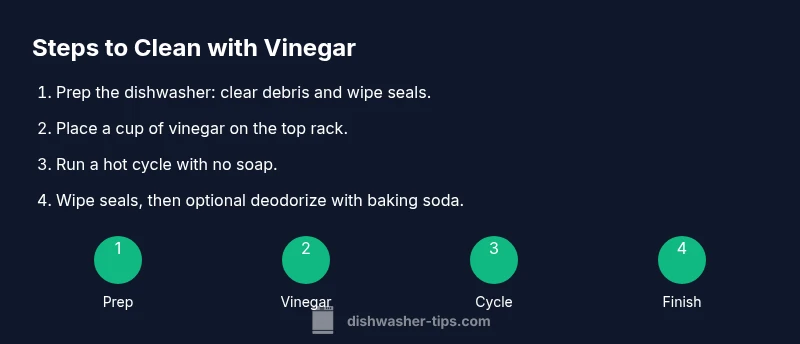
This guide follows a simple, repeatable workflow designed to minimize mess and maximize results. First, you’ll inspect the interior, remove utensils and racks, and check for obvious debris. Next, you’ll position a cup of vinegar on the upper rack to distribute cleaning action as the machine heats. After the cycle completes, wipe seals and inspect spray arms for clogs, then optionally deodorize with baking soda. The plan is safe for most residential dishwashers, but always consult your manufacturer’s recommendations for cleaning cycles and approved cleaners. Consistency matters: regular, gentle maintenance beats sporadic, aggressive cleanings. By following this overview, you’ll approach the task with confidence and reduce the chance of damage.
Step 1: Prep the dishwasher
Start by emptying the dishwasher and inspecting the interior for food particles or hard-water film. Wipe around the door gasket and near the spray arms with a damp cloth to remove loose debris. This step reduces the chance of particles redepositing during the wash and helps vinegar work more effectively. If you notice mineral buildup on the door seals, use a soft brush to dislodge it, taking care not to scratch the surface. A clean, dry cavity also prevents odor formation between cycles, which matches best practices recommended by Kitchen Maintenance guides.
Step 2: Place vinegar properly
Place a heat-safe cup or small bowl containing white vinegar on the top rack, toward the center to allow even distribution as the dishwasher runs. Do not pour vinegar directly into the dispenser unless your manual explicitly instructs you to; using the dispenser can dilute effectiveness or affect cycle timing. The vinegar acts as a mild descaler and deodorizer as the machine heats. Close the door and select a hot, normal wash; the heat helps dissolve mineral deposits more effectively. This method aligns with widely recommended descaling practices for household appliances.
Step 3: Run the cycle and inspect
Run the hottest normal cycle without adding soap. After the cycle finishes, open the door carefully and check for improved odor and cleaner surfaces. Use the soft cloth to wipe the door seals and interior walls; look for remaining white film or mineral deposits. If you see stubborn buildup, repeat the process or focus on problem areas with a vinegar-soaked cloth, avoiding aggressive scrubbing that could scratch metal. This step often yields noticeable improvements in both cleanliness and fragrance.
Step 4: Optional deodorizing with baking soda
If your dishwasher still smells off, sprinkle a cup of baking soda on the bottom and run a short hot cycle or a cold cycle with no dishes. Baking soda helps neutralize odors and can leave the interior with a fresh scent. Do not mix baking soda with vinegar in the dishwasher, as this can cause fizzing that may be splashy and noisy inside the unit; instead, use it after the vinegar cleaning pass. This step is optional and should be guided by odor levels and user experience in your home.
Step 5: Maintenance tips and safety reminders
To maintain the results, clean the door seals and spray arms monthly with a damp cloth and a soft brush. For homes with hard water, consider a quarterly cleaning routine and occasional water-softening considerations. Always avoid mixing cleaners like vinegar with bleach, and if you’re uncertain about a model’s materials, consult the user manual or the manufacturer’s cleaning recommendations. By building a simple maintenance habit, you can extend the life of your dishwasher and preserve clean, odor-free dishes, a point emphasized by Dishwasher Tips in their ongoing guidance to homeowners and renters.
Authority Sources
- https://www.epa.gov
- https://www.osha.gov
- https://www.cdc.gov
These sources provide general safety and cleaning guidelines for households. They help frame why safe, mild cleaners and proper ventilation matter when maintaining appliances and emphasize avoiding incompatible chemical combinations. Their guidance supports the safe, everyday use of vinegar as part of a broader maintenance routine.
Tools & Materials
- White distilled vinegar (5% acidity)(Use plain white vinegar; avoid scents or flavored varieties.)
- Measuring cup or small cup(For placing vinegar on the upper rack.)
- Dishwasher-safe cup or small bowl(To hold vinegar on the top rack; avoid pouring into dispenser.)
- Soft microfiber cloth(For wiping seals and interior surfaces.)
- Old toothbrush or small brush(For crevices and spray arm gaps.)
- Baking soda (optional)(For deodorizing after the vinegar cleaning.)
Steps
Estimated time: 30-45 minutes
- 1
Prep the dishwasher
Empty the unit and inspect for debris. Wipe around the door gasket and spray arms to remove loose dirt. This reduces residue that could redeposit during cleaning and helps the vinegar work more effectively.
Tip: Taking a few minutes to prep saves time later and lowers splashing risk. - 2
Place vinegar on the top rack
Set a heat-safe cup with vinegar on the upper rack, centered to promote even distribution. Avoid pouring vinegar into the dispenser unless the manual allows it; direct pouring can dilute the solution’s effectiveness.
Tip: Center the cup to maximize exposure of the interior walls to the vapor. - 3
Run a hot cycle
Run a hot or normal cycle without soap. The heat assists descaling and deodorizing and reduces the risk of mineral film setting on surfaces.
Tip: Choose a cycle with a thorough rinse and a high-temperature setting if available. - 4
Inspect and wipe after cycle
Open the door and check seals and interior for any remaining film or buildup. Wipe surfaces with a microfiber cloth; address stubborn spots with a vinegar-soaked cloth.
Tip: A quick wipe prevents mineral residues from redepositing during the next load. - 5
Optional deodorizing with baking soda
If odors persist, sprinkle baking soda on the bottom and run a short cycle with no dishes. Avoid mixing vinegar and baking soda in the same load.
Tip: Reserve baking soda for odor control; it’s not a substitute for descaling.
People Also Ask
Is vinegar safe for all dishwasher models?
In most cases, vinegar is safe for stainless steel and plastic interiors. Always consult your model’s manual if you’re unsure, and test on a small area first. Avoid prolonged exposure to seals that could degrade over time.
Vinegar is generally safe for most models, but check your manual and test a small spot first.
How often should I clean with vinegar?
Use vinegar for periodic maintenance, such as every few months, depending on water hardness and odor. If you notice buildup or smells, a follow-up cleaning may help.
Do a vinegar clean every few months or when you notice buildup or odors.
Will vinegar damage rubber seals?
When used in moderation and not left in contact for long periods, vinegar is unlikely to damage rubber seals. Limit exposure time and rinse with a cloth if you see any irritation.
Vinegar is usually safe for seals if you don’t leave it on too long.
Can I use vinegar with baking soda in the same load?
No. They react to form carbon dioxide and can create a mess inside the dishwasher. Use vinegar first, then baking soda in a separate step if odors persist.
Don’t mix them in the same load; use them in separate steps.
Does vinegar leave a smell after cleaning?
Vinegar scent typically dissipates quickly as the cycle ends and the interior air clears. If a faint smell remains, run a brief rinse cycle with no detergent and air out the door afterward.
The smell usually goes away after a thorough rinse and air dry.
Is vinegar a replacement for strong descalers?
Vinegar works well for routine maintenance and odor control, but heavy mineral buildup may require dedicated descalers or professional service. Consider using stronger products if you consistently see deposits.
Vinegar helps with regular maintenance, but heavy buildup may need stronger products.
Watch Video
What to Remember
- Use vinegar as a safe, affordable maintainer for most dishwashers.
- Never mix vinegar with bleach or ammonia cleaners.
- Place vinegar on the upper rack and run a hot cycle.
- Wipe seals and interior after cleaning for best results.