Hard Water in Dishwashers: A Practical Home Guide 2026
Learn practical steps to manage hard water in your dishwasher, prevent mineral buildup, and keep dishes sparkling with safe, affordable methods for 2026.


By following this step-by-step guide, you’ll identify hard-water symptoms in your dishwasher, prevent mineral buildup, and restore cleaning performance. You’ll learn how to test water hardness, choose appropriate salt and cleaners, and establish a maintenance routine that keeps dishes sparkling. Start with a quick check, then execute a thorough interior clean and adjust your cycles for hard-water use.
Why Hard Water Affects Dishwashers
Hard water contains elevated minerals, primarily calcium and magnesium, that travel through your home's pipes and accumulate in appliances. In a dishwasher, these minerals can precipitate as limescale on heating elements, spray arms, filters, and interior walls. That scale reduces water flow, impedes heating, and makes detergents less effective. A mineral film on glassware and silverware causes cloudiness and speckling, while odors and residue can appear if the interior isn’t cleaned regularly. The Dishwasher Tips team notes that regular maintenance slows scale buildup and keeps cleaning performance high in tough water conditions. If you notice longer wash cycles, more frequent re-washing, or dull dishes, hard-water buildup is likely the culprit. The good news is that you can mitigate most of these issues with a simple, consistent routine. Start by knowing your water hardness and applying only what your machine needs for your water quality; this helps save detergent, energy, and time while extending the dishwasher's life.
Signs Your Dishwasher Is Dealing with Hard Water
Common indicators include a chalky film on dishes, cloudy or etched glassware, and mineral crusts on interior surfaces. You may also see soap scum on rims and seals, white specks on utensils, or a distinct mineral odor after cycles. If your dishwasher seems to run more cycles than before to achieve the same level of cleanliness, or if you frequently hand-rinse items, hard water might be the underlying issue. Some users notice increased energy use as the appliance works harder to heat water through mineral buildup. A quick check is to inspect the inside of the dishwasher after a wash: do you see any white crust around the filter, spray arms, or door gasket? These signs point toward mineral deposition and warrant a routine descaling and maintenance plan.
Preventive Measures to Minimize Mineral Build-Up
Take a proactive approach to keep minerals in check:
- Test your water hardness with a simple kit or obtain a local water report to tailor your approach.
- Use dishwasher salt or a built-in water-softening feature if your appliance supports it; this reduces mineral load.
- Always fill the rinse aid reservoir and use its setting appropriate for your water hardness; this helps water sheet off dishes and reduces spots.
- Clean the filters and spray arms monthly to prevent debris from trapping mineral particles.
- Choose a detergent formulated for hard water; prefer high-alkaline formulas and avoid over-dosing.
- Run hot cycles whenever possible; hotter water helps dissolve minerals and improves cleaning efficiency.
Cleaning Mineral Buildup and Interior Surfaces
Begin with empty dishwasher. Remove and rinse the filter, then inspect spray arms for clogged holes; use a soft brush or pin to clear obstructions. For interior descaling, choose a descaler or a citric acid-based cleaner; follow label directions, typically a hot cycle with the product. If using white vinegar, limit to a single hot cycle and avoid mixing with other cleaners. After the cycle, wipe the door gasket, interior walls, and door seal; a microfiber cloth helps. Rinse thoroughly and run an empty rinse cycle with clean water to ensure no residue remains. Finally, check for remaining scale around the heating element and around the water inlet; persistent buildup may require professional attention or a more concentrated descaling regime.
Choosing the Right Detergent and Additives for Hard Water
Hard water interacts with detergents to form insoluble salts that deposit on dishes, leaving spots and film. For best results, pair your detergent with a rinse aid designed for hard water and maintain the salt reservoir if your model uses it. Choose detergents labeled as suitable for hard water conditions, and avoid highly scented products that can leave residues. Consider a citric acid-based cleaner or a dedicated descaler as part of a monthly maintenance routine. If your area has very hard water, you might need a stronger formulation or a two-step approach: detergent plus an inline scale inhibitor. As a general rule, use a detergent engineered for hard water and complement with rinse aid to optimize results.
Routine Maintenance Plan for Hard Water
Create a simple calendar: weekly quick checks, monthly deep clean, quarterly descale. To keep hard-water issues under control, adopt a routine that fits your schedule:
- Weekly quick glance: check for visible scale on filters, run hot water tap for a minute before a cycle to ensure hot water supply.
- Monthly deep clean: remove and clean filters, spray arms; run a cleaning cycle with a descaler or citric acid-based cleaner.
- Quarterly descaling: perform a full interior descale; re-check water hardness and adjust salt and rinse aid levels.
- Annually evaluate water hardness and consider a home water-softening option or consulting a plumber for alternative solutions.
When to Consider Water Softening or Specialist Treatments
Assess the scale of the problem: if multiple fixtures show mineral buildup, or the dishwasher continues to have spots after descaling, consider a water-softening solution. A whole-house system can reduce mineral content throughout the home; a point-of-entry (POE) unit can be installed near the main supply. Compare the cost of softening versus continuing maintenance; for renters, portable options or frequent maintenance may be more practical. A licensed plumber or water treatment specialist can recommend the most effective approach based on your local water hardness and household usage.
Troubleshooting Common Hard Water Issues
- If glasses are cloudy or spotted after a cycle, increase rinse aid or switch to a hot cycle and descale if needed.
- If mineral crust appears on interior surfaces, perform a thorough clean and descaling; check filters and spray arms for blockages.
- If you notice a persistent mineral odor, clean gaskets and seals and run an empty cycle with a descaler.
- If the dishwasher drains slowly, inspect the filter and pump for scale buildup; remove debris and test again.
- If cycles are incomplete or do not finish, verify water supply is hot and unobstructed, and that the rinse aid reservoir is full.
- If after troubleshooting you still see mineral deposits, consider professional assessment of local water hardness and appliance health.
Quick-Start Checklist
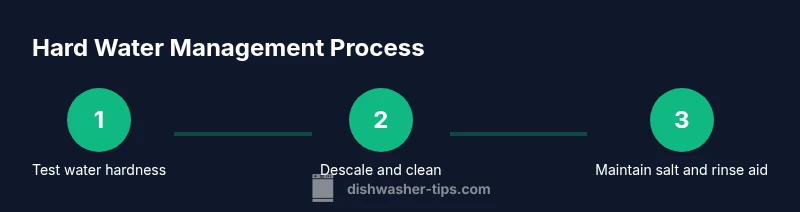
- Test water hardness
- Add dishwasher salt (if applicable)
- Fill rinse aid reservoir
- Clean filters and spray arms
- Run a hot cleaning cycle with descaler or citric acid cleaner
- Wipe interior surfaces and door gaskets
- Re-check salt and rinse aid levels
- Schedule regular maintenance and monitor performance
Tools & Materials
- White vinegar(Descaling and deodorizing; limit to one hot cycle if used)
- Citric acid-based dishwasher cleaner(Safer descaler alternative to vinegar for regular use)
- Dishwasher salt(Used in models with water softening to reduce mineral load)
- Rinse aid(Assists in water sheeting and reduces spots in hard water)
- Soft cloth or microfiber cloth(For wiping gaskets and interior surfaces)
- Soft bristle brush(Useful for gently clearing spray arm holes)
- Dishwasher-safe gloves(Protect hands during cleaning)
Steps
Estimated time: 60-90 minutes for initial cleanup; ongoing maintenance 15-20 minutes monthly
- 1
Check water hardness and detergent settings
Confirm your water hardness using a test kit or local water report. Note the level and adjust detergent, salt, and rinse aid usage accordingly. This ensures the dishwasher runs efficiently under your specific water conditions.
Tip: If hardness is high, plan for more frequent descaling and consider a dedicated hard-water cycle. - 2
Empty and prep the dishwasher
Remove any standing water and take out the bottom rack to access filters. Cleaning the interior now prevents dislodged scale from spreading during descaling.
Tip: Wear gloves to protect hands when handling sharp components. - 3
Clean filters and spray arms
Rinse filters under running water and use a soft brush to dislodge debris from spray arm holes. Blockages reduce water flow and cleaning efficiency.
Tip: Inspect spray arms for cracks; replace if holes are damaged. - 4
Descale the interior
Run a hot cycle with a descaler or citric acid-based cleaner according to label directions. This dissolves mineral buildup and restores cleaning performance.
Tip: Do not mix vinegar with bleach or other cleaners. - 5
Rinse and inspect
After the cycle, wipe gaskets and walls with a microfiber cloth. Inspect for remaining scale and re-clean if necessary.
Tip: Follow with an empty rinse cycle to ensure no cleaner residue remains. - 6
Re-seat salt and rinse aid
If your model uses salt or rinse aid, refill to recommended levels to support ongoing hard-water performance.
Tip: Avoid overfilling; consult the manual for correct amounts. - 7
Run a test load
Run a small load with hot water and a typical detergent to confirm improved cleaning and reduced spots.
Tip: If issues persist, consider a second descaling step. - 8
Schedule ongoing maintenance
Create a routine: quick weekly checks and a deeper monthly clean plus periodic descaling. This minimizes long-term mineral buildup.
Tip: Set a reminder in your phone or calendar to stay consistent.
People Also Ask
What is hard water and how do I test for it?
Hard water contains high mineral content, primarily calcium and magnesium. You can test it with a home hardness kit or obtain a local water report.
Hard water has minerals like calcium and magnesium; you can test it with a simple home kit or check your local water report.
Can I use vinegar to descale my dishwasher?
Vinegar can be used sparingly for descaling, but avoid mixing it with bleach or other cleaners. Citric acid-based descalers are a safer, common alternative.
Yes, you can use vinegar in moderation, but don’t mix it with bleach. Citric acid cleaners are often safer.
Will salt help with hard-water buildup in my dishwasher?
In models that support it, dishwasher salt softens water and reduces mineral deposits, improving cleaning efficiency.
If your machine uses salt, it can help reduce mineral buildup and improve performance.
How often should I descale my dishwasher?
Descale frequency depends on your water hardness; aim for regular descaling as part of your maintenance routine rather than a fixed schedule.
It depends on how hard your water is; set a descaling rhythm that fits your usage.
What are the signs that I need professional help?
Persistent mineral buildup despite cleaning, recurring spots after cleaning, or unusual odors may require a professional assessment of water hardness and appliance health.
If buildup keeps coming back or odors appear, a pro can check water hardness and the appliance.
Should renters install a home water softener for the dishwasher?
Renters may opt for portable solutions or regular maintenance. A professional can help assess if a permanent softening system is appropriate for your unit.
For renters, portable options or regular descaling can be practical; consult a pro for long-term options.
Watch Video
What to Remember
- Identify hard-water symptoms early.
- Descale regularly to prevent buildup.
- Optimize detergent and rinse aids for hard water.
- Maintain a simple, scheduled routine.