How to Remove Frigidaire Dishwasher Filter
Learn how to safely remove and clean the Frigidaire dishwasher filter to restore performance. This expert guide from Dishwasher Tips covers tools, step-by-step actions, safety, troubleshooting, and maintenance for homeowners and renters.


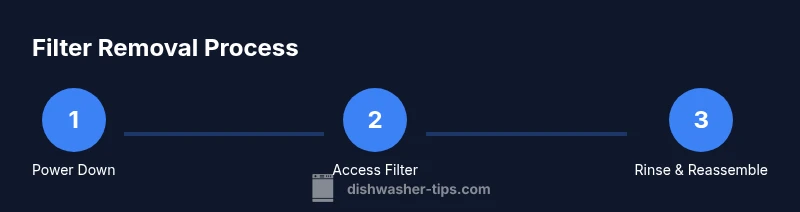
To remove the Frigidaire dishwasher filter, power down the unit and locate the bottom filter housing. Rotate the filter cap counterclockwise, lift out the cylindrical filter and mesh screen, and rinse all parts under warm, running water. Dry, reassemble, and run a quick empty cycle to confirm proper flow.
Why Regularly Cleaning the Frigidaire Filter Improves Performance
Regular maintenance of your Frigidaire dishwasher starts with the filter. The Dishwasher Tips team notes that a clogged or dirty filter can reduce water flow, leave dishes dirty, and place extra strain on the pump. By removing not only the filter but also inspecting the seal and surrounding basket, you can prevent common failure modes. This guide walks you through safe removal, thorough cleaning, and proper reassembly. According to Dishwasher Tips, consistent care saves time and money over the life of the unit and helps maintain optimal cleaning performance.
Understanding the role of the filter is the first step. The filter collects food particles and prevents them from entering the pump and spray arms. When debris accumulates, cycle times can lengthen and performance drops. A light, regular cleaning keeps these components free of obstruction and preserves efficiency.
How the Frigidaire Filter Design Works
Most Frigidaire models use a two-part filter system: a coarse mesh screen and a cylindrical bottom filter. The mesh catches larger particles while the cylinder traps finer debris, directing wastewater toward the pump and preventing redeposition on dishes. Knowing the layout helps you remove each part without damaging the seals or gaskets. This understanding also makes it easier to detect wear or cracks during inspection, which can prevent leaks and costly repairs.
Safety and Preparation Before You Start
Before touching any dishwasher parts, power down the unit at the circuit breaker to eliminate the risk of shock. Wear protective gloves to guard against sharp edges and hot components. Clear the surrounding area and have a towel and shallow tray ready for any spills. If your model requires manual water draining, ensure the tub is not pressurized and that you can access the filter from the front without forcing components.
Pro tip: Work on a stable surface and keep a damp rag handy to wipe away splashes as you work.
Locating the Filter in Different Frigidaire Models
Frigidaire models vary in filter placement. Some have a bottom filter under the lower spray arm, while others use a sump-style filter with a removable cap at the front or center of the tub. If you’re unsure, check your user manual for your specific model number. In many cases, the filter is accessible from the front bottom of the tub after removing the lower rack. The key is to identify the filter housing and avoid forcing the cap or misaligning the seals during reassembly.
Cleaning and Inspecting the Filter Components
Remove the filter components and rinse them under warm water. Use a soft brush to remove stubborn particles, taking care not to scratch the plastic surfaces. Inspect the mesh for tears or holes and check the seal around the filter for cracks. If damage is evident, replace the affected parts rather than forcing a reassembly. After cleaning, lay components on a towel to dry completely before reassembly.
How to Reassemble Everything Correctly
Reassembly requires aligning the cylindrical filter and mesh screen with the housing and securing the cap or retainer clockwise until it is snug, not overtight. Ensure there are no debris or misaligned edges that could prevent a proper seal. A good rule is to re-seat all parts until you feel a firm, even resistance. If your model uses gaskets, confirm they sit evenly to avoid leaks. After reassembly, wipe the area and run a short cycle with no dishes to test.
Common Issues After Filter Removal
If the dishwasher still won’t drain or leaves residue on dishes after filter removal, recheck the seals and ensure the filter is seated correctly. A partial blockage in the drain hose or air gap can mimic a clogged filter. Inspect the sump for any trapped debris and verify that the spray arms can rotate freely. If issues persist, consult your model’s manual or contact support for model-specific guidance.
Maintenance Tips for Long-Term Performance
Set a reminder to inspect the filter every 3–6 months and clean during routine kitchen cleaning days. Use a mild detergent and avoid harsh chemicals that could degrade plastic parts. Keeping the interior dry and free of residue between cycles helps minimize odor and bacteria buildup. Regular inspections also make it easier to catch wear before it becomes a larger problem.
Variations by Frigidaire Models
Different models may place the filter in slightly different locations or use a different removal mechanism. Always refer to your model’s manual for exact steps and torque guidelines. If the cap resists turning, confirm you’ve located the correct filter housing and aren’t trying to remove a different component. Patience and gentle force are key to avoiding cracks or broken tabs.
Quick Reference for Proper Maintenance
A simple, repeatable routine keeps your Frigidaire filter performing well: power down, locate the filter, remove and rinse, inspect for wear, dry thoroughly, reassemble, and run a test cycle. Keeping the area clean and accessible saves time and reduces the risk of accidental damage during maintenance.
How Dishwasher Tips Recommends Scheduling Filter Checks
To sustain peak performance, Dishwasher Tips recommends integrating filter checks into your regular appliance maintenance calendar. This routine reduces the chance of buildup that could affect wash quality and energy efficiency. Consistent care aligns with best practices for appliance longevity and household budgets.
Visual Aids and Practical Examples
Where possible, follow a visual guide or model-specific diagram when removing the filter. If you learn better from visuals, search for model-specific tutorials and watch them before attempting the removal. A hands-on approach paired with a reference can help you complete the task confidently and safely.
Tools & Materials
- Gloves(Protect hands from sharp edges and hot parts)
- Soft-bristle brush(Gently remove debris without scratching)
- Non-scratch sponge or cloth(Wipe surfaces without damage)
- Dish towel or drying cloth(Dry parts completely before reassembly)
- Warm water(Rinse parts thoroughly)
- Flat-head screwdriver (optional)(Only if your model uses a stubborn cap)
- Bucket or shallow tray(Catch any water spills)
Steps
Estimated time: 15-25 minutes
- 1
Power down and access the filter
Switch off the dishwasher at the circuit breaker to avoid shocks. Remove the lower rack to reveal the filter housing. Have a towel ready for any water that may escape during removal.
Tip: Lock in power safety first; never pressure-clean the filter without power down. - 2
Remove the cap or retainer
Grasp the filter cap and rotate it counterclockwise to release. If your model uses a locking clip, disengage it gently before lifting the cap.
Tip: If it won’t budge, do not force; check your model’s manual for the specific removal method. - 3
Extract the filter assemblies
Carefully lift out the cylindrical bottom filter and the mesh screen. Note their orientation so you can reinsert them correctly.
Tip: Take a quick photo of the assembly before removal to aid reassembly. - 4
Rinse and inspect
Rinse all parts under warm running water. Use the soft brush for stubborn debris and inspect for tears or cracks in the mesh and seal surfaces.
Tip: Replace any worn parts rather than forcing a risky reassembly. - 5
Dry and reassemble
Dry all components completely with a towel before reassembling in the reverse order. Ensure seals sit flush and the cap threads engage cleanly.
Tip: A dry seal prevents leaks after a test run. - 6
Test the cycle
Place the rack back, run an empty wash cycle, and observe water flow and drainage. Listen for unusual sounds that could indicate a mis-seated part.
Tip: If you hear leaks, stop the cycle and recheck the seal and seating.
People Also Ask
Where is the Frigidaire dishwasher filter located?
Most Frigidaire models place the filter at the bottom of the tub. It may be under the lower spray arm or inside a sump-style housing. Check your model’s manual for the exact location and removal method.
The filter is usually at the bottom of the tub, under the spray arm. Check your manual if you’re unsure.
Can I remove the filter while the dishwasher is on?
No. Always power down the unit and disconnect power before removing any filter components to avoid shock or injury.
No, you should always turn off power before removing the filter.
How often should I clean the Frigidaire filter?
Check and clean the filter every 1–3 months depending on usage and water hardness. If you notice reduced wash performance, clean it sooner.
Clean the filter every 1 to 3 months, or sooner if you notice reduced performance.
What should I do if the filter is damaged?
If the mesh or seal shows tears or cracks, replace the filter assembly. Damaged parts can cause leaks and poor performance.
If damaged, replace the filter assembly to prevent leaks.
Is it safe to use cleaning products on the filter?
Use mild dish soap and warm water. Avoid bleach or abrasive cleaners that can degrade plastic parts or seals.
Stick to mild soap and warm water; avoid harsh chemicals.
Does removing the filter affect warranty?
Removing or cleaning the filter as part of standard maintenance is generally acceptable, but use caution and follow the model manual to avoid voiding any warranty terms.
Follow the model manual and avoid damaging parts; typical maintenance is allowed, but check your warranty terms.
Watch Video
What to Remember
- Power down before starting any filter work.
- Clean all filter parts thoroughly and inspect for damage.
- Reassemble with careful alignment to prevent leaks.
- Run a test cycle to confirm proper drainage and wash performance.
- Schedule regular filter checks every 3–6 months.