Is Dishwasher Salt the Same as Water Softener Salt? A Practical Guide
Analytical guide explaining whether dishwasher salt and water softener salt are interchangeable, how they work, and how to choose the right salt for your appliance and water hardness.


In short, dishwasher salt and water softener salt are not interchangeable. Dishwasher salt is formulated for use in a dishwasher’s built‑in softening system to help the machine achieve efficient washing with hard water, while water softener salt is designed for whole‑home systems. Using the wrong salt can reduce cleaning performance and potentially damage the resin over time. Always follow the manufacturer’s guidance for your specific appliance.
What these salts do in your dishwasher
According to Dishwasher Tips, understanding whether the salt you buy is the right kind is essential for maintaining wash quality and protecting your dishwasher's internal softening module. When people ask is dishwasher salt the same as water softener salt, the quick answer is no: they serve different systems and are formulated for different tasks. In many homes, a built‑in water softening feature relies on dishwasher salt to regenerate the resin used to reduce hardness during the wash; this is not the same as the salt used in whole‑home water softeners. In practice, using the wrong salt can mean reduced cleaning performance, more mineral deposits, and potential damage over time. The distinction matters for renters and owners who want to avoid repeated service calls.
How dishwasher salt is used with built-in softeners
Dishwasher salt is designed to regenerate a small resin bed inside certain dishwashers’ dedicated softening modules. This process lowers the calcium and magnesium ions that cause hardness, improving detergent effectiveness and reducing mineral spots. The salt is released slowly in a controlled brine cycle, which helps maintain consistent performance over time. While many modern machines include a simple salt compartment, usage should still follow the user manual. Misplacing salt or using an inappropriate product can lead to factory‑set alarms or reduced rinse quality. According to the Dishwasher Tips team, staying within the intended system is crucial for long‑term reliability.
Composition, grain size, and common impurities
Dishwasher salt is typically pure sodium chloride with a grain size optimized to dissolve under the machine’s brine action. Water softener salt used for whole‑home units often comes in larger crystals or pellets and may include additives or moisture to suit salt‑based water softeners. The descriptor “food grade” is less relevant here, as the salt’s job in a dishwasher is not culinary; its purity level should still be suitable to avoid residue. Potassium chloride is sometimes offered as an alternative in some contexts, but it is generally not recommended for standard dishwasher softening modules unless the manufacturer explicitly supports it. The key takeaway is to avoid mixing salt types and to choose the product labeled for dishwashers when your appliance requires it.
How to identify the right product for your appliance
Start by checking the user manual and the salt compartment lid for the exact recommendation. Look for phrases like “dishwasher salt” or “salt for dishwashers,” and note any warnings about not using water softener salt. If your dishwasher has a salt indicator light, keep the compartment filled as instructed by the manual. When in doubt, contact the manufacturer or a qualified service technician. This is where a simple misstep—using the wrong salt—can affect cycle performance and even risk damaging the resin bed in the dishwasher’s softening module.
Common myths and misuses
Misconceptions abound around these salts. A common myth is that any NaCl salt will work in a dishwasher; in reality, only dishwasher‑specific salt should be used in machines with built‑in softeners. Some renters assume water softener salt is a universal fix for all hard water issues; this ignores the difference between whole‑home and appliance‑level softening. Another misconception is treating salt like rinse aid or detergent, which can create additional buildup or film on dishes. Sorting fact from fiction helps protect the dishwasher and ensures the best possible cleaning results.
Maintenance tips and practical storage
Store both types of salt in a cool, dry place away from moisture. Keep bags sealed and upright to prevent moisture ingress that can cause clumping. When filling the salt reservoir, wipe away any spilled salt to avoid corrosion on metal components and to minimize unbalanced cycles. Regularly inspect the salt reservoir and follow the manufacturer’s schedule for refills. In areas with very hard water, you may need to check salt levels more often to sustain optimal wash performance.
Switching between salt types: a safe, practical approach
If you ever need to switch from one salt type to another, do it gradually and reset relevant dishwasher settings if your model requires it. Run a test cycle with a small amount of the new salt to confirm there are no alarms or unusual residues. Always consult the manual if your model offers a salts‑selection feature or an automatic regeneration option. A cautious approach reduces the risk of resin damage or poor cleaning results when changing salts.
Real‑world scenarios for homeowners and renters
A renter with a high‑hardness water supply might rely on a built‑in dishwasher softener for ordinary loads, while a homeowner with a modern whole‑home softener may still need to monitor the dishwasher’s salt level. In regions with moderate water hardness, following the dishwasher’s salt recommendation is often enough; in harsher climates, more frequent refills may be required. No matter the setup, keeping spare dishwasher salt handy and following the manual’s maintenance steps helps minimize service calls and maintain peak performance.
Best practices to avoid damage and optimize performance
- Always use the salt type specified by the manufacturer
- Do not substitute with water softener salt unless explicitly approved
- Regularly check the salt indicator and light up a maintenance reminder
- Keep the salt reservoir clean and free of residue
- Pair salt maintenance with proper detergent and rinse aid usage for best results
Comparison
| Feature | Dishwasher Salt | Water Softener Salt |
|---|---|---|
| Primary Purpose | Used by dishwasher softening modules to reduce hardness locally | Used by a whole‑home system to reduce hardness across the entire house |
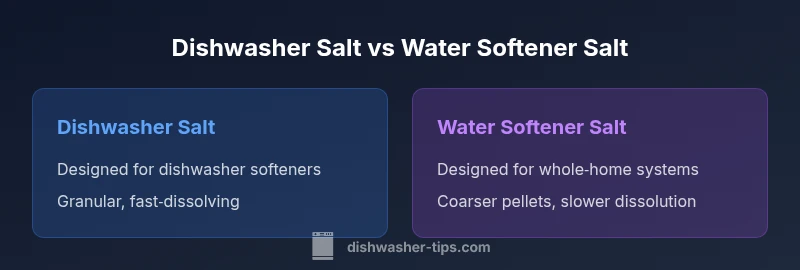
| Typical Form | Granular salt designed for easy dissolution in a dishwasher brine cycle | Larger crystals or pellets meant for continuous regeneration in a water softener unit |
| Grain Size / Dissolution | Small to medium granules optimized for fast dissolution in dishwasher brine | Coarser pellets with slower dissolution suitable for whole‑home systems |
| Recommended Use Context | Only in the dishwasher salt compartment per manufacturer guidelines | For central water softeners installed by professionals |
| Labeling / Availability | Labeled for dishwashers; widely available in grocery and online stores | Sold at hardware stores and plumbing suppliers; less common in groceries |
The Good
- Clear separation of functions reduces cross‑contamination risk
- More predictable cleaning performance in hard water areas
- Widely available and clearly labeled for consumer use
- Minimized risk of resin damage when used as intended
Disadvantages
- Wrong salt type can damage resin or reduce efficiency
- Not interchangeable, which can cause confusion if manuals are misplaced
- Inconsistent labeling across brands can lead to accidental substitution
Dishwasher salt and water softener salt are not interchangeable; use the salt type recommended for your system.
Sticking to brand‑specified salt types protects your appliance’s softening module and ensures optimal cleaning. When in doubt, consult the manual or contact the manufacturer.
People Also Ask
Are dishwasher salt and water softener salt interchangeable?
No. They are designed for different systems: dishwasher salt is for the dishwasher’s built‑in softener, while water softener salt is for whole‑home systems. Using the wrong type can reduce wash quality and damage the resin over time.
No—the salts aren’t interchangeable. Use the one your system specifies to protect performance.
What happens if I use the wrong salt in my dishwasher?
Using the wrong salt can impair the dishwasher’s resin regeneration, leading to poorer cleaning, more mineral deposits on dishes, and potential resin clogging over time. Always follow the label and manual.
It can mess with performance and long‑term parts health.
Can I use water softener salt in a dishwasher that doesn’t need it?
If your dishwasher does not have a built‑in softener, using water softener salt is generally unnecessary and could cause issues. Stick to salt labeled for dishwashers unless your manual says otherwise.
Only use dishwasher salt unless your manual says it’s okay to use water softener salt.
Does hard water affect dishwasher performance even with salt?
Hard water can still leave mineral deposits if salt levels aren’t maintained or if the detergent system is not correctly calibrated. Salt helps minimize this, but it’s not a cure‑all for all water hardness issues.
Hard water can cause spots even with salt if the system isn’t tuned right.
How do I know which salt to buy for my home?
Check your appliance manual for the recommended salt type and any regional notes about water hardness. If you have a whole‑home softener, follow that system’s guidance and use dishwasher salt in the appliance as directed.
Refer to the manual and regional water hardness guidance.
What to Remember
- Verify the salt type your dishwasher requires
- Do not substitute dishwasher salt with water softener salt
- Keep salt compartments clean and refilled as recommended
- Check your water hardness and adjust maintenance accordingly
- Consult the manual for salt‑switch guidance if you change systems