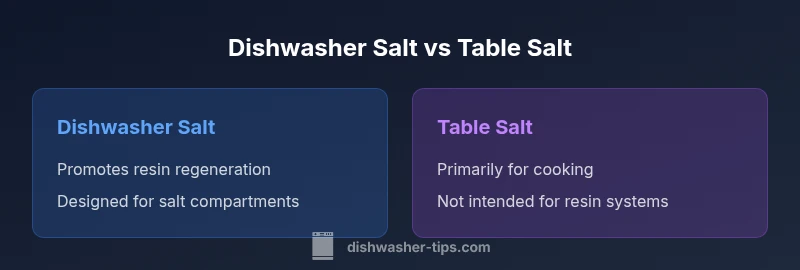
Is Dishwasher Salt the Same as Table Salt? A Practical Guide
Dishwasher Tips analyzes whether dishwasher salt and table salt are interchangeable, why it matters for water hardness, and how to choose the right salt for your machine. Learn the differences, usage tips, and common myths.


Dishwasher salt and table salt are not always interchangeable. This quick comparison highlights the key differences in purpose, composition, and maintenance, and offers practical guidance for homeowners. Following the manufacturer’s guidance helps prevent mineral buildup, residue, and potential resin damage. Read on to learn when each salt is appropriate and what to avoid.
Is This Salt Interchangeable? Framing the Question
The question “is dishwasher salt the same as table salt” sits at the intersection of appliance maintenance and mineral chemistry. In most modern dishwashers, the salt compartment feeds a built-in resin-based water-softening system. That resin relies on a very specific chemical environment to function correctly. According to Dishwasher Tips, using the wrong type of salt can disrupt this environment, potentially leading to mineral deposits, films on dishes, and reduced cleaning performance. This block sets the stage for understanding what makes dishwasher salt different from cooking salt, and why following your machine’s manual matters for long-term efficiency. The distinction is not merely about taste or aroma; it’s about how your dishwasher handles minerals during every wash.
Word count check done for planning purposes; the content continues with careful, evidence-based explanations to help homeowners make informed decisions.
Comparison
| Feature | Dishwasher Salt | Table Salt |
|---|---|---|
| Primary purpose | Softens water via resin regeneration in dedicated salt compartments | Culinary seasoning and preservation |
| Chemical composition | Purified sodium chloride suitable for resin systems (often non-iodized, may include anti-caking agents) | Purified or iodized sodium chloride intended for food use |
| Granule size | Typically coarse to prevent premature dissolution | Can be fine or table-grade crystals |
| Impact on dishwasher | Maintains resin efficiency and prevents mineral buildup when used as directed | Generally has no function in resin regeneration and may cause residue if misused |
| Brand/recommendation | Use the salt specified by the manufacturer; many brands require dishwasher salt only in certain models | Not designed for resin regeneration and is not a substitute in salt compartments |
| Cost and availability | Widely available; often sold in bags at moderate prices | Widely available for culinary use; may be cheaper but not appropriate for the softener |
The Good
- Clear guidance on salt compatibility and how to avoid resin issues
- Helps preserve the dishwasher’s softening system and improve cleaning when used correctly
- Simple, repeatable maintenance with routine topping up and checks
Disadvantages
- Requires ongoing purchase of dishwasher salt; mislabeling can cause confusion
- Regional salt formulations vary; some products may contain additives unsuitable for dishwashers
- Table salt may be iodized or contain anti-caking agents that interfere with the resin
Dishwasher salt is not the same as table salt; use dedicated dishwasher salt where required by your machine
For most modern dishwashers, dishwasher salt regenerates the water-softening system. Table salt is for cooking and can interfere with the resin if used in the salt compartment.
People Also Ask
Is dishwasher salt the same as table salt?
Not always. Dishwasher salt is designed to regenerate the water-softening resin in the dishwasher, while table salt is for cooking. They are not universally interchangeable, and using the wrong type can affect cleaning and mineral buildup.
Dishwasher salt regenerates the softener; table salt is for food. Follow your manual for the recommended salt.
Can I use table salt if dishwasher salt is unavailable?
In some brands, it might work temporarily, but it’s not recommended. Non-dishwasher salt can cause residue and may affect the softener’s performance over time.
Table salt as a substitute can cause problems; stick to the manufacturer’s salt if possible.
What happens if I mix salt types?
Mixing different salts can alter chemical balance and disrupt the resin in the softening system, leading to unreliable hardness control and poorer cleaning.
Mixing salts can upset the system and reduce cleaning quality.
Does salt type affect warranty?
Some brands require using their recommended salt; deviation could influence warranty terms. Always consult the manual or brand guidance.
Warranty depends on following the salt guidelines from the manufacturer.
How often should I refill dishwasher salt?
Refill frequency depends on water hardness and usage. Check the indicator and refer to the manual for recommended refill intervals.
Keep an eye on the salt indicator and refill as the manual suggests.
Are there regional salt differences I should know?
Yes. Salt composition can vary by region and brand. Always use the salt recommended by your dishwasher’s manufacturer.
Salt varies by region; follow your machine’s guidance.
What to Remember
- Follow the dishwasher’s manual for salt type and replacement frequency
- Keep the salt compartment filled with the recommended product
- Avoid using table salt in the salt dispenser unless explicitly approved by the manufacturer
- Regularly inspect for residues and adjust salt usage as needed
- Understand your machine’s indicators and respond promptly