When to Run Dishwasher: The Ultimate Timing Guide
Learn exactly when to run your dishwasher for optimal energy use, cleaner dishes, and longer appliance life. This step-by-step guide covers load sizing, cycle selection, timing strategies, and maintenance.


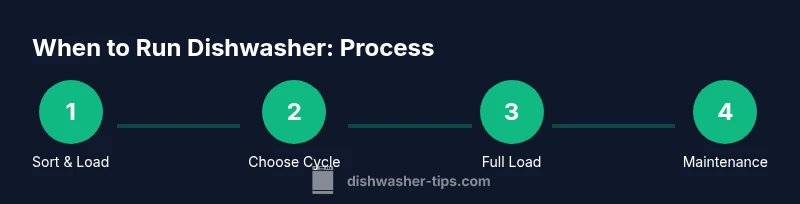
To maximize efficiency and cleaning, run the dishwasher when it’s full and there is a dirty, mixed load. Choose the cycle that matches soil and load (normal for everyday dishes, heavy for pots and baked-on food). Avoid half-loads, pre-rinsing only if necessary, and consider off-peak timing if your utility offers lower rates. Regular maintenance keeps performance high.
Why timing matters for dishwasher efficiency
Timing your dishwasher runs matters beyond convenience. It affects energy consumption, water use, and even the lifespan of your appliance. According to Dishwasher Tips, running at full capacity and loading dishes thoughtfully delivers the best balance between cleanliness and cost. When you stage cycles to align with soil levels and avoid frequent short runs, you reduce wear and tear on the motor and minimize soap residue. In addition, off-peak electricity pricing in some regions makes scheduling runs later in the evening or overnight financially attractive. You can also extend the life of your dishwasher by practicing simple habits like cleaning filters regularly and using the right rinse aid. This section explains how to think about timing in everyday terms, with practical examples and clear rules you can apply this week.
Load strategy: getting it right
The way you load dishes directly influences the timing and effectiveness of a wash. Scrape off large food particles before loading, not after, so you don’t waste time re-running cycles. Place plates and bowls in alternating directions on the lower rack, with cups and small bowls tilted to allow water to flow over every surface. Avoid crowding: if water cannot reach every item, you’ll end up re-running cycles, which wastes water and energy. By design, a well-organized rack means you can wait longer between runs without sacrificing cleanliness, letting you align dishwasher use with your daily schedule and energy rates. Dishwasher Tips emphasizes place and angle to maximize water exposure.
Cycle guidance by soil level
Soil level should drive cycle choice. Light soils or lightly soiled dishes can often use an eco or auto cycle, saving water and energy. Everyday meals with typical residues are well-suited for a normal cycle. Heavier soils like baked-on food, pots, and pans require a heavy or intensive cycle to prevent re-washing. Auto cycles adapt to soil level, but can be less predictable if the load is poorly sorted. If you’re unsure, a normal cycle with a thorough pre-scrape is a reliable default. Remember to adjust cycle selection for large cookware on the bottom rack.
Timing and energy: off-peak vs on-peak
When your utility offers time-of-use pricing, running the dishwasher during off-peak hours reduces electricity costs. If you have a delay-start option, you can load dishes, set the cycle, and have the machine start during cheaper periods. This timing strategy can make a significant difference over a month. Additionally, enabling eco modes—when available—reduces water and energy per cycle, which compounds the savings when you schedule runs for full loads.
Scheduling for irregular loads and small households
Not every day yields a perfect full load. In households with irregular meal patterns or small kitchens, you still can optimize timing by grouping loads across a day or using the delay-start feature to align with off-peak pricing. If you must run a partial load, choose the fastest cycle that still provides adequate washing. For countertop or compact dishwashers, plan for a shorter, high-temperature cycle and avoid overloading the small tub, which can hamper timing and cleaning results.
Maintenance that saves time and energy
Regular maintenance enhances timing efficiency by preventing breakdowns that interrupt scheduling. Clean the filter monthly or as needed, inspect spray arms for clogs, and wipe seals to maintain a tight door. A clean dishwasher drains and spins more efficiently, reducing cycle length and avoiding unnecessary re-runs. When timing is off due to performance issues, check for blockages, de-lime hard-water deposits, and ensure correct detergent use and rinse-aid levels. These practices support reliable timing and consistent results.
Special cases: multiple kitchens and portable units
In homes with more than one dishwasher or portable units, time management becomes more complex. Synchronize loads to maximize full cycles across units or stagger cycles to take advantage of off-peak rates for each device. For RV or compact portable dishwashers, rely on shorter cycles with proper pre-rinsing of large food particles, and avoid frequent shorter cycles that waste energy. The goal remains: full, efficient cycles with minimal re-wash.
Common mistakes and how to avoid them
Common timing mistakes include pre-rinsing everything, overloading, and running cycles with sparse loads. Overloaded racks block spray arms, leading to poor cleaning and the need for re-runs. Pre-rinsing can waste water, while underloading prevents energy optimization. Also, ignoring maintenance schedules dramatically reduces efficiency. By avoiding these habits, you keep timing predictable and results consistent.
Quick-start routine you can implement today
Start with a daily 2-minute pre-load check: scrape scraps, sort by size, and clear any obstruction from spray arms. Load with care, select the cycle based on soil level, and set delay-start if off-peak energy is available. Run full loads whenever possible, and schedule regular monthly maintenance checks to keep timing accurate for weeks to come.
Tools & Materials
- Dishwasher-safe detergent(Powder, gel, or tabs per manufacturer guidance)
- Soft cloth or sponge(For cleaning filters and door seals after cycles)
- Measuring cup (optional)(For precise detergent dosing in some cycles)
- Small brush (toothbrush works)(For spray arms and filter crevices)
- Bucket or towel(Catch drips during maintenance)
- Gloves(If handling cleaning agents)
Steps
Estimated time: 30-45 minutes
- 1
Sort and load dishes properly
Remove large scraps and pre-scrape plates. Place plates and bowls facing inwards on the lower rack, with bowls angled slightly down. Position cups and mugs on the upper rack with rims down to prevent spills. Ensure nothing blocks the spray arms.
Tip: Keep a clear zone around the spray arms for even cleaning. - 2
Check water temperature and detergent
Ensure the hot water supply reaches the recommended temperature (often around 120-140°F / 49-60°C). Use the detergent type your dishwasher recommends. If you’re unsure, run the hot water tap at the kitchen sink for 30 seconds before starting a cycle.
Tip: Cold start can reduce cleaning efficiency; a hot rinse improves soil removal. - 3
Select cycle based on soil level
For everyday dishes, a Normal or Auto cycle works well. Heavier soils or pots require a Heavy or Intensive cycle. If available, Eco modes save water and energy for typical loads.
Tip: When in doubt, start with Normal and monitor results; adjust next time if needed. - 4
Use full loads or delay-start when possible
Maximize each cycle by waiting to run a full load, or use the Delay Start feature to align with off-peak pricing. If you must run a partial load, choose the shortest cycle that still cleans effectively.
Tip: Delay-start is especially helpful for energy savings on electric-rate plans. - 5
Unload and air-dry
Let dishes cool and air-dry with the door ajar for a short time to reduce condensation and speed drying. Start with utensils and cups, then plates, and finally pots.
Tip: Open the door slightly to vent steam and avoid steam burns. - 6
Maintenance after cycle
Inspect and clean the filter and spray arms weekly or monthly depending on usage. Wipe seals and door edges to prevent buildup that can affect cycle timing and performance.
Tip: A clean machine runs more efficiently and reduces the chance of re-washing.
People Also Ask
How do I know if my dishwasher is full enough?
A full load typically fills about 80-90% of rack capacity. Don’t force items in; allow space for water and detergent to circulate. If items are crowded, you’ll see poor cleaning and may need a second cycle.
A full load is typically 80 to 90 percent full. Don’t cram items; give space for water and soap to reach all surfaces.
Can I run a dishwasher with a partial load?
Yes, but it’s less efficient. If you must, use a shorter or eco cycle and reduce pre-rinsing to save water. Delaying a cycle until you have a full load is usually the best approach.
You can run a partial load, but it’s less efficient. If possible, wait for a full load or choose a shorter eco cycle.
Should I pre-rinse dishes before loading?
Pre-rinsing isn’t required for modern dishwashers. Scrape off large food particles, but a light rinse can waste water. Rely on the machine’s spray arms to finish cleaning.
Pre-rinsing usually isn’t needed. Just scrape off big bits and let the dishwasher do the rest.
What cycle is best for everyday dishes?
Most days, Normal or Auto cycles work well. Use Eco mode if available to save water and energy. Switch to Heavy only for pots or heavily soiled cookware.
Use Normal or Auto for daily dishes; save energy with Eco when possible.
Why does my dishwasher not drain after a cycle?
Check the filter and sump for debris, inspect the drain hose for kinks, and verify the pump is functioning. A clogged drain stops the machine from finishing its cycle and can lead to odors.
If it won’t drain, check the filter and drain hose for clogs and ensure the pump is working.
How often should I clean the dishwasher filter?
Clean the filter monthly or whenever you notice reduced cleaning performance. A clogged filter reduces flow and extends cycle times, undermining efficiency.
Clean the filter about once a month, or whenever you notice poor cleaning.
Watch Video
What to Remember
- Load fully and sort correctly for best results
- Choose cycles by soil level to save energy
- Maintain filters and spray arms to sustain performance
- Schedule runs during off-peak hours when possible