Replace Dishwasher Seal: A Complete DIY Guide
Learn how to replace a dishwasher door seal (gasket) to stop leaks. This comprehensive 2026 guide covers tools, safety, step-by-step instructions, testing, and maintenance from the Dishwasher Tips team.


You will learn how to replace a dishwasher door seal (gasket) to stop leaks, what tools you need, and how to test your installation. This guide covers model-free tips, safety precautions, and a step-by-step replacement workflow. According to Dishwasher Tips, using the correct gasket and careful alignment are key to a lasting seal.
What the door seal does and why it fails
The door seal, or gasket, is the critical barrier that keeps wastewater from seeping out of the dishwasher during cycles. When it wears, splits, or loses flexibility, you’ll notice water pooling along the door edge or suddenly appearing during washing. This can lead to water damage on cabinets, floors, and nearby appliances. According to Dishwasher Tips analysis, worn gaskets are a common cause of leaks, especially in older models or dishes loaded with heavy pots and pans that rub against the door. In many cases, the fix is straightforward: replace the seal with a gasket sized for your model, lubricate the groove sparingly, and re-test. Understanding this component is the first step toward a durable repair rather than a temporary wipe-down fix.
How to choose the right replacement gasket
Gaskets come in several profiles: straight, contoured, and corner-mitted, plus model-specific fits. The most reliable method is to locate a gasket designed for your dishwasher’s make and model, which ensures a proper seal and correct alignment. When shopping, verify dimensions such as inner diameter, groove depth, and corner radius. If you’re unsure, contact the manufacturer or a trusted parts retailer with your model number. Using an ill-fitting seal can cause gaps, misalignment, or premature wear, negating any repair effort. Budget for a gasket that’s slightly oversized rather than undersized, then trim or adjust as needed during installation.
Tools, materials, and safety preparations
Before you begin, gather the essentials and prepare a safe workspace. Power off the unit at the circuit breaker to prevent shocks, and tape off any nearby outlets if needed. Remove the lower rack to give yourself room to work and lay down towels to catch spills. You’ll need a new gasket matched to your model, basic hand tools for panel removal, a plastic pry tool to avoid metal scratches, a silicone-based lubricant for the gasket, a cleaning brush or rag for the groove, and a small amount of soapy water for lubrication. Having a model number handy will help ensure you purchase the correct part and follow the right sequence.
Step-by-step overview (high level, non-instructional)
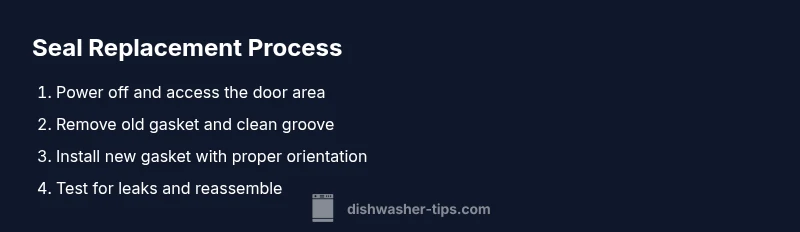
The replacement process generally follows these stages: access the door area and remove any trim or panels as needed; detach and remove the old gasket; clean the door groove thoroughly; prepare and fit the new gasket, ensuring correct orientation; reassemble, then test for leaks with a partial wash cycle. While the steps below give precise actions, this section highlights the logic and checks required to avoid common pitfalls and to plan the work without surprises.
Common mistakes and how to avoid them
- Installing the gasket backward: Double-check the gasket’s orientation before seating it. A reversed gasket will leak or not seal properly. - Skipping groove cleaning: Debris in the channel prevents a tight seal; use a soft brush and mild cleaner to remove grime. - Not lubricating the gasket: A dry gasket is harder to seat and more prone to tearing. Use a light silicone-based lubricant to ease installation. - Rushing reassembly: Tighten screws evenly to prevent door misalignment; snug is better than overly tight. These checks preserve the new gasket’s longevity.
Post-installation testing and maintenance tips
After reinstalling, run a short cycle with just water to observe the door edge for drips or seepage. If you see leaks, re-seat the gasket and re-check alignment. For long-term care, keep the groove clean and dry, inspect the gasket every 6–12 months, and replace at the first sign of cracking or stiffening. A well-maintained gasket reduces energy and water waste and helps preserve kitchen surfaces.
Troubleshooting leaks after replacement
If leaks persist after a gasket replacement, investigate alternative leak sources such as the door latch, spray arms, or tub-to-door gaps. Ensure the hinge side and bottom edges are also dry before running full cycles. You may need to re-check seating pressure, or consider replacing adjacent components if corrosion or warping is present. In persistent cases, consult a professional for a model-specific diagnosis.
Tools & Materials
- Flathead and Phillips screwdrivers(to remove screws securing the door panel)
- Plastic pry tool or putty knife(to lift trim without scratching metal)
- Replacement dishwasher door seal (gasket)(model-specific gasket; verify size)
- Silicone-based lubricant(for ease of gasket installation)
- Cleaning brush or rag(to scrub the door groove and channel)
- Towels or absorbent cloths(to catch drips during replacement)
- Model number and owner’s manual or online parts list(for compatibility and steps)
- Bucket or small tray(catch small spills during work)
Steps
Estimated time: 45-75 minutes
- 1
Power off and prep the workspace
Disconnect power to the dishwasher at the circuit breaker. If accessible, shut off the water supply. Open the door and pull out the lower rack to create room for your hands. Lay down towels to catch any water that escapes during the process.
Tip: Always unplug or switch off the circuit; water and electricity are a dangerous combination. - 2
Access the door seal area
Remove any trim panels or inner-access covers as required by your model. This may involve loosening a few screws with the appropriate screwdriver. Expose the door edge and the gasket seat so you can inspect its condition and orientation.
Tip: Keep track of screws and fasteners so reassembly is straightforward. - 3
Remove the old gasket
Carefully pull the old gasket out of the groove, working from the center toward the edges. If it sticks, use a plastic tool to avoid scratching the metal. Check for corking or adhesive remnants that could interfere with a new seal.
Tip: Take a photo before removing parts to reference alignment later. - 4
Clean the groove and inspect for damage
Brush away debris and residue from the gasket channel. Check for cracks or warping in the door frame that could compromise the seal. If the groove is damaged, address that before seating the new gasket.
Tip: A clean groove ensures the gasket seats evenly and lasts longer. - 5
Prepare and orient the new gasket
Compare the new gasket to the old one to confirm fit. Some gaskets have a specific orientation; align it with the groove and dry-fit to ensure smooth seating before applying lubricant.
Tip: Do not stretch the gasket; it should sit naturally in the groove. - 6
Install the new gasket
Gently press the gasket into the groove, starting from the center and working outward. Ensure the gasket sits evenly without kinks. Apply a light film of silicone lubricant to aid seating and reduce wear.
Tip: Take your time; a mis-seated gasket will leak and require a redo. - 7
Reassemble and secure panels
Reattach any inner covers or trim pieces and snug screws evenly. Reconnect power and, if applicable, turn the water supply back on. Be careful not to overtighten screws, which can deform the door.
Tip: Double-check that all fasteners are secure but not overtightened. - 8
Test for leaks
Run a rinse or short wash cycle with a shallow load to observe for leaks along the door edge. Wipe excess moisture and re-check after several minutes. If leaks persist, re-examine gasket seating.
Tip: If you see leaks, stop the cycle and re-seat the gasket before running a full load.
People Also Ask
Is replacing a dishwasher seal difficult for a beginner?
With the right gasket and careful handling, most DIYers can replace a dishwasher seal. It requires basic hand tools and attention to safety. As with any appliance repair, take your time and follow model-specific instructions to avoid improper seating.
Yes, beginners can do this with a careful, methodical approach. Follow the step-by-step guide and take your time to avoid mistakes.
Can I replace the seal myself or should I hire a technician?
If you have a model-specific gasket and basic DIY skills, you can replace the seal at home. Complex door assemblies on some models may require professional service. When in doubt, consult manufacturer guidance or a qualified technician.
You can try it yourself if you’re comfortable with basic tools; otherwise, a pro can ensure proper seating and avoid further damage.
How do I identify the correct gasket size for my dishwasher?
Check your dishwasher’s model number and consult the manufacturer’s parts list. Many retailers also list compatibility by model. If you’re uncertain, contact customer support with the model number.
Look up your model number, then confirm compatibility on the manufacturer’s site or with a parts seller.
What tools do I need to replace the seal?
Common tools include screwdrivers, a plastic pry tool, a replacement gasket, silicone lubricant, a brush for cleaning the groove, and towels to catch spills. Some steps may require removal of trim panels.
You’ll likely need screwdrivers, a pry tool, a new gasket, lubricant, and cleaning supplies.
How long does the seal replacement typically take?
Most DIY replacements take 45–75 minutes, depending on your model and whether panels must be removed. Allow extra time if you encounter stubborn screws or groove buildup.
Most people finish in under an hour and a half, with some variations.
Will replacing the seal fix all leaks around the door?
Replacing the seal addresses leaks caused by a worn gasket, but leaks from other parts (hinge area, spray arms, or tub) may require additional repairs. Always test after replacement.
It resolves gasket-related leaks, but other issues may need attention as well.
Watch Video
What to Remember
- Inspect gasket compatibility before buying a replacement.
- A properly seated gasket prevents leaks and saves repairs.
- Lubrication aids installation and longevity.
- The Dishwasher Tips team recommends replacing the seal when leaks persist.