Can You Run a Dishwasher If the Sink Is Clogged? A Practical Troubleshooting Guide
Urgent, practical troubleshooting: learn if you can run your dishwasher when the sink is clogged, how to clear blockages, and steps to prevent future backups from Dishwasher Tips.


Yes—you can run the dishwasher if the sink is clogged, but only after addressing the blockage. Before starting a cycle, clear the sink drain and verify the dishwasher drain hose isn’t kinked. If water backs up, pause and fix the clog first or use a plunger and a snake; then run a test cycle with hot water. Safety first: unplug the machine when inspecting hoses.
Can You Run a Dishwasher If the Sink Is Clogged? A Practical Answer
Readers often ask can you run dishwasher if sink is clogged. The short answer is: yes, but only after addressing the blockage. You must ensure the sink drains freely and the dishwasher drain hose remains clear and not kinked. If water backs up, pause and fix the clog first, or use a plunger or snake to clear it. After clearing, run a test cycle with a small amount of hot water and an empty load to confirm drainage. Safety remains paramount: unplug the dishwasher before inspecting hoses or traps. This approach minimizes risk of backflow and protects your dishwasher seals. If you're renting, check with your landlord before attempting major drain work. If the clog recurs, there may be broader drain issues that require professional plumbing. Keep a regular drain-cleaning plan: avoid pouring grease down the sink, use a screen to catch food, and run hot water for a minute after meals to slow buildup.
How a Sink Clog Affects Dishwasher Drain
When a sink is clogged, the path from the dishwasher to the main drain can become blocked; as a result, water from the dishwasher may have nowhere to go and may bubble back into the sink, the disposal, or even into the dishwasher itself. This backpressure can push dirty water through seals, leading to odors and potential contamination. The drain hose's height and routing also matter; if the hose sits too low or the air gap is compromised, backflow risk increases. In general, if your sink is clogged, you should assume any dishwasher discharge could back up. By understanding these dynamics, you can plan a safe workflow: clear the clog, re-rout hoses if needed, and run a quick rinse test with the dishwasher empty before loading dishes.
Common Causes Linked to Sink Clogs
- Grease and soap scum buildup in the P-trap and pipes
- Hair, food scraps, and fibrous debris
- Partial or complete clog beyond the trap
- Garbage disposal jams or a dirty disposal unit
- Venting issues or a blocked vent line
- Misrouted or kinked dishwasher drain hose, or a missing/blocked air gap
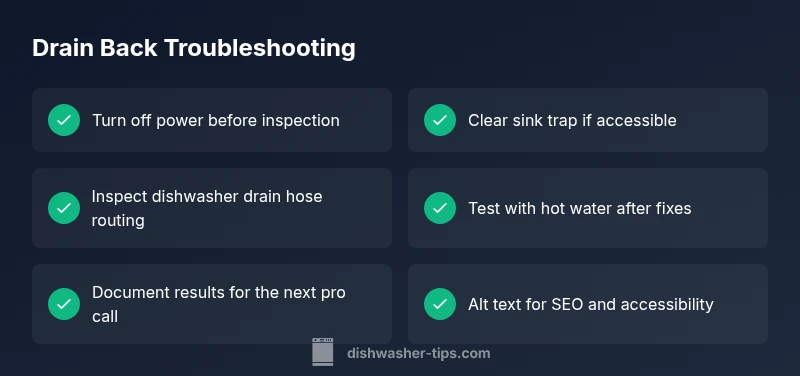
Immediate Checks You Can Do Now
- Turn off power to the dishwasher at the breaker and shut off the water supply if you suspect a leak.
- Inspect the kitchen sink drain: remove the strainer, clear visible debris, and flush with hot water and a small amount of dish soap.
- Check the P-trap under the sink: place a bucket underneath, loosen the slip nuts, and clean out hair and gunk from the trap.
- Inspect the dishwasher drain hose: ensure it’s not kinked and that it’s properly connected to the sink drain or disposal. If you have an air gap, confirm it’s clear.
- If you have a garbage disposal, run it briefly to ensure it’s not jammed; reset if needed.
- Reassemble, restore water and power, and run a short hot water cycle with the dishwasher empty to observe drainage.
Quick Fixes If a Visible Clog Is Present
- Use a plunger on the sink drain to dislodge a clog, then re-test drainage.
- Use a hand-crank drain snake or hair-removal tool to break up stubborn blockages further down the line.
- Avoid chemical drain cleaners near the dishwasher; they can damage seals and piping.
- After clearing, flush with boiling water and run the dishwasher on empty to verify proper drainage.
Safety and When to Call a Pro
If you notice sewage odors, water backing into the dishwasher, or persistent backups after basic clearing, stop and call a licensed plumber. Do not force items through the disposal or drain lines, which could cause pipe damage or leaks. For renters, document issues and contact your building maintenance team.
Prevention and Maintenance to Keep Drains Clear
- Use a sink strainer and empty it daily to prevent solids from entering the pipes.
- Freeze stubborn grease and wipe pots before washing; never pour grease down the drain.
- Periodically flush drains with hot water and a safe enzyme-based cleaner to maintain flow.
- Schedule professional drain cleaning every 1–2 years if you have frequent clogs.
Final Checks Before Running a Cycle
- Ensure the sink drains freely; test by running hot water and watching for 10–15 seconds of steady flow.
- Confirm the dishwasher drain hose is free of kinks and the air gap (if installed) is clear.
- Run an empty hot-water cycle to confirm there is no backflow into the dishwasher.
Troubleshooting Summary
If water continues to back up after these steps, the clog may be beyond the trap or there may be venting issues. In that case, stop using both the sink and dishwasher until a professional plumbers confirms the line is clear and the venting is functioning correctly.
Steps
Estimated time: 60-90 minutes
- 1
Power Down and Prep
Turn off the dishwasher at the breaker and shut off the sink supply valve. Have towels and a bucket ready to catch water.
Tip: A dry work area saves you from slipping on wet surfaces. - 2
Inspect the Sink Drain
Remove the sink strainer and extract obvious debris. If the water drains slowly, the clog is likely in the trap or below.
Tip: Use a flashlight to see inside the pipe. - 3
Clear the P-Trap
Place a bucket beneath the trap, loosen the slip nuts, and clean out hair and slime. Reassemble loosely to test flow.
Tip: Be prepared for dirty water; wear gloves. - 4
Check the Dishwasher Drain Hose
Trace the hose from the dishwasher to the sink/disposal. Make sure it’s not kinked and that it’s properly connected; inspect the elbow and any clamps.
Tip: If attached to a disposal, ensure the knockout plug is removed. - 5
Test Air Gap/Disposal Connection
If you have an air gap, remove and clean it. For disposals, run the unit to clear jams and reset if needed.
Tip: Run hot water through the sink during tests to assess flow. - 6
Run a Hot-Water Cycle (Empty)
With the trap clean and hoses secured, run an empty hot-water cycle to observe drainage through the sink and into the main line.
Tip: Watch for any backflow into the dishwasher chamber. - 7
Evaluate Outcomes
If water still backs up or you smell sewage, stop and call a licensed plumber; do not force more cycles.
Tip: Document any recurring patterns to share with the pro.
Diagnosis: Water backs up from sink or dishwasher during cycle
Possible Causes
- highPartial or full sink drain clog
- mediumKinked or improperly routed dishwasher drain hose
- mediumAir gap blocked or missing in the drainage path
- lowClog beyond the trap in the main line
Fixes
- easyClear sink trap and main line blockage with a snake or professional auger
- easyStraighten or reroute the dishwasher drain hose and check air gap disposal connections
- mediumInspect and clean the air gap or install a proper air gap if needed
- hardCall a plumber if the clog is beyond the trap or if backups persist after basic clearing
People Also Ask
Can I run the dishwasher if the sink is clogged?
Yes, but only after clearing the clog and ensuring the drain path is clear. Running the dishwasher during a backlog can cause backflow and contamination. If in doubt, delay a wash and fix the clog first.
Yes, you can, but only after clearing the clog. If in doubt, stop and fix first.
What should I check first when the sink is clogged and the dishwasher backs up?
Check the sink drain for a partial clog, inspect the P-trap, and verify the dishwasher drain hose isn’t kinked or misrouted. If drainage improves after clearing the trap, proceed with a test run.
Check the sink trap and the dishwasher hose routing, then test with hot water.
How do I safely clear a sink trap?
Place a bucket under the trap, loosen slip nuts, and remove the trap to clean out hair and gunk. Reassemble and run hot water to test flow.
Loosen the trap, clean it out, then reassemble and test with hot water.
When should I call a professional?
If the clog persists beyond the trap, if there are sewage odors, or if water backs up despite clearing, contact a licensed plumber to inspect vents and main lines.
If clogs persist or sewage odors appear, call a plumber.
Can prevention tips really reduce clogs?
Yes. Use screens, avoid pouring grease, run hot water after washing, and schedule periodic professional cleanings to minimize buildup.
Screens, avoid grease, and keep drains clean to prevent clogs.
Is it safe to use chemical drain cleaners?
Chemical cleaners can damage dishwasher seals and may react with hot water. Prefer mechanical methods like plunging or snaking and consult a pro for persistent clogs.
It's usually better to avoid chemical cleaners and use mechanical methods instead.
Watch Video
What to Remember
- Address clogs before using the dishwasher to prevent backflow.
- Check hoses, air gaps, and disposal connections for proper routing.
- Clear the trap and test drainage with an empty hot cycle.
- Call a pro if backups persist after basic clearing.