Can a Dishwasher Cause Sink Not to Drain? A Troubleshooting Guide
Urgent troubleshooting guide to determine if your dishwasher is causing a sink to not drain. Step-by-step checks, safe fixes, and prevention tips from Dishwasher Tips.


The most common reason a sink won’t drain after dishwasher use is a clog in the shared drain path or a blocked dishwasher drain hose causing backflow. Start with simple checks: confirm the sink drains freely, clear the dishwasher filter, and inspect the hose for kinks. If problems persist, follow the step-by-step flow below.
Can a dishwasher cause sink not to drain? Understanding the shared drain pathway
In most homes, the dishwasher and sink share a drain line. When you run the dishwasher, water exits through a hose connected to the sink drain or disposal, and waste water must flow freely through the same pipes. This means that a blockage anywhere in that shared pathway can cause the sink to back up or drain slowly, especially during or immediately after a dishwasher cycle. This is exactly the kind of issue the phrase can dishwasher cause sink not to drain describes, and the answer is often a combination of factors rather than a single faulty component. The Dishwasher Tips team finds that many backups start with routine clogs in the trap or disposal inlet, then propagate to the dishwasher hose or air gap. Recognizing this interplay helps you prioritize checks and avoid unnecessary replacements. If you approach the problem as a system, you’ll identify the real bottleneck quickly and choose the simplest fix first, which is safer and cheaper than pulling apart the whole plumbing stack.
A common misperception is that the dishwasher is always the sole culprit. In reality, you may have multiple issues in the same drainage path: a partially blocked P-trap, a jam in the disposal inlet, or an elevated trap in the island sink that traps debris. By thinking in terms of a shared pathway, you also appreciate why a quick fix, such as cleaning the trap, can relieve both appliances. This section equips you with a practical mental model and the practical steps to test it without jumping to dramatic conclusions. It also sets up the next sections, which walk you through simple checks you can perform before calling a plumber.
Steps
Estimated time: 60-90 minutes
- 1
Power off and water shutoff
Unplug the dishwasher or switch off the circuit, then disable the kitchen water supply. Keep a bucket handy for drips.
Tip: Double-check that power is off using a tester before touching any components. - 2
Access the sink trap and clean
Place a bucket under the U-shaped pipe. Use the slip nuts and channel pliers to disconnect the trap, allowing water and debris to flow into the bucket.
Tip: Reassemble hand-tight, then run warm water to test for leaks. - 3
Inspect dishwasher drain hose
Trace the hose from the dishwasher to the sink connection. Look for kinks, pinches, or a blocked end. Disconnect and flush the hose with a strong burst of water.
Tip: Keep a towel ready for water spillage and avoid bending the hose too sharply. - 4
Check the air gap (if present)
If your setup has an air gap, remove the cap and clean any blockage. Reattach securely and operate a test cycle.
Tip: Run the cycle without dishes to verify proper drainage. - 5
Test the disposal and final drain
If you have a disposal, run it with cold water to ensure no jams. Then run the dishwasher through a cycle and observe the drain flow.
Tip: If the disposal smells or stutters, avoid forcing blades; seek professional help. - 6
Evaluate and plan maintenance
If drainage is still slow, consider professional evaluation of the disposal or main line. Note your findings for the plumber.
Tip: Document symptoms for faster diagnosis next time.
Diagnosis: Sink backs up or drains slowly during or after a dishwasher cycle
Possible Causes
- highBlocked sink drain or P-trap
- highDishwasher drain hose kinked or blocked
- mediumDisposer jam or misconnection
- lowAir gap blocked or misconnected
Fixes
- easyClear the sink drain and P-trap, removing hair, grease, and debris
- easyInspect dishwasher drain hose for kinks or clogs; flush with water and ensure proper slope
- easyCheck and clean the air gap if installed; reinstall correctly
- mediumReset or clean the garbage disposal if linked; run water while turning blades
- hardIf backflow persists, inspect the disposer inlet or check valve and consider professional service
People Also Ask
Why does the sink back up after a dishwasher run?
Backups often indicate a clog in the shared drain path, such as the sink trap, or a blocked dishwasher drain hose or air gap. Inspect and clear these first.
Backups usually mean a clog in the shared drain path. Start by clearing the sink trap and checking the dishwasher hose and air gap.
Can a clogged air gap cause dishwater to back up into the sink?
Yes. A blocked air gap can prevent proper drainage and force water back into the sink. Clean or replace the air gap as needed.
A blocked air gap can cause backflow into the sink. Clean or replace it.
Should I remove the garbage disposal to fix this?
If the disposal is part of the drainage path, ensure it is clear and the knock-out plug is removed if newly installed. Do not force the disposal if it doesn’t turn freely.
If the disposal is part of the path, check for jams and ensure the plug is removed.
Is it safe to use chemical drain cleaners with a dishwasher connection?
Chemical cleaners can backfire and damage seals or contaminate dishwasher hoses. Use mechanical clearing techniques first and consult a professional if needed.
Chemical cleaners can damage hoses and seals. Use mechanical methods instead and call a pro if unsure.
What maintenance prevents this next time?
Regularly flush the drains, clean the trap, and inspect hoses and air gaps on a routine schedule to prevent buildup and backflow.
Maintain drains by cleaning traps and inspecting hoses regularly.
Watch Video
What to Remember
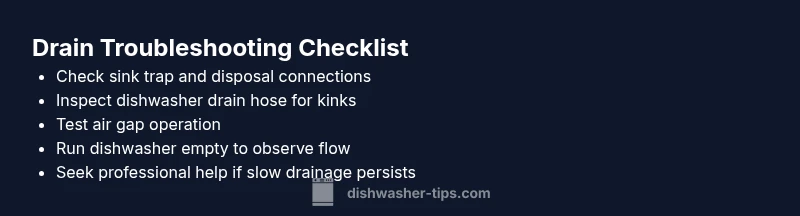
- Start with the easiest checks, not assumptions
- Drain issues often involve shared plumbing paths
- Clean the trap and drain hose early in the process
- Test with cycles to verify drainage after fixes
- Prevent clogs with regular maintenance