Dishwasher Backing Up Into Sink: Troubleshooting Guide
Learn how to diagnose and fix a dishwasher backing up into the sink with a clear flow, safe steps, and practical prevention tips for homeowners and renters.


Most likely, a clog in the sink-drain pathway is causing the dishwasher to back up into the sink. Start with the sink air gap and then inspect the dishwasher drain hose for kinks or blockages. Check the garbage disposal inlet and run a sink test. If the backup persists, seek professional help.
Understanding the problem: dishwasher backing up into the sink
When a dishwasher backs up into the sink, it signals a drainage issue that affects the shared plumbing and the way wastewater flows away from both appliances. The most common culprits are the sink air gap, the dishwasher drain hose, and the disposal inlet connected to the sink drain. Left unaddressed, a backup can foul dishes, create an unpleasant odor, and even trigger leaks. According to Dishwasher Tips, many backup incidents trace back to simple blockages or improper hose routing rather than a full system failure. Recognizing the signs—standing water in the sink after a wash, a gurgling sound, or water backing up during drainage—helps you act quickly and safely. This guide is designed for homeowners and renters and emphasizes practical checks you can perform with basic tools, following a logical, step-by-step approach. Remember: safety comes first, so power down the dishwasher before any inspection.
Common causes and how to tell them apart
Backups are rarely a single mystery. The top suspects include blocked air gaps, kinks or clogs in the drain hose, a clogged disposal inlet, and a partial sink drain clog that raises water level during dishwasher cycles. An air gap that is blocked or mis-seated can push dirty water back into the sink. A kinked dishwasher hose or one that is pinched behind cabinetry stops wastewater from flowing freely into the drain. A clogged disposal inlet or a full P-trap will slow or stop drainage, causing a backup when the dishwasher runs. By testing the sink drain separately—running hot water and watching for smooth flow—you can identify whether the problem lies with the sink plumbing or the dishwasher’s drainage path. If the sink drains slowly on its own, the issue is likely in the home’s main drain, not just the dishwasher. Maintaining venting and avoiding over-tightened clamps also helps prevent future backflow incidents.
Quick checks you can perform safely today
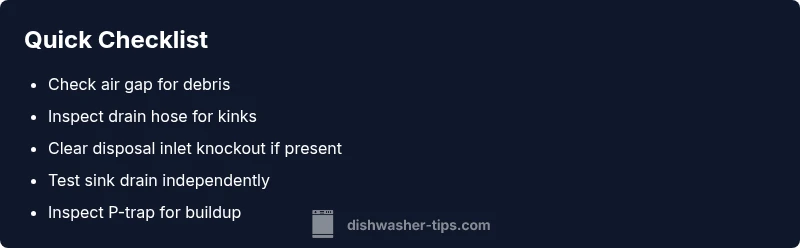
- Inspect the sink air gap for debris and clear it if needed. The air gap should allow wastewater to flow freely into the drain without splashing back. - Check the dishwasher drain hose for obvious kinks, twists, or pinches under the sink or behind cabinetry. If you can, straighten the hose to restore a smooth path.
- Examine the disposal inlet (where the dishwasher hose connects to the disposal). Ensure there is a proper knockout plug removed if you recently installed a disposal; a missing or left-in knockout can block flow.
- Test the sink drain separately by running hot water down the drain for a minute. If water backs up or drains slowly, you may have a main drain or trap issue.
- Clear the P-trap under the sink if accessible. A buildup of grease, hair, or soap scum can impede flow and back up into the dishwasher.
- Reconnect everything and run a short dishwasher cycle with no dishes to observe whether the water still backflows into the sink. If it does, move to the diagnostic flow.
Diagnostic flow: symptom to solution (overview)
This section maps symptoms to likely causes and practical fixes, helping you decide when to try a simple fix and when to call a pro. The common pattern is:
- Symptom: Water backs up into the sink during or after a dishwasher run.
- Likely cause: Air gap blockage or a kinked/blocked drain hose.
- Quick fix: Clear air gap, straighten hose, inspect disposal inlet.
- When to escalate: If water backs up again after these steps, a more complex main-drain issue or disposal problem may exist, requiring professional service.
Step-by-step overview (high-level setup)
This section previews the steps that are detailed in the Step-by-Step block. It gives you a roadmap to follow before diving into each action, ensuring you understand the flow from diagnosing to fixing and testing.
Prevention and maintenance to avoid future backups
Regular maintenance helps prevent dishwasher-backup incidents. Schedule periodic checks for the air gap, clean the sink drain and disposal inlet, and inspect the drain hose routing for any signs of wear or kinks. Use a sink-friendly cleaner that breaks down grease without harming seals, avoid chemical drain openers, and run the disposal and dishwasher separately on a routine basis to keep the drainage path clear. If you notice repeated backups despite correct hose routing, consider evaluating the home’s main drain or installing a larger-diameter drain line where feasible. Dishwasher Tips emphasizes proactive maintenance as the best defense against backflow.
Safety, safety, safety
Always unplug the dishwasher and turn off the water supply before starting any inspection. Never work with energized components or hot water near electrical outlets. Use a bucket and towels to catch spills, and avoid using chemical drain cleaners in a disposal system. If you feel uncertain about handling plumbing components, it is safer to call a licensed plumber rather than risk water damage or electrical hazards.
When to call a professional
If you cannot clear the air gap or the hose appears intact but water still backs up, a deeper issue such as a blocked main line, a failing disposal inlet, or a compromised P-trap may exist. A plumber can perform a camera inspection, locate the exact blockage, and clear the line safely. The Dishwasher Tips team recommends seeking professional help when the problem recurs after performing the basic checks or when you detect signs of sewage odors, persistent backups, or leaks around the dishwasher or sink.
Steps
Estimated time: 45-75 minutes
- 1
Power down and safety prep
unplug the dishwasher or switch it off at the breaker, and turn off the under-sink water valve. Have a bucket ready for spills and use towels to absorb any water.
Tip: Never work on live electrical parts; disconnect power first. - 2
Inspect the air gap
Remove the cap from the air gap at the sink; clear any visible debris and rinse the cap and body. Reassemble and test by running a short cycle and pouring water into the sink to see if air can flow freely.
Tip: If the air gap is clogged, remove debris with a small brush or pin. - 3
Check the dishwasher drain hose
Inspect the hose for kinks, twists, or crush points under the sink cabinet. If needed, detour the hose so it runs smoothly to the drain connection.
Tip: Secure the hose with zip ties to prevent movement. - 4
Inspect disposal inlet and knockout plug
If you have a garbage disposal, ensure any knockout plug is removed and the inlet is clear. Run a quick water test to confirm wastewater can enter the disposal drain.
Tip: Do not force items into a clogged inlet; use a plumber's snake if needed. - 5
Test the sink drain independently
Run hot water down the sink for several minutes to confirm the sink drains freely when the dishwasher is not running.
Tip: If the sink drains slowly, the issue is likely in the sink’s plumbing. - 6
Check the P-trap and trap connections
If accessible, inspect the P-trap for buildup and clean out any grease, hair, or soap scum. Reassemble tightly to avoid leaks.
Tip: Place a towel beneath to catch spills. - 7
Run a test cycle
Run an empty dishwasher cycle with a small load to observe whether the water backs up into the sink. Watch the flow and listen for unusual gurgling.
Tip: Take note of any odors. - 8
Evaluate the results and plan next steps
If water still backs up after these steps, you likely have a more complex issue that requires professional assistance. Consider scheduling a plumber or dishwasher technician.
Tip: Document the steps you’ve taken for faster service.
Diagnosis: Dishwater backs up into the sink during or after a dishwasher run
Possible Causes
- highAir gap blockage or mis-seated air gap
- highKinked or blocked dishwasher drain hose
- mediumBlocked disposal inlet or knockout plug issue
- lowPartial sink/main drain clog
Fixes
- easyClear the air gap; ensure it is accessible and free of debris
- easyUnkink and straighten the dishwasher drain hose; replace if damaged
- mediumInspect disposal inlet and knockout plug; remove plug if needed
- hardIf the sink drains slowly or the main line is clogged, call a plumber
People Also Ask
What causes a dishwasher to back up into the sink?
Backups are typically caused by a blocked air gap, a kinked drain hose, or a clogged disposal inlet. A slow sink drain or a blocked main line can also contribute. Start with the simplest fixes and proceed to the more involved checks.
Backups usually come from the air gap or drain hose. Check those first before moving to the disposal inlet or main drain.
Is an air gap required for all dishwashers?
Most standard dishwasher installations include an air gap to prevent backflow into the dishwasher. If your setup lacks one, backflow can occur more easily. However, some integrated systems rely on alternative anti-backflow methods.
An air gap helps prevent backflow. If you don’t have one, consider professional installation advice.
Can a clogged disposal cause this issue?
Yes. A clog at the disposal inlet or a blocked knockout plug can force water back into the sink through the dishwasher. Check and clear the disposal inlet if you have one.
A clogged disposal inlet can push wastewater back toward the dishwasher.
Are chemical drain cleaners safe to use?
Most plumbers advise avoiding chemical drain cleaners, especially in disposals or shared drains. They can damage seals and pipes and may create dangerous fumes. Use mechanical clearing methods first.
Avoid harsh drain cleaners in disposals. They can damage components and aren’t always effective.
When should I call a professional?
If you’ve tried the basic checks and the sink still backs up, or you notice persistent odors, leaks, or unusual noises, it’s time to call a licensed plumber or dishwasher technician. They can perform a camera inspection and diagnose deeper drainage issues.
Call a professional if the problem persists after basic checks.
Can a main drain issue cause repeated backflow?
Yes. A partial or full blockage in the main drain can cause backups that show up when the dishwasher runs. If the sink drains slowly or gurgles after tests, a plumber may need to check the main line.
Main drain problems manifest as slow draining or gurgling; consult a pro if suspected.
Watch Video
What to Remember
- Start with the air gap and drain hose first
- Test the sink drain separately to locate the problem
- Do not ignore recurring backups; escalate when needed
- Prioritize safety and professional help for complex issues