Can You Stop a Dishwasher While It's Running? A Safe, Step-by-Step Guide
Can you stop a dishwasher while it's running? Learn safe, tested steps to pause or cancel, power down safely, handle hot water, and resume washing with confidence.


Yes — you can stop a dishwasher while it's running, but proceed with care. If your model supports it, press the Pause/Cancel or Start/Reset button to halt the cycle safely. If that doesn't work, unplug the unit at the outlet, or switch off the breaker, then wait a moment before reopening the door. Always consult your manual for model-specific steps.
Can you stop a dishwasher while it's running? Safety and feasibility
Yes, you can stop a dishwasher mid-cycle on many models, but you should understand how your control panel works and the potential risks. According to Dishwasher Tips, the safest approach is to use the built-in Pause/Cancel feature first, rather than yanking power or opening the door in mid-splash. In this guide, we explain when stopping mid-cycle is reasonable, what to expect inside the appliance, and how different cycles respond to interruptions. Being prepared with knowledge reduces splashes, heat exposure, and the chance of improper rinsing. This is especially important for households with young children or elderly residents who may be nearby during a disturbance.
You’ll often hear that you can interrupt a cycle; however, not all models respond the same. The best practice is to start with the control panel, then escalate to a power cut only if the panel is unresponsive. Keeping a copy of your model’s user manual handy will help you understand the exact sequence for your machine. The Dishwasher Tips team emphasizes this safety-first mindset to prevent avoidable issues and to ensure you can resume washing efficiently after a pause.
For renters and homeowners alike, it’s valuable to know the difference between a pause and a cancel. A pause typically suspends washing actions and allows the door to be opened (after the tub pressure is released), while a cancel often shuts the cycle down and resets to standby. Understanding this distinction reduces the risk of leaks, splashes, or unfinished rinses.
This section will help you decide when stopping is appropriate, which method to use, and how to handle water that may be present in the tub after a pause. If you’re ever unsure, err on the side of caution and power down using a safe method before opening the door.
How pause and cancel features work on most dishwashers
Most modern dishwashers offer a Pause/Cancel or Start/Reset button. Pressing Pause typically suspends the current wash and drains some water from the pump, depending on the model. Cancel usually stops the cycle entirely and returns the dishwasher to standby; some units require a second confirmation or a brief hold. If the appliance completes a portion of the cycle or initiates a rinse after you press Cancel, you may hear the door unlock and the tub drain automatically. Always listen for indicators (beeps, lights, or an EEPROM readout) that confirm the machine has acknowledged your input. When you press Pause/Cancel and nothing happens, avoid repeated hammering on the key; consult the manual or try powering down as a last resort.
If your dishwasher includes a heat or anti-overflow feature, pausing may not instantly stop all water flow. In some models, the main valve still cycles briefly or the pump continues to run until it safely releases pressure. This nuance is why it’s important to know your specific model's behavior. The Dishwasher Tips team notes that model variance is common, so model-specific guidance should be your north star. A quick reference: pause first, cancel second, and power down only if the control panel is unresponsive.
When it’s safe to stop mid-cycle (use-case scenarios)
Stopping mid-cycle is generally safer when it’s about convenience or safety concerns rather than a malfunction. For example, if you notice an unusual odor, excessive noise, or you urgently need to re-sort dishes, pausing to assess the situation is reasonable. If there is visible leakage or the tub appears to be overfilled, stopping may be appropriate to prevent flooding or water damage. Always consider the current wash stage: early pre-wash or wash phases may tolerate pauses better than high-heat drying cycles. The key is to recognize the symptoms that warrant interruption and to avoid stopping during aggressive spray phases where risk of splashing is higher.
If you’re dealing with a non-responsive unit, the decision to stop should factor in safety. Do not rush to open the door if the water is hot or the door lock is engaged. You may need to power down at the outlet or breaker to reset the control. In all cases, be prepared to mop up any stray water and have towels ready.
Step-by-step: Safe methods to stop mid-cycle
Carefully following a structured sequence reduces the risk of damage or spills when stopping mid-cycle. We’ll outline steps that apply to most models, while noting model-specific variations.
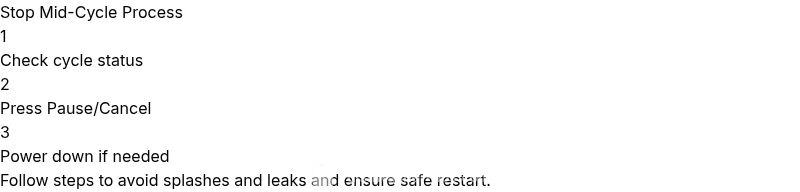
- Identify cycle status and locate the control. Check the display to confirm that a cycle is actively running and identify whether you have Pause/Cancel or Start/Reset available. This helps you choose the proper first action.
- Attempt a safe pause or cancel from the control panel. Press and hold or tap the Pause/Cancel button as your model requires. If the cycle halts, wait for the door lock to release before opening.
- If the control panel is unresponsive, cut power safely. Unplug the unit or switch off the dedicated circuit breaker. Wait 10-20 seconds to reset the electronics, then try the panel again.
- Open the door carefully after power-down. Open slowly to avoid a sudden splash of hot water. Have a towel or shallow tray ready to catch any water that may escape.
- Inspect for water and leaks in the tub. Look for standing water, seeps around door seals, and ensure the drain path is clear. If you see leakage, close the door and lower the tub until you can address the drain.
- Decide how to proceed. If you plan to resume washing, reset the cycle and load as needed. If issues persist after resuming, run a diagnostic or call support.
- Document the incident. Record the model, observed symptoms, and steps you took for future reference or service needs.
- Restart or service if necessary. If the same interruption occurs frequently, contact a technician. Regular maintenance reduces mid-cycle interruptions.
Estimated total time: 10–20 minutes.
What to do after stopping: door safety, drying, and restarting
Opening the door after stopping a cycle requires extra caution. If you power down, wait for the door lock to deactivate, and then open slowly to avoid scalding steam or splashes. Dry the seals and interior with a microfiber cloth to prevent moisture buildup in hidden crevices. When restarting, consider running a short test cycle with empty racks to ensure that the pump, drain, and spray arms operate smoothly. If you experience persistent leaks, unusual smells, or unusual noises after restarting, do not continue the cycle—power down and call a professional.
Model-specific tips and reading the manual
Because dishwashers vary by brand and model, always consult the user manual for the exact sequence of Pause/Cancel and how the unit behaves when interrupted. The manual will indicate whether the unit can unlock the door while the tub is still pressurized, how long you should wait after a power-down, and any safety locks that may engage during mid-cycle. If you’ve lost your manual, visit the manufacturer’s support site using your model number to download a PDF. Consumer forums can provide general guidance, but model-specific steps from the manual are the most reliable source.
Common mistakes and how to avoid them
- Forcing the door open during a run: This can lead to burns and water spillage.
- Repeatedly pressing Cancel: Some models require a deliberate hold or a secondary confirmation; otherwise, it may trigger a reset that you didn’t intend.
- Ignoring safety locks: If a safety lock remains engaged, forcing the door can damage the latch or solenoid.
- Powering down without draining: A power cut can leave water in the sump or cause an overflow during restart.
- Restarting without checking for leaks: A leak after restarting can cause further damage. Always inspect for leaks before resuming.
When to call a pro: signs you shouldn’t attempt stopping mid-cycle
If your dishwasher displays error codes, makes grinding noises, leaks profusely, or refuses to acknowledge any user input, pause and call a trained technician. Repeated interruptions can indicate a failing control board, faulty door latch, or drain pump issues. For safety and to avoid further damage, do not continue to operate a malfunctioning unit. The Dishwasher Tips team recommends scheduling professional service for recurring issues and keeping warranty information handy.
Tools & Materials
- Pause/Cancel or Start/Reset button on control panel(Use to halt cycle safely)
- Access to power (outlet or circuit breaker)(Needed if control panel is unresponsive)
- Owner's manual (model-specific steps)(Helpful for model-specific guidance)
- Insulated gloves (optional)(Protection for hands if hot water exposure occurs)
- Towel or shallow tray(Catch water when opening the door)
Steps
Estimated time: 10-20 minutes
- 1
Identify cycle status and control location
Check the display for the current phase and locate the Pause/Cancel or Start/Reset button. Knowing the correct action prevents unnecessary power cuts and water splashes.
Tip: If the display is blank, proceed to power-down with caution. - 2
Attempt a safe pause or cancel on the control panel
Press the Pause/Cancel button as designed by your model. If the cycle halts, wait for the door lock to disengage before attempting to open the door.
Tip: Some models require a second confirmation or a beep indicating the interrupt has been accepted. - 3
If unresponsive, cut power safely
Unplug the unit or switch off the dedicated circuit breaker. Wait 10–20 seconds to reset the electronics before retrying the control input.
Tip: Dry hands and avoid touching metal parts when power is off. - 4
Open the door carefully after power-down
Open slowly to avoid a hot-water splash. Have a towel ready to blot any water that escapes.
Tip: Stand to the side to avoid steam exposure. - 5
Check for water in the tub and leaks
Inspect for standing water and check door seals. If water remains, you may need to drain manually or run a quick rinse after restarting.
Tip: If you see a leak, close the door and reassess the drain path. - 6
Decide how to proceed after stopping
If you plan to resume, reset the cycle and load as needed. If issues persist, run diagnostics or contact support.
Tip: Avoid mixing hot and cold water to prevent thermal shock to components. - 7
Document the incident
Record the model, symptoms, and steps taken for future reference or service.
Tip: Keep the manual handy or save a repair log. - 8
Restart or service if necessary
If issues recur, contact a technician. Regular maintenance reduces mid-cycle interruptions.
Tip: Use recommended detergents and water hardness settings to minimize issues.
People Also Ask
Is it safe to stop a dishwasher mid-cycle?
Yes, it’s safe on many models to pause or cancel mid-cycle using the control panel. If unresponsive, power down at the outlet or breaker and proceed with caution. Always refer to your manual for model-specific guidance.
Yes, you can pause or cancel mid-cycle on most dishwashers using the control panel; if needed, power down safely and consult the manual.
Will stopping mid-cycle damage dishes or the appliance?
Stopping mid-cycle can cause dishes to shift or incomplete rinsing. In most cases there is no permanent damage, but repeated interruptions can strain components. Let the unit complete a full cycle when possible.
Stopping mid-cycle can cause movement or incomplete rinsing but usually doesn't damage the appliances unless done repeatedly.
What should I do if the door locks and won't unlock after stopping?
Wait for the safety lock to release after power-down. If it remains stuck, unplug and wait 60 seconds, or reset the breaker before trying again. If still stuck, contact a technician.
If the door stays locked after stopping, wait, then power down and try again; if it won't unlock, call a technician.
Can I add more dishes after stopping mid-cycle?
After stopping, you can add dishes if the door is safely unlocked and the tub has cooled slightly. Avoid forcing items in while hot or pressurized. Resume with a normal cycle.
Yes, you can add dishes after stopping, once it’s safe to open the door and the tub isn’t hot.
Should I unplug the dishwasher to stop it?
Unplugging is a last resort if the control panel is unresponsive or a safety concern arises. Use the breaker if the outlet is hard to reach. Reconnect only when it's safe.
Unplugging can stop the unit if the controls fail; use a breaker if necessary, then reconnect safely.
Watch Video
What to Remember
- Know your model's pause/cancel behavior
- Use the control panel first, then power if needed
- Open the door carefully after power-down
- Check for leaks before restarting
- Consult a pro for recurring issues