Can You Take a Dishwasher Door Off? A Step-by-Step Guide
Learn how to safely remove a dishwasher door for service, with safety checks, required tools, a model‑agnostic step-by-step process, reinstallation tips, and common mistakes to avoid from Dishwasher Tips.


Yes—you can remove a dishwasher door to access hinges, seals, or the tub for maintenance or inspection. Before you begin, unplug the unit and disconnect power, drain residual water, and clear the surrounding area. Have a helper nearby and use a soft mat to support the door while you remove the hinge screws and lift it away.
Safety first: when and why to remove the door
Removing a dishwasher door is a common maintenance task for inspecting hinges, seals, or the tub. According to Dishwasher Tips, approaching this task with preparation and care minimizes risk to you and the appliance. Always unplug the unit, drain residual water, and work on a stable surface. If the machine is level and power is off, you can proceed to door detachment safely.
Tools and materials you’ll need
Before you start, gather the following items so you can work efficiently and safely:
- Phillips #2 screwdriver
- Adjustable wrench
- Soft pad or blanket to cushion the door
- Towels or a small tray to catch any remaining water
- Masking tape or labeling stickers (optional but helpful)
- Safety glasses and gloves (recommended for eye and hand protection)
How the door removal works in practice
In most models, the door is attached by hinges at the top and/or bottom. The basic principle is to relieve the door from the hinge pins while keeping the door supported so the weight doesn’t fall. Always verify you have enough space behind the unit and a stable surface to set the door down once detached. The goal is to access the interior components without bending or twisting parts that could lead to leaks or misalignment.
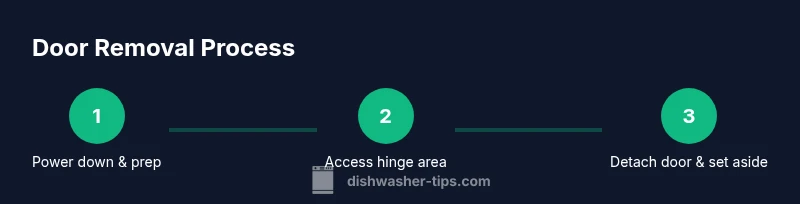
Step 1: Prepare power down and drain
Start by unplugging the dishwasher from the wall outlet. If your model has a removable power cord, disconnect it according to the user manual. Remove any standing water in the sump or door with towels. This reduces slip hazards and protects electrical components during hinge work.
Step 2: Access the hinge area
Open the door to its full angle but avoid forcing it toward the floor. Locate the hinge screws or mounting plates at the hinge junctions. If your model uses a cover plate, gently pry it off with a small flathead screwdriver to expose the screws. Label any parts or screws as you go to simplify reassembly.
Step 3: Support and detach the door from the hinges
Have a helper hold the door steady while you loosen the hinge screws just enough to release the door from the hinge pins. Do not remove all fasteners at once; loosen in stages to prevent the door from slipping. Place the door on a padded surface or stand it up against a wall with supports so it cannot fall.
Step 4: Inspect hinges, seals, and interior components
With the door off, inspect the underside of the door and the hinge areas for worn seals, rust, or bent components. This is the opportunity to replace seals or hinges if you notice damage. Keep all removed parts organized to avoid mix-ups during reinstallation.
Step 5: Reattach the door or prepare for reinstallation
If you’re reattaching after service, align the door with the hinges and guide the pins into place. Start with a couple of screws to secure alignment, then tighten evenly on both hinges. If you’re replacing hinges, swap them one at a time and verify the door balance.
Step 6: Test door operation
Close the door slowly to ensure proper seating and clearance around the gasket. Check for leaks and ensure the door latches securely. If misalignment is noticed, loosen a screw slightly and adjust until the door sits evenly.
Step 7: Final safety check and cleanup
Reconnect power if you had unplugged the unit. Wipe any residual moisture in the work area and ensure there are no tools left in or around the tub. Document any parts replaced and keep the screws in labeled bags for future reference.
Common mistakes and how to avoid them
Common mistakes include forgetting to unplug power, not supporting the door during detachment, and mixing up hinge screws. Take your time, label parts, and keep a tidy workspace. If you sense resistance, stop and recheck alignment rather than forcing components.
When to call a pro
If your hinges are bent, the door won’t align, or you notice significant water leakage after reassembly, it’s wise to contact a qualified technician. A professional can assess whether the door, hinges, or tub seal require replacement and ensure the dishwasher remains safe to operate.
Aftercare: maintaining the door once reinstalled
After the door is reattached, run a short test cycle with the rack empty to verify quiet operation and proper sealing. Periodically inspect the gasket and hinges for wear and address issues early to prevent leaks. Regular maintenance helps extend the life of your dishwasher.
Tools & Materials
- Phillips #2 screwdriver(Magnetized tip helps control small screws)
- Adjustable wrench(For any hex or nut fasteners on some models)
- Soft pad or blanket(Protects door surface during removal)
- Towels or small tray(Catches residual water)
- Masking tape or labels(Label screws/parts to sort during reassembly)
- Safety glasses and gloves(Personal protection while handling parts)
Steps
Estimated time: 40-60 minutes
- 1
Unplug and prep
Unplug the unit and remove any standing water from the sump. Clear the area and place a soft mat under the door to prevent damage if it slips.
Tip: Use the power cord strain relief to ensure the plug won’t snag during work. - 2
Access hinge area
Open the door to full angle and locate hinge screws or mounting plates. Remove any cover plates gently to expose fasteners while keeping track of parts.
Tip: Label each screw set to ensure correct reassembly. - 3
Support and detach door
Have a helper support the door and loosen hinge screws in stages until the door frees from hinge pins.
Tip: Do not completely remove all screws at once to avoid sudden door drop. - 4
Inspect components
With the door removed, inspect seals, hinges, and the cabinet edge for wear or damage that could cause leaks.
Tip: Look for bent hinge brackets and replace if needed. - 5
Reattach or service
Align the door with the hinges and guide pins, then secure with screws and test fit before fully tightening.
Tip: Tighten evenly to avoid door binding. - 6
Test operation
Close the door slowly to check seating and seal. Run a short cycle with no load to confirm no leaks.
Tip: Listen for unusual squeaks or rubbing sounds. - 7
Final safety & cleanup
Reconnect power, wipe surfaces, and store any removed parts in labeled bags for future reference.
Tip: Keep a small notebook of what you replaced and where.
People Also Ask
Can I remove the dishwasher door without tools?
Some models use simple hinges and cam pins, but most require a screwdriver or wrench. Always consult the user manual for your model before starting.
Some models can be detached with basic tools, but check your manual first.
Will removing the door void my warranty?
Removing a door per the manufacturer’s instructions typically doesn’t void the warranty if you follow proper procedures. Always review your warranty terms and model-specific guidelines.
Warranties vary by model—follow official steps to stay compliant.
What should I do before starting the removal?
Unplug the unit, drain any water, and clear the area. Having a helper and a padded surface reduces risk during detachment.
Power down, drain water, and prepare a safe workspace.
What if the hinges look bent or corroded?
Bent hinges or damaged brackets require replacement. Don’t reuse compromised parts, as this can cause misalignment and leaks.
Damaged hinges should be replaced rather than reused.
Do I need to disconnect the power cord?
Yes. Always unplug the unit or switch off the circuit breaker before touching interior components.
Always make sure the power is off before starting.
How do I reattach the door after service?
Line up the door with the hinges, insert pins gradually, and tighten screws evenly on both sides. Verify smooth operation after reattachment.
Line up the hinges, insert pins, and tighten screws evenly.
Watch Video
What to Remember
- Power down before starting
- Support the door during detachment
- Label screws for accurate reassembly
- Check alignment after reinstallation
- Consult a pro if hinges or seals are damaged