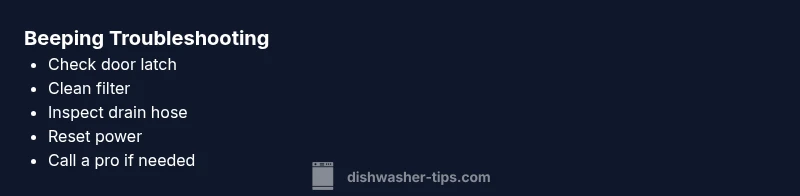
Dishwasher Beeping Troubleshooting: Quick Fixes for 2026
Learn how to stop your dishwasher beeping, diagnose common causes, and safely fix the issue with clear, step-by-step guidance from Dishwasher Tips for homeowners and renters.


Most likely, your dishwasher is beeping to signal a simple issue—like a lid switch, blocked filter, or draining problem. Start by checking the door latch, then inspect the filter, spray arms, and drain hose for clogs. If the beeping continues after these basics, follow the diagnostic flow below or contact a pro.
What the Beep Really Means
Every time you hear the dishwasher beeping, your first instinct is to silence it. But the beep is a built-in alert that the appliance needs attention. In many cases, the issue is simple and tied to common causes behind dishwasher beeping, such as a lid switch not detecting a properly closed door, a clogged filter, or a drainage problem. Identifying the exact beeping pattern helps narrow the cause: a single chirp often signals a door issue, while continuous beeps indicate a more persistent fault like water supply or sensor trouble. Throughout this guide from Dishwasher Tips, we explain how to interpret this specific beeping and what to check first to prevent a flood or ruined dishes. The Dishwasher Tips analysis shows that most beeping incidents are user-serviceable with basic tools and careful safety steps.
Quick Checks You Can Do Immediately
If you hear a dishwasher beeping, you probably don’t need to dismantle the machine right away. Begin with the simplest checks that address the most common causes implicated by dishwasher beeping signals. Make sure the door is fully closed and latched, the filter is free of debris, and the drain hose isn’t kinked. A quick power cycle (turn off at the outlet or breaker, then back on) can clear minor sensor hiccups that trigger beeping. Keep your manual handy as beep codes vary by model, and check for any model-specific reset instructions to stop the beeping quickly.
Diagnostic Flow: Beep to Solution
Beeping patterns guide diagnosis. Start with the most likely issues: a door latch fault or misalignment, clogged filter or drain, and finally water supply or sensor problems. For each symptom, a recommended fix is listed in a progressive order from easy to hard. If the beep persists after performing the easy fixes, escalate to the more involved steps and consider professional help if needed. Remember, never bypass safety features or electrical protections when diagnosing dishwasher beeping.
Step-by-Step Fixes for the Most Common Causes
This section provides a practical, itemized approach to resolving the most frequent beeping triggers. Each step includes a clear action and a quick tip to avoid repeating the issue. By following these steps in order, you’ll typically stop the dishwasher beeping without specialized tools. If a step reveals a defective component, plan for replacement or professional service as a longer-term solution for the beeping problem.
Safety Tips and Common Mistakes
When addressing dishwasher beeping, safety is paramount. Always unplug before inspecting internal parts, avoid forcing components, and keep water away from electrical connections. Common mistakes include ignoring a steadily beeping unit, using harsh cleaners on seals, or neglecting routine maintenance that leads to clogged filters. Following safe practices reduces risk and protects your appliance over time.
How to Prevent Future Beeps
Proactive maintenance reduces the frequency of dishwasher beeping. Regularly clean the filter and spray arms, inspect hoses for kinks, and ensure the door latch seals properly. Run an occasional drain test if your model supports it, and keep the water supply steady. Creating a simple maintenance routine helps you catch issues before they escalate into audible alerts from dishwasher beeping.
Steps
Estimated time: 30-45 minutes
- 1
Power down and safety first
Unplug the unit or switch the circuit breaker off. This prevents shocks while you inspect components exposed to water and electrical parts.
Tip: Always start with safety; drain any standing water if present. - 2
Check the door latch and seal
Ensure the door latches fully; inspect the gasket for cracks or misalignment that might trigger the beeping alert.
Tip: Close the door firmly and listen for a solid latch click. - 3
Inspect and clean the filter
Remove the lower rack and take out the filter assembly. Rinse under running water to remove debris that can trigger beeps due to drainage issues.
Tip: Use a soft brush to loosen stubborn gunk. - 4
Inspect the drain hose and air gap
Check for kinks or clogs in the drain hose; ensure the air gap (if present) is clear to allow proper drainage.
Tip: Detangle hoses gently to avoid puncturing them. - 5
Run a reset or drain test
With power off, replug and run a quick cycle to see if the beep recurs. If your model has a test mode, follow the manual.
Tip: Note model-specific steps in your manual. - 6
Evaluate water inlet and sensor
If beeping persists after basics, check the water inlet valve for obstructions and ensure sufficient water supply. Sensor faults may require professional service.
Tip: Do not force sensors or bypass safety features.
Diagnosis: Dishwasher beeping intermittently or continuously
Possible Causes
- highDoor latch switch fault or misaligned door
- highBlocked filter or clogged drain hose
- mediumWater inlet valve or water level sensor issue
- lowControl board error
Fixes
- easyInspect door latch and door seal; ensure door closes properly
- easyRemove and clean the filter; rinse spray arms and check for clogs
- easyCheck drain hose for kinks or blockages; run a drain test
- easyReset the dishwasher by cycling power
- hardReplace faulty parts or contact a pro if beep persists
People Also Ask
Why is my dishwasher beeping continuously after a cycle?
Continuous beeping usually signals a persistent fault such as drainage, water inlet, or sensor issues. Start with the basics, then advance to the diagnostic flow.
Continuous beeping usually means a persistent fault; try basic checks first.
Is beeping dangerous or a fire risk?
Beeping itself is not usually dangerous. It signals a fault or alert; unplug if you suspect a power issue and inspect safely.
Beeping is a warning signal, not a fire risk by itself; unplug if you suspect a hazard.
What should I check first when I hear a beep?
Check the door latch and seal, then inspect the filter and drain hose. These are the most common beeping causes.
First check the door latch and the filter, then the drain hose.
Can I fix a beeping dishwasher myself or call a technician?
Many beeps come from simple clogs or misalignment and can be fixed at home. If the beep persists after basics, contact a technician.
Most beeps can be fixed at home. If it persists, call a pro.
Why does beeping occur after cleaning or a new cycle?
Beeping after a cycle often indicates a drainage or water level issue that was aggravated by the load. Check filter, drain, and water supply.
Beeping after a cycle usually means drainage or water level needs attention.
What if the beep is a diagnostic code I don’t recognize?
Consult the user manual or model-specific guide for beep patterns. If unresolved, contact customer support for diagnostics.
Unknown beep patterns should be checked in the manual or with support.
Watch Video
What to Remember
- Identify beeping pattern to guide checks
- Start with door latch, filter, and drain hose
- Reset and test before professional help
- Document issues to plan prevention
- If beeps persist, safety first: call a pro