Dishwasher KitchenAid Repair: Essential Step-by-Step Guide
Learn practical, AI-informed steps to diagnose and repair a KitchenAid dishwasher with safe practices, part checks, and guidance on when to call a professional.


You're about to diagnose and perform safe repairs on a KitchenAid dishwasher. This guide covers common failure points, from drainage to heating, and explains step-by-step checks you can perform before calling a technician. You’ll verify power, water supply, pump operation, and control board status, then decide whether to replace parts or pursue professional service for your dishwasher kitchenaid repair.
Understanding Common KitchenAid Dishwasher Problems
According to Dishwasher Tips, many KitchenAid dishwasher failures stem from drainage, clogged filters, or a faulty pump. In this section we explore the most frequent symptoms homeowners notice and map them to likely causes. Slow draining, standing water, strange noises, or failure to start can often point to a blocked filter, a stuck float, a worn pump, or a defective door latch. While KitchenAid dishwashers share core components, model-specific features may alter diagnosis, so note your model number and consult the user manual when possible. This foundation will help you decide whether a DIY repair is feasible or if service should be sought for more complex issues.
Safety First: Pre-Repair Precautions
Before you touch any wiring or components, unplug the unit and shut off the water supply. Use towels to catch any residual water and protect the floor. Remove the bottom rack to access the sump, filter, and spray arms. If your unit is hard-wired rather than plug-in, do not attempt to bypass safety features—call a qualified electrician. Never work on energized components; safety should come first to prevent electric shock, burns, or flood damage. If you feel unsure at any point, pause and seek professional help.
Diagnostic Checklist for Dishwasher kitchenaid repair
Use this checklist to identify the root cause quickly:
- Verify power at the outlet or circuit breaker and check for a tripped breaker.
- Inspect the door latch and control panel for error codes or loose connections.
- Confirm water inlet valve and supply line are delivering water during the fill stage.
- Test the drain hose for kinks and listen for the pump operation during the drain cycle.
- Inspect filters, screens, and spray arms for clogs or damage.
- Look for leaks around door seals and gaskets, including the tub and hose connections. If any step reveals electrical faults or a malfunctioning control board, consider professional evaluation for kitchenaid repair.
Hands-On Fixes You Can Try Safely
These practical fixes often resolve common issues without full component replacement. Start with non-invasive steps and progress to more involved ones:
- Clean or replace the filter and sump to restore proper drainage.
- Clear and inspect spray arms; ensure they rotate freely and aren’t blocked by debris.
- Inspect the door seal for wear, tears, or gaps and replace if necessary.
- Check the inlet valve and water line for obstructions and correct pressure.
- Test the float switch to ensure the dishwasher detects water level accurately.
- If you hear abnormal noises, confirm the drain pump is mounted correctly and free of obstructions. Note: If you observe electrical signs, fire risk, or your model displays error codes beyond simple drain issues, stop and seek professional service.
When to Replace Components and How to Source Parts
Not every symptom requires a full replacement. Consider replacing components when tests indicate a failing part, or when parts show visible wear. Typical components in need of replacement include filters, seals and gaskets, drain pump assemblies, and inlet valves. Source parts through authorized service channels or reputable repair suppliers, ensuring compatibility with your KitchenAid model by checking the exact model number and part compatibility. Preserve manuals and purchase receipts to support warranties or service records.
How to Test the Appliance After Repairs
After performing any fixes or replacements, run a complete test cycle with an empty dishwasher. Observe for leaks, verify the water fills and drains within the expected cycle, and listen for normal pump operation. Check the spray arms and filter again after the test cycle for any residual debris. If issues persist, review the steps you took, recheck connections, and consider professional diagnostics to avoid further damage.
Tools & Materials
- Phillips-head screwdriver(For removing lower access panels and securing components)
- Flat-head screwdriver(Helpful for prying loose panels without damage)
- Nut driver or socket set(To loosen clamps and fasteners)
- Multimeter(Test voltage, continuity, and resistance on electrical parts)
- Pliers (slip-joint)(Grip hoses and clamps; handle small springs or clips)
- Towels or absorbent rags(Mop up drips; keep workspace dry)
- Bucket or shallow tray(Catch water during drain tests)
- Flashlight or headlamp(Improve visibility inside panels)
- Replacement parts kit (generic)(Optional if you diagnose a specific failed component)
- Safety gloves(Shield hands from sharp edges)
Steps
Estimated time: 60-120 minutes
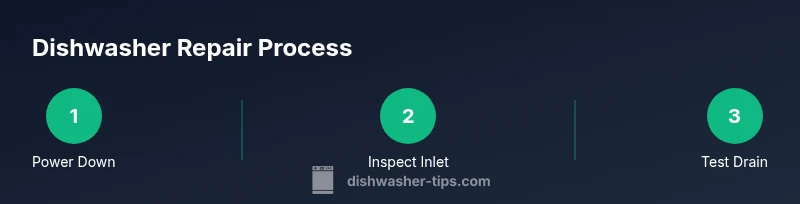
- 1
Power Down and Access Panels
Unplug the dishwasher and turn off the water supply before touching any internals. Remove the lower front access panel to inspect wiring and visible components. Note all connections with photos to aid reassembly.
Tip: Take a photo of each connection before disconnecting plugs to simplify reassembly. - 2
Check Power, Water Inlet, and Hoses
Use a multimeter to confirm the outlet provides power at the control board when the cycle starts. Inspect the water inlet valve and supply line for kinks or blockages. Replace or reseat hoses as needed.
Tip: If the inlet valve doesn’t click during the fill, it may be stuck or faulty. - 3
Test Door Latch and Control
Verify the door latch engages fully and the door interlock is not damaged. Check for error codes displayed on the control panel and consult the user manual for code meanings. Secure any loose connectors on the control board if present.
Tip: A partially engaged door latch can prevent the cycle from starting even if power is present. - 4
Inspect Pump, Float, and Drain
Listen for the drain pump during the cycle; look for clogs in the pump housing and ensure the float moves freely. Use the multimeter to check pump continuity if you suspect failure. Ensure the drain hose is clear of obstructions and properly connected.
Tip: A blocked drain valve or impeller will mimic a non-draining condition. - 5
Clean Filters and Replace Seals
Remove and clean all filters, screens, and spray arms. Inspect door seals and tub gaskets for cracks or wear; replace if necessary. Reassemble with care and ensure no parts are loose before testing.
Tip: A clean filter improves cleaning performance and reduces strain on the pump. - 6
Run Test Cycle and Inspect
With the unit reassembled, run a short test cycle with an empty load. Watch for leaks, verify proper water fill and drain, and listen for normal pump operation. If issues persist, revisit the prior steps or seek professional diagnostic.
Tip: Document any error codes or symptoms to guide a technician if needed.
People Also Ask
What is the most common KitchenAid dishwasher repair issue?
Drainage problems and clogged filters are among the most frequent causes. Start with cleaning the filter, inspecting the drain hose, and verifying the pump operation before pursuing more complex repairs.
The most common issue is drainage and filter clogs. Start by cleaning the filter and checking the drain, then inspect the pump if needed.
Can I repair a KitchenAid dishwasher myself?
Many minor problems can be addressed with basic tools and careful follow-through. Complex electrical faults or a malfunctioning control board usually require professional service.
Many minor issues you can fix yourself, but electrical faults or a failing control board usually need a pro.
How do I know if I need a professional?
If there is a strong electrical smell, sparks, exposed wires, or the error codes point to the control board, contact a professional. Leaks that persist after basic fixes also merit expert evaluation.
Call a pro if you smell burning, see sparks, or the control board indicates an error that you can't resolve safely.
What tools are essential for dishwasher repair?
A basic repair kit includes screwdrivers, pliers, a multimeter, a towel, and a bucket. Depending on the issue, you may need a replacement filter or pump kit.
Keep a screwdriver, pliers, a multimeter, towels, and a bucket on hand; you may need a replacement filter or pump.
How long does a typical KitchenAid dishwasher repair take?
Simple fixes can take under an hour, while more involved diagnostics or part replacements may extend to a few hours. Always allocate extra time for potential troubleshooting.
Simple fixes can be under an hour, but more involved repairs may take a few hours.
What parts are most likely to fail?
Filters, drain pumps, inlet valves, and door seals are frequently involved in KitchenAid dishwasher issues. Confirm compatibility with your exact model when sourcing replacements.
Filters, drain pumps, inlet valves, and door seals are common failure points.
Watch Video
What to Remember
- Identify root cause before replacing parts.
- Prioritize safety and follow lockout procedures.
- Document parts and model details for accurate sourcing.
- Test thoroughly after any repair to confirm success.