Dishwasher Repair Guide: A Practical How-To for Homeowners
Learn practical, step-by-step strategies to diagnose and repair common dishwasher problems. Safety tips, tools, and a DIY workflow to save money and extend appliance life.


By following this guide, you'll diagnose common dishwasher failures, decide whether repair is cost-effective, and perform safe, basic fixes. You'll learn how to test drains, pumps, door latches, and control boards, plus when replacement is wiser. The steps cover safety, tool prep, and a practical workflow homeowners can complete in a weekend.
Understanding the value of dishwasher repair
For homeowners facing a malfunctioning dishwasher, repair can be a cost-effective path that extends the appliance's life. When the issue is isolated to a component you can access and replace, your total expense is often far below buying a new machine. According to Dishwasher Tips, most common failures - like a clogged drain, a failing pump seal, or a faulty door latch - can be addressed with basic tools and a methodical approach. The goal is not to chase every symptom, but to uncover the root cause and verify that a safe, working replacement part exists. In many cases, repairing a dishwasher rather than buying new results in meaningful savings and less environmental impact. However, not every problem is worth fixing; if the tub is rusted, the control board has multiple faults, or energy efficiency has fallen far behind current models, replacement may be the wiser choice. Use a simple decision framework: assess safety, estimate parts and labor, and compare to the cost of a replacement. This guide helps you do exactly that, with practical steps you can follow at your own pace while keeping your home safe.
Common failure modes and how to diagnose them
Dishwashers fail for a handful of predictable reasons. Noise can indicate a worn pump bearing or a loose spray arm; water leaks often come from gaskets or door seals; poor cleaning results may stem from clogged filters or spray arms; failure to start can be caused by a tripped circuit, a faulty door switch, or a malfunctioning control panel. The first step is to observe symptoms carefully and note any error codes on the display. Then perform simple checks: locate and inspect the filter and sump area for debris, rotate the spray arms to verify they turn freely, and ensure the door latch engages when closed. If your model has service codes, consult the manual to translate the code into a probable fault. With a little patience, you can rule out the most common culprits before pulling out tools. Remember that some issues, like a malfunctioning heating element or a cracked tub, are not economical to repair and may warrant replacement. This section provides a practical framework to categorize symptoms and map them to likely causes without guessing at parts you don’t need.
Safety precautions before you begin
Before you touch any appliance, prioritize safety. Unplug the dishwasher from the outlet and shut off the water supply to avoid leaks. If you must access the control panel, turn off the circuit breaker to prevent shocks. Wear gloves and use a flashlight to inspect inside the tub, especially around electrical components and the heating element. Never operate the unit with standing water near electrical connections. When in doubt, wait for a cool-down period after use. Keep children and pets away while you work. Use a towel to soak up any residual water and place a tray under the machine to catch drips. Finally, document the model number and serial code for parts and warranty considerations. By following these precautions, you reduce the risk of injury and damage during a DIY dishwasher repair.
Tools and diagnostics you should have on hand
Typical repairs require just a handful of common tools. A multimeter helps test sensors and motors; a non-contact voltage tester confirms live circuits; a Philips and flat-head screwdriver handle most screws; nut drivers cover pump bolts and hose clamps; pliers and tweezers assist with clamps and small parts; a soft brush or old toothbrush cleans stubborn debris; towels and a bucket manage water; a flashlight ensures you can see into tight spaces. For many fixes, you won't need to replace the entire module; instead replace worn seals, filters, or hoses. Stock spare gaskets, clamps, and a drain pump if you anticipate frequent clogging. If you lack experience, consider practicing on a non-electrical task first to build confidence. Having these tools ready saves time and reduces the risk of losing small parts during disassembly.
Basic diagnostic tests you can perform without professional equipment
Start with the filter and spray arms; a clogged filter reduces cleaning power and can cause standing water. Remove the filter and rinse with warm water, then reassemble and run a quick cycle to observe. If the dishwasher fills with water but drains slowly or not at all, inspect the drain hose for kinks and the air gap (if installed). For leaks, check door seals and the bottom gasket, looking for cracks or soft spots. If the machine won't start, verify the door latch engages and test the control panel's power by resetting the cycle. If there is a visible error code, consult the manual or manufacturer website for decoding tips. Finally, listen for unusual noises—grinding or rattling often means a failing pump bearing or a loose spray arm. By performing these basic checks, you can narrow the root cause before deciding whether a component replacement is feasible.
A practical workflow for common fixes
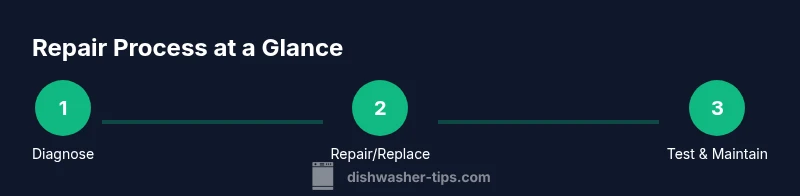
A practical diy workflow starts with a clear diagnosis, followed by a cost-conscious plan. Begin by unplugging the unit and turning off water for safety. Next, access the relevant component—be it the filter, pump, door latch, or electrical connector—and perform the required cleaning or replacement. Reassemble carefully, restore power and water, and run a test cycle. Observe for leaks, noises, or poor cleaning. If the problem persists, reassess whether a full replacement is a better long-term option. Document the repair steps and test results to help future maintenance. Finally, after a successful fix, clean the interior thoroughly to prevent residue buildup. This workflow helps you stay organized while tackling common dishwasher issues.
When to replace rather than repair and how to budget
Not every fault justifies a repair. If multiple major components show wear, or the tub and seal are seriously compromised, replacement may be the smarter choice. Consider the age of the machine, energy efficiency, and the total repair cost relative to buying a new model. Rather than guessing, estimate parts and labor, then compare to the price range of a new unit with similar capacity. If you own a high-efficiency model, a repair that preserves efficiency can still be cost-effective. In many cases, a well-timed replacement also brings quieter operation and modern features that improve daily use. Budget acknowledges taxes, disposal fees, and potential warranty considerations. By weighing these factors, you can make a rational, data-informed decision about repair versus replacement for your dishwasher repair needs.
Maintenance to extend life after a repair
Once you complete a repair, adopt a simple maintenance routine to extend the life of your dishwasher. Rinse the filter weekly, inspect spray arms for clogs, and run a cleaning cycle with a dishwasher-safe cleaner every few months. Check door seals for cracks during periodic pulls and wipe down the tub to remove mineral buildup. Use the recommended detergent and rinse aid in the correct amounts to reduce residue. Finally, run a quick empty cycle monthly to keep the pump and valve pathways clear. Establishing a routine reduces the likelihood of recurrence and helps you catch problems early.
Where to find parts and warranty considerations
For a successful dishwasher repair, source high-quality parts compatible with your model. Start with the manufacturer’s library or authorized parts distributor to ensure compatibility. If you’re unsure, bring the model number and serial to verify fit. Review any remaining warranty coverage on the unit; some components may be covered beyond the general warranty period, while labor may not be. When in doubt, consult a professional to confirm that the part choices meet safety and performance standards. Keeping a parts inventory for common wear items—filters, gaskets, and hoses—also speeds up future repairs. By knowing where to obtain parts and how warranty terms apply, you can complete repairs with greater confidence and minimize downtime.
Tools & Materials
- Multimeter(Test sensors and continuity)
- Non-contact voltage tester(Verify no live circuits)
- Screwdriver set (Phillips and flat-head)(Remove panels and fasteners)
- Nut drivers (assorted)(Loosen pump and hose clamps)
- Pliers and tweezers(Handle clamps and small parts)
- Towels and small bucket(Manage water spills)
- Flashlight or headlamp(Illumine tight spaces)
- Replacement seals/hoses/pump (as needed)(Only if diagnosed component needs replacement)
- Gloves(Protect hands during disassembly)
Steps
Estimated time: 60-120 minutes
- 1
Power down and safety check
Unplug the dishwasher and switch off the water supply. Verify the circuit is de-energized with a tester before touching any internal components. This prevents shocks and water-related accidents.
Tip: Keep a log of what you checked before starting. - 2
Access the filter and drain area
Open the bottom access panel, remove the filter, and inspect the sump. Rinse out debris that can block water flow. A clean drain improves efficiency and prevents overflow.
Tip: Take a photo of component orientation before disassembly. - 3
Inspect and clean the filter and spray arms
Remove spray arms and filters and flush them with warm water. Look for food particles and mineral buildup that reduce spray efficiency. Reassemble securely to avoid leaks.
Tip: Use a soft brush to remove stubborn grime. - 4
Check door latch and switch
Ensure the door latch engages fully and the door switch functions. A faulty latch can prevent the cycle from starting. Test by closing the door firmly and selecting a cycle.
Tip: If the latch feels loose, replace it rather than trying to adjust. - 5
Test the drain pump and hoses
Inspect the drain hose for kinks and examine the pump hoses for cracks. Listen for the pump when the unit drains; grinding noise can indicate wear.
Tip: Disconnect power before touching the pump and hose connections. - 6
Check float switch and float assembly
Verify the float moves freely and the switch isn’t stuck. A misreading can cause overfilling or underfilling cycles. Clean gently if mineral deposits are present.
Tip: Always test the float in multiple positions. - 7
Test the control panel and wiring
Inspect visible wiring for wear and reseat connectors. If the display shows error codes, consult the manual to map them to likely faults. Run a short cycle to confirm behavior.
Tip: Power cycle the control board by unplugging for 60 seconds if codes persist. - 8
Decide on fix vs replacement
If a single component resolves the issue, complete the repair and retest. If multiple major parts show wear, compare replacement costs with the price of a new unit.
Tip: Document the repair steps and results to guide future maintenance.
People Also Ask
What are the most common dishwasher repair issues homeowners can fix themselves?
Many issues involve the filter, spray arms, door latch, or drain. Cleaning components and replacing simple seals or hoses are common DIY tasks. If a fault involves the control board or heating element, consider professional help.
Most DIY fixes involve filters, spray arms, and door latches; for controller or heating element faults, seek professional assistance.
Is it worth repairing an older dishwasher?
If repair costs are modest and the machine remains efficient, repair can be worthwhile. If multiple major components show wear or energy efficiency lags behind newer models, replacement may be more economical in the long run.
Repair can be worth it for modest costs, but multiple worn parts or poor efficiency may favor replacement.
How long does a typical dishwasher repair take?
A simple fix may take an hour or two, while more complex issues could require several hours or a scheduled service. For many homeowners, a weekend DIY session is realistic if you stay organized.
Most DIY fixes fit into a few hours, with complex repairs possibly taking longer.
What safety steps should I follow before attempting any repair?
Always unplug the unit, shut off the water, and wear protective gear. Avoid working near live wires or standing water, and verify you’re using the correct replacement parts for your model.
Unplug, shut off water, wear gloves, and verify proper parts before you start.
When should I replace rather than repair?
If the repair requires multiple major components or the unit is old and inefficient, replacement is often more cost-effective in the long term. Compare repair costs with the price of a new energy-efficient model.
Consider replacement if many parts wear out or the unit is inefficient and costly to fix.
Where can I find legitimate replacement parts?
Start with the manufacturer’s website or authorized distributors to ensure compatibility. Cross-check your model number and order genuine seals, hoses, or pumps designed for your unit.
Use the manufacturer or authorized distributors to find compatible parts.
Watch Video
What to Remember
- Diagnose root cause before repairs.
- Repair can save money vs replacement.
- Safety first in every step.
- Use the right parts for your model.
- Maintain regularly to prevent future issues.