Dishwasher Not Draining Frigidaire Dishwasher: Troubleshooting Guide
Urgent troubleshooting guide for a Frigidaire dishwasher that won't drain. Learn quick fixes, diagnostic steps, and prevention tips from Dishwasher Tips to restore proper drainage fast.


The most likely cause is a clogged filter or blocked sump that prevents water from leaving the tub. Start by removing and cleaning the filter, then inspect the drain hose for kinks or clogs. If the issue persists, test the disposal connection and, as a next step, check the drain pump for obstructions or failure.
Why a Frigidaire Dishwasher Might Not Drain
If your Frigidaire dishwasher won't drain, you're not alone, and the clock is ticking. This drainage problem is particularly frustrating because it often signals a simple maintenance issue rather than a failed component. According to Dishwasher Tips, the most common culprits are clogs in the filter and sump area or a kinked drain hose, followed by a faulty drain pump in older models. Start your diagnosis by locating the filter assembly under the lower spray arm and inspecting the drain path for debris. Remove any gunk, rinse thoroughly, and reassemble. While you’re at it, check the drain hose at the bottom of the machine for twists or obstructions. If the water still sits after a quick test, you’ll need to move to the more thorough checks described in this guide. A fast, methodical approach saves both time and cost and minimizes the risk of electrical mishaps.
Common Causes in Frigidaire Models
Frigidaire dishwashers share several drainage patterns. A blocked filter or clogged sump screen is the leading cause; debris such as bits of glass, potato peels, or broken utensils can accumulate. A damaged or pinched drain hose prevents water from leaving the tub, while an improperly connected disposal or an unplugged knockout plug can block flow. In some cases, the pump impeller wears out or a check valve sticks, letting water pool instead of flowing out. Hard water builds mineral scale that narrows passageways over time, exacerbating drainage issues. By prioritizing the check of the filter and hose first, you can often rescue drainage with minimal tools and no professional help. If the issue persists after these steps, it may indicate a failing pump or control module.
Safety First: What to Do Before You Work
Electric appliances demand caution. Always unplug the dishwasher or switch off the circuit breaker before opening panels or touching wires. Use a flashlight to inspect a dry sump area and filter; never run water near live electrical components. If you must move the dishwasher, unplug from the outlet and turn off the water supply to avoid leaks. Mark and photograph every connector before disassembly to simplify reassembly. Keep a dedicated container handy for catching residual water. By combining care with a logical sequence, you reduce the risk of shocks or floods while diagnosing drainage problems.
Diagnostic Flow: Quick Path to the Problem
Start with the simplest checks: is the filter visibly blocked? Is the sump clean? Are there standing puddles after a cycle? If yes, proceed to cleaning. If not, inspect the drain hose: is it kinked or clogged? Detach and flush it with warm water. Next, verify the disposal connection if applicable: remove the knockout plug and ensure the disposal is clear of clogs. If water still remains, test the drain pump by running a cycle with the front access panel opened (without touching live wiring); listen for the pump motor and feel for air movement. If the pump doesn't operate or produces a hum without flow, the pump may be faulty and require replacement. Finally, verify the control board and timer if all mechanical paths test normal.
Step-By-Step: Fixes for the Most Common Cause
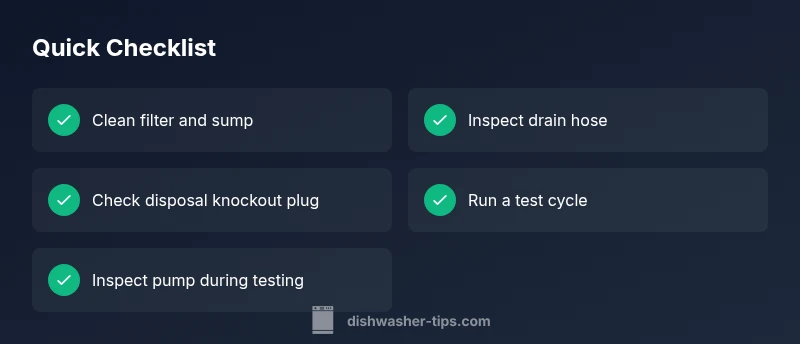
- Power off and access the lower panel to reach the filter and hoses. 2. Remove and clean the drain filter and sump screen; rinse under running water to remove debris. 3. Detach the drain hose and flush it with warm water; check for kinks or clogs. 4. If connected to a disposal, ensure the knockout plug is removed and the disposal is clear of obstructions. 5. Reassemble, restore power, and run a short hot-water test cycle. 6. If drainage remains poor, inspect the drain pump and impeller for obstructions or failure and consider replacement.
Troubleshooting Advanced Issues If Basic Fixes Fail
If the basic cleanings don’t restore drainage, the issue may be a failing drain pump, a stuck check valve, or a faulty control board. Use a multimeter to test the pump’s continuity and ensure power reaches the motor. Inspect the impeller for damage or jam, and look for signs of water ingress into the electronics. Consider replacing the drain pump assembly or, if a control fault is suspected, consulting a licensed technician. In the meantime, avoid running the unit with a known pump or electrical fault to prevent further damage.
Prevention Tips to Keep Your Frigidaire Dishwasher Draining Properly
Establish a simple maintenance routine to prevent future drainage problems. Clean the filter and sump weekly or biweekly, especially if you run the dishwasher daily. Use a rinse aid to reduce mineral buildup and consider a dishwasher-safe descaler every few months if you have hard water. Always check the drain hose for kinks during routine cleaning, and ensure the disposal knockout plug is properly removed if you connect to a garbage disposal. A proactive approach saves time, money, and frustration.
Steps
Estimated time: 30-60 minutes
- 1
Power off and gain access
Unplug the unit or switch off the circuit breaker. Remove the lower access panel to reach the drain filter and hose connections.
Tip: Safety first: confirm power is off before touching any wiring. - 2
Inspect and clean the filter
Take out the filter and sump screen, rinse under running water to remove debris, then reassemble. A clogged filter is the most common drain blocker.
Tip: Use a soft brush to remove baked-on grease without scratching plastic. - 3
Check the drain hose
Trace the hose from the dishwasher to the sink drain. Detach and flush it with warm water. Look for kinks or narrow bends that impede flow.
Tip: Be prepared for water spillage; have towels ready. - 4
Inspect disposal connection
If your dishwasher drains to a garbage disposal, verify the knockout plug is removed and the disposal is clear of clogs.
Tip: Run the disposal briefly to ensure it’s free but avoid running both at once. - 5
Run a test cycle
Reconnect power and run a hot water cycle with an empty dishwasher to verify drainage improves. Observe the drain flow.
Tip: If water remains in the tub, proceed to pump check. - 6
Evaluate the drain pump
Access the pump housing; listen for the impeller and check for debris. If the pump is faulty, replacement may be necessary.
Tip: A test using a multimeter is recommended if you’re comfortable with electricity.
Diagnosis: Dishwasher won't drain after cycle ends
Possible Causes
- highClogged filter or sump screen
- highBlocked drain hose or air gap
- mediumDisposal connection with knockout plug present
- mediumFaulty drain pump or impeller
- lowDrain valve or check valve stuck
Fixes
- easyRemove and clean the filter and sump area; rinse thoroughly
- easyDisconnect and clear the drain hose; check for kinks or clogs
- easyIf connected to a garbage disposal, ensure the knockout plug is removed and the disposal is clear
- hardTest or replace the drain pump if flow remains blocked
People Also Ask
Why is my Frigidaire dishwasher not draining after a cycle?
Most drainage problems come from a clogged filter, blocked drain hose, or a faulty drain pump. Start by cleaning the filter and inspecting the hose, then run a hot water test cycle. If water remains after steps, consult a technician.
Drainage issues usually come from clogs in the filter or hose, or a faulty pump. Start with cleaning the filter and hose, then run a hot water test cycle. If it still doesn’t drain, call a pro.
Can I fix this without tools?
Many fixes involve hand-cleaning the filter, inspecting the drain hose, and clearing debris. Some steps may require basic tools to remove panels or disconnect hoses. If you’re unsure, stop and consult a pro to avoid injury.
You can often fix it by cleaning the filter and checking the hose. Some steps may need basic tools; if in doubt, experts can help.
How do I reset the dishwasher drain cycle?
Power-cycle the unit by unplugging it or switching off the breaker for about 5 minutes, then plug back in and run a test cycle. This often clears minor control glitches that affect drainage.
Try unplugging it for five minutes, then plug it back in and run a test cycle. It often fixes a simple control glitch.
How do I clean the filter properly?
Remove the filter assembly, rinse under warm running water, and scrub with a soft brush to remove baked-on residue. Reinstall securely and run a short rinse cycle to confirm drainage.
Take out the filter, rinse it well, and scrub off debris. Reinstall and run a quick rinse to test drainage.
When should I call a technician?
If you’ve performed the basic cleanings and checks and the unit still won’t drain, the issue may be a faulty pump, timer, or control board. A licensed technician can diagnose and replace these parts safely.
If basic fixes don’t work, it’s time to call a technician to check the pump or control board.
Does hard water affect drainage?
Hard water can contribute to mineral buildup in filters and hoses, increasing the chance of clogs. Use a mineral deposit remover periodically and ensure a proper rinse aid is used.
Yes, hard water can cause mineral buildup that blocks drains. Regular cleaning helps prevent this.
Watch Video
What to Remember
- Start with the filter and drain hose first
- Don’t ignore subtle drainage issues
- Know when to call a pro for pump replacement
- Regular maintenance prevents future clogs